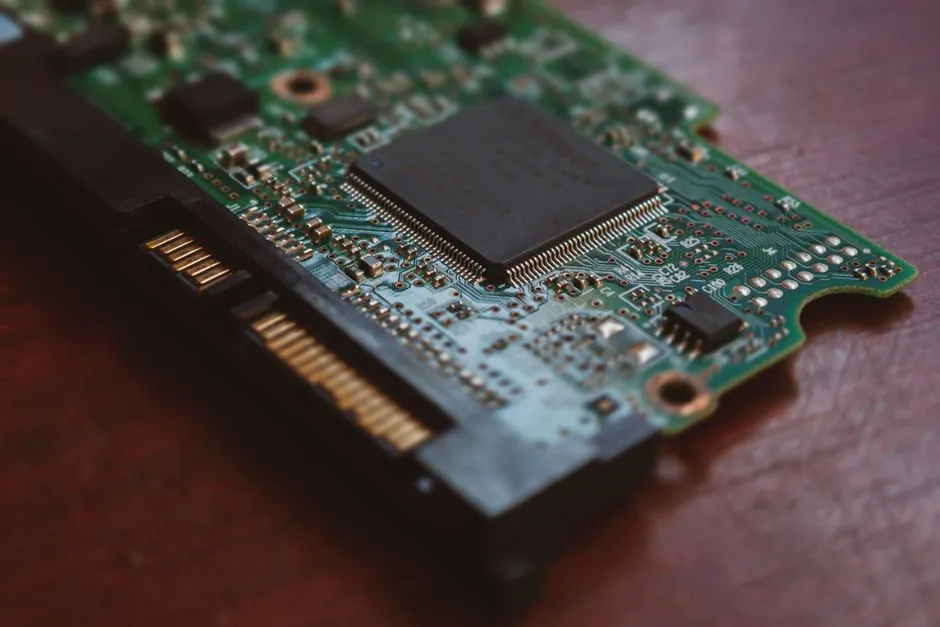
Electronics enclosures, connector grommets, and PCB-side seals that contact mineral-oil-cooled transformers or hydraulic assemblies are commonly specified with NBR compounds in the 33–45 wt% ACN range, 50–80 Shore A hardness, and a -40°F to +212°F continuous service envelope [S2][S4].
Outside that envelope (above 250°F continuous, or in direct ozone/UV exposure) NBR fails: it has poor flame resistance, poor sunlight resistance, and a tensile ceiling of roughly 3,500 PSI at the high end of the durometer scale [S2][S5]. For an overview of the elastomer family, see the nitrile rubber reference page.
ACN Content Drives the Electronics Use Case
Specifying NBR without an ACN target leaves the grade to the compounder, and two 70 Shore A compounds from the same supplier can behave very differently in a sealed enclosure [S1]. The nitrile family is conventionally split by ACN content into three bands: low ACN at 15–25 wt% for cold flexibility, medium ACN at 25–33 wt% as a general-purpose balance, and high ACN at 33–45 wt% for fuel and oil resistance, with specialty grades pushing beyond 45 wt% [S7].
For electronics packaging where the seal sees petroleum-based coolants, lubricant mist, or transformer mineral oil, a 33–45 wt% ACN grade is the typical pick; below 30 wt% ACN, swelling in oil becomes a reliability concern, while above 45 wt% the compound loses low-temperature flexibility and compression set recovery [S7][S4]. Hardness is a separate variable and is usually targeted at 60–80 Shore A for connector grommets and 50–70 Shore A for cover-plate gaskets [S2][S5].
Thermal Envelope vs. Electronics Operating Conditions
Continuous static service for general-purpose NBR tops out at +250°F with a brittle point between -70°F and 0°F depending on the ACN level, and a -40°F static minimum [S2][S5]. The widely cited NBR O-ring service band of -40°F to +212°F continuous, with short-term excursions to +250°F, lines up with most indoor electronics cabinets, junction boxes, and consumer device seals [S4].
Cabinets mounted outdoors, in engine bays, or in industrial process areas near heat sources need a different polymer: HNBR extends the high end by roughly 30–50°F, while silicone (VMQ) covers -58°F to +347°F continuous and tolerates +446°F short-term, at the cost of poor oil resistance [S4]. Cross-referencing the silicone rubber reference helps when the temperature band exceeds NBR's ceiling.
Chemical Compatibility at the PCB and Connector Boundary
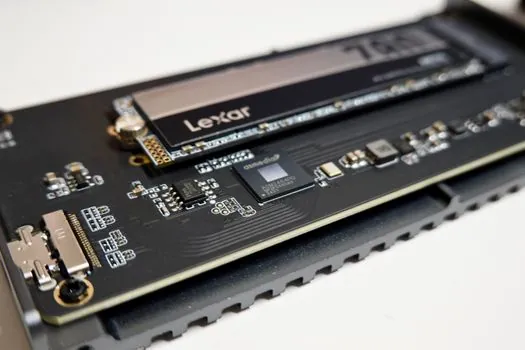
NBR rates excellent for LP gases, fuel oils, mineral oils, and aliphatic hydrocarbons, good for silicone oil and dilute acids, and poor for ketones, esters, ethers, halogenated solvents, concentrated acids, and amines [S2]. That profile is the main reason NBR shows up around electronics: it tolerates the petroleum-based lubricants, greases, and transformer oils that contact seals in power-conversion and motor-drive assemblies, while rejecting the polar solvents a chemist would use on a bench.
Manufacturing-side exposure is the failure mode most often missed. Ketone-based degreasers, ester-based flux carriers, and chlorinated cleaning solvents will attack NBR within minutes, so a sealed enclosure that passes a 212°F thermal soak can still fail a flux-residue wash [S2][S3]. If the assembly process uses these chemistries, NBR needs to be shielded or replaced with a fluorocarbon or HNBR compound.
Mechanical Limits and ASTM D-2000 Line Call-Outs
Standard NBR compounds fall in the ASTM D-2000 BF, BG, and BK cell range, with durometer from 20 to 95 Shore A, tensile strength from 200 to 3,500 PSI, and elongation between 350% and 650% [S2][S5]. Adhesion to metal is rated excellent, which is why NBR-to-metal-bonded connector boots and grommets are common in molded electronics hardware.
Compression set is good to excellent, which matters for static gaskets on enclosure lids that see thermal cycling between room temperature and +200°F; flex cracking is only fair to good, so dynamic seals (e.g., hinged covers, sliding connector shields) are a weak point, and the design should bias toward static sealing surfaces where NBR's compression set recovery does the work [S2][S5].
NBR vs. Silicone and EPDM for the Same Enclosure
On a four-criteria matrix for indoor electronics sealing, NBR (70 Shore A) delivers ~14 MPa tensile, continuous service to +212°F, excellent oil/fuel resistance, and the lowest unit cost; silicone (VMQ, 70 Shore A) drops tensile below NBR, extends continuous service to +347°F, and adds UV/ozone resistance, but loses oil resistance; EPDM sits between the two on temperature, beats NBR on weather and ozone, and again loses oil compatibility [S4].
The decision rule that comes out of those four columns: pick NBR when oil contact is present and the temperature ceiling stays inside +212°F, pick silicone when thermal or UV exposure dominates and oil contact is absent, and pick EPDM when outdoor weather is the main stressor and the seal stays away from petroleum media. For a deeper look at the silicone side of that trade-off, the silicone rubber selection map for energy equipment covers parallel thermal and media criteria. Where electronics hardware shares a cabinet with construction-grade sealing, the NBR selection for construction article shows how ACN and service bands carry over to harsher field environments.
Failure Modes and What to Verify Before Release
Three failure modes dominate NBR in electronics service: ozone/UV cracking on outdoor enclosures, ketone/ester attack during cleaning or rework, and compression set loss above +212°F continuous [S2][S3][S4]. Gas permeability is rated fair to excellent depending on compound, so a sealed enclosure relying on NBR for an IP-rated barrier should be checked against the permeability class, not just the durometer.
Before signing off a drawing, the spec should carry four numbers, not one: ACN content in weight percent (e.g., 33–45 wt%), hardness in Shore A (e.g., 70 ±5), continuous service temperature ceiling (e.g., +212°F), and the ASTM D-2000 cell (e.g., BF, BG, or BK); calling out "NBR, 70 Shore A" alone is the most common source of cross-compound variance and field returns [S1][S2]. For broader elastomer trade-offs across non-electronics service, the industrial rubber reference maps where NBR sits next to NR, EPDM, CR, and FKM families. The next signal to watch is supplier disclosure of XNBR (carboxylated NBR) grades for higher-abrasion connector boots, where recent work has documented enhanced wear behaviour over standard NBR at comparable ACN levels [S8].