
An NRR 33 dB protector has an 8 dB higher laboratory rating than an NRR 25 dB protector, but the difference does not translate directly into 8 dB more workplace protection.
The decision depends on measured noise, corrected exposure, fit, comfort, communication requirements and whether the protector will be worn consistently.
What NRR 25 dB and 33 dB Ratings Mean
The Noise Reduction Rating is a standardized laboratory measure of the noise-reduction potential of earplugs and earmuffs, expressed in decibels. A higher NRR means greater potential attenuation, so an NRR 33 dB product offers a higher rated starting point than an NRR 25 dB product [S1][S3]. The rating does not mean that ambient sound is reduced by the full NRR while the protector is worn.
On that calculation basis, the NRR 33 dB option provides 4 dB more estimated attenuation, not 8 dB.
Corrected Exposure Comparison at Common Noise Levels
The numerical gap remains 4 dB across the same noise inputs, although the difference becomes more consequential as exposure rises.
These are estimated exposures under the stated 50% correction method, not guaranteed field attenuation [S1]. For continuous noise, the duration and exchange-rate rules still apply; NRR does not make a 105 dBA environment equivalent to an 85 dBA environment. A formal exposure assessment should use the applicable regulatory method and measured dosimetry rather than selecting protection from the label alone.
Selection Criteria: Noise, Fit and Work Practice
Choose NRR 25 dB protection when the corrected exposure remains within the required limit, the wearer accepts the device, and lower attenuation reduces communication or comfort problems. Choose NRR 33 dB protection when measured sound levels require the extra 4 dB under the OSHA correction method, or when a high-rated plug is needed to achieve a target exposure [S1][S2].
Fit is a hard constraint for both ratings. Protection is greatly reduced when earplugs are not inserted correctly, earmuffs do not seal around the ears, the device is worn only periodically, or it is removed for even short periods. A labeled NRR of 33 dB therefore cannot compensate for poor training, inconsistent use or an ill-fitting product [S2].
Comfort also affects protection in practice. CCOHS recommends choosing a protector that is correct for the job, adequate for the required attenuation, compatible with other PPE and communication equipment, comfortable, and suitable for workplace temperature and humidity [S2]. Workers should also be able to hear alarms and warning signals while wearing protection.
These factors make the NRR 25 dB versus 33 dB decision more than a label comparison. For a detailed component reference, see hearing protectors and protective clothing when coordinating hearing and other site PPE.
Who Should Use Each Protection Type
NRR 25 dB earplugs are suitable for workers in environments where measured noise plus the corrected protection estimate meets the site exposure requirement and the wearer can maintain a proper seal. Premolded, moldable, roll-down foam, push-to-fit and custom-molded earplugs are available, so the rating should be matched to fit conditions rather than treated as a universal performance level [S2].
NRR 33 dB protection is appropriate where higher attenuation is required, including high-noise industrial work, provided the wearer can use the selected design correctly. An NRR 33 dB rating is not a reason to ignore feasible controls. CCOHS identifies source elimination and source reduction as the most effective methods for preventing noise-induced hearing loss, with PPE used when those controls are not possible [S2].
NRR 33 dB earmuffs may be easier for some wearers because no canal insertion is required, but their bulk can interfere with glasses, facial hair, headgear or other PPE. Earmuffs are generally more suitable for intermittent exposure because removing and reinserting earplugs can be inconvenient [S2]. Workers must still be able to perceive alarms, warnings and required communications.
Combined Protection and Real-World Attenuation
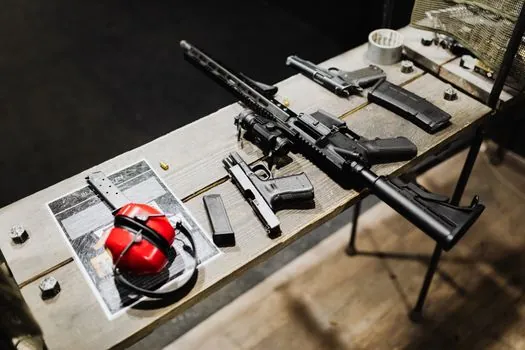
This rule applies equally to NRR 25 dB and NRR 33 dB combinations.
NRR is measured in laboratory conditions, while workplace attenuation depends on application, anatomy, fit and work practices [S2]. One practical reference advises subtracting 25 percent from an earmuff NRR and reducing an earplug NRR by 50 to 70 percent because NRRs tend to be somewhat overstated [S4]. That range is more conservative than the 50% OSHA method, particularly for earplugs.
Under the 50% to 70% adjustment, NRR 25 dB earplugs estimate to 7.5–12.5 dB of protection, while NRR 33 dB earplugs estimate to 9.9–16.5 dB [S4]. These are planning estimates, not product guarantees. Fit testing, training, inspection and a hearing conservation program are required elements where hearing protection is mandated [S2].
Standards, Program Controls and Failure Modes
A hearing conservation program includes noise assessment, engineering controls, protector selection, worker training, audiometric testing, maintenance, inspection, record keeping and program evaluation [S2]. This matters because the highest NRR is ineffective if wearers remove protection during brief work intervals, fail to achieve a seal, or use devices that interfere with alarms and radios.
Music headphones and communication headsets are not substitutes for certified hearing protection in areas where protection is required [S2]. For combined continuous and impulse-noise work, separate assessment is necessary because a steady dBA measurement does not fully characterize impulsive peaks. The selection method should also account for whether the hearing protector must remain compatible with face shields and other head, eye, or respiratory PPE.
For intermittent noise, earmuffs may be operationally preferable because they are less likely to be partially inserted; for long-duration continuous wear, the worker’s ability to maintain an effective seal and wear the device consistently should drive the decision [S2]. Where communication is critical, assess intelligibility and warning-signal audibility with the actual combination of hearing protection and communications equipment.
Practical Selection Rules

Use measured A-weighted noise and duration to establish the required protection, then apply the jurisdiction’s correction method. If either option fails the exposure calculation, neither label is acceptable.
When both options pass, select NRR 25 dB if greater comfort, communication audibility or PPE compatibility is important. Select NRR 33 dB when the higher corrected attenuation provides a meaningful margin against the measured exposure. Provide more than one type and size where practical because comfort and fit are personal factors [S2].
Before purchase, verify the manufacturer’s instructions, confirm that the protector is suitable for the workplace temperature and humidity, train users on insertion or seal formation, and inspect wearables regularly [S2]. For higher-risk applications, the deeper distinction between continuous and impulsive noise is covered in Hearing Protection for Continuous and Impulse Noise.
Track the corrected exposure estimate, wearer feedback, fit observations, training completion and audiometric outcomes through the hearing conservation program, because the NRR label alone does not demonstrate that noise-induced hearing loss risk is controlled [S2].