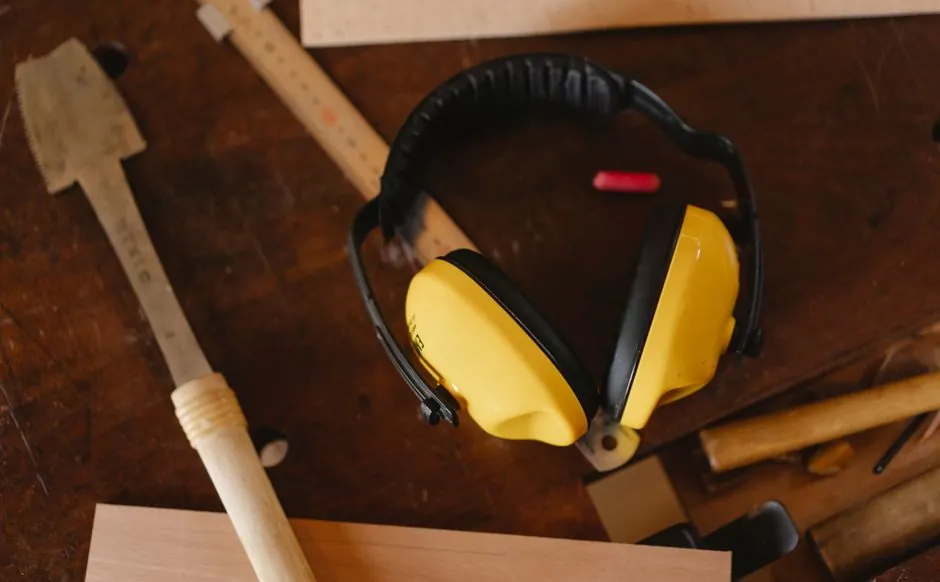
OSHA permits employers to add 5 dB to the higher Noise Reduction Rating when an earplug and earmuff are worn together [S1][S2].
The result is an estimate for extreme noise, not the sum of both labeled NRR values, and it still requires realistic field derating, correct fit and uninterrupted wear time [S3][S5].
OSHA method for double hearing protection
The calculation follows a defined sequence: identify the NRR of the earplug, identify the NRR of the earmuff, select the higher value, add 5 dB, and then apply the applicable real-world correction for the combined system [S2][S6]. This approach is used for estimating workplace exposure, not for comparing the laboratory attenuation of each component.
Derating the combined NRR for field conditions
NRR is a laboratory value determined under controlled fitting conditions, so it must not be treated as the noise reduction actually achieved at a workstation [S3]. The common OSHA method subtracts 7 dB from the NRR and divides the result by 2, producing an estimated field reduction of 50% with a 7 dB allowance [S3].
For a mixed earplug and earmuff system, the final estimate should follow the exposure assessment method adopted by the responsible safety professional rather than mixing formulas without a stated basis.
Comparison of dual-protection approaches

The largest labeled NRR is not the only selection criterion. A practical comparison must balance estimated attenuation, communication, compatibility and the consequences of poor fit. [S1]
Earmuffs can also support task communication. The Elgin Fury Dual-Defense model is specified as NRR 40 with Bluetooth, a microphone, IP65 enclosure and a battery rated for more than 70 hours [S8]. Those features address operational needs, but rated attenuation still depends on fit, compatible PPE and uninterrupted use [S3].
Extreme-noise exposure and selection thresholds
Fabrication and masonry environments regularly exceed 100 decibels [S5]. The selection guidance states that noise levels in stone fabrication shops and masonry job sites regularly exceed 100 decibels [S5].
Dual protection is not a substitute for hierarchy-of-controls measures. It should be selected after measuring the operator-position exposure, identifying the duration of that exposure, and checking whether alarms, radios, machine cues and verbal instructions remain audible [S3][S5]. The hearing protector selection guide provides the wider framework for matching protection type to noise level and required communication.
For extreme noise, an eligible specialist may also consider communication-capable Bluetooth hearing protectors, but radio features do not change the NRR calculation and should not be mistaken for a control over hazardous noise exposure [S8].
Fit, wear time and failure modes
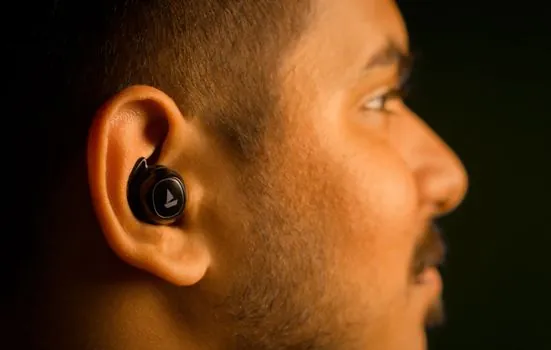
Sustained wear is part of the attenuation estimate. A calculation based on NRR 27 earplugs at a 95 dBA exposure assumes proper insertion and continued use; removing the plugs for 15 minutes can negate much of the protection credited for an 8-hour shift [S3]. The same failure mode applies to dual protection because adding an earmuff cannot correct an earplug that is absent or poorly seated.
Common field reductions include rushed donning, imperfect fit, breaks in wear time, sweat and dust [S3][S5]. Fit testing, user instruction and a procedure that protects communication openings during work are therefore more defensible than relying on the package label alone. Any face shield, respirator, eyewear or other worn equipment must also be checked for interference with the earmuff seal.
Overprotection can create its own hazard by masking warning signals and equipment sounds [S5]. In extreme noise, the assessment should document both the exposure reduction and the worker's ability to receive critical information, with fit and attenuation decisions made by the safety function rather than by the NRR label alone.
Procurement criteria and verification
A procurement specification should record the exact NRR of the earmuff and earplug, the applicable dual-protection calculation, the field derating method, exposure duration and required communications features. For dual systems, the OSHA starting estimate is the higher component NRR plus 5 dB [S1][S2]. The labeled rating, estimated protection and measured workplace exposure are three different values and should not be interchanged.
Industrial buyers comparing protective clothing and complete PPE ensembles should include compatibility checks for earmuff seals, eyewear, respiratory equipment and work clothing. The purchase specification should also require training in earplug insertion and earmuff positioning, along with an inspection process for dirt, damage, deformation and worn sealing surfaces [S3][S5].
For high-noise sites, the next verification step is to document the modeled exposure after the 5 dB dual-protection allowance and field correction, then compare it with measured 8-hour exposure. If the result remains above the applicable exposure limit, the specification requires another control measure rather than a larger label claim [S3][S5].