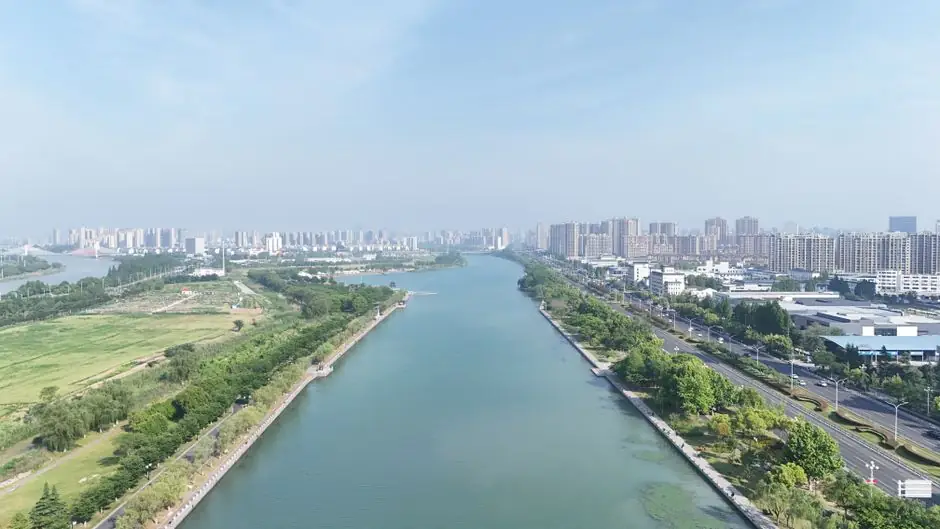
Online water quality analyzers for industrial process and wastewater loops are now sourced from a three-tier supplier base: a US/EU instrumentation tier (Hach, XOS, Badger Meter), EU process distributors (FILTER carrying HACH and XOS analyzers), and a Chinese OEM tier led by Shanghai Chunye and GAIMC offering digital sensors and multi-parameter transmitters on 4-20 mA plus Modbus outputs [S1][S3][S4][S5][S6].
Across these suppliers, the parameter menu converges on pH, ORP, conductivity, TDS, resistivity, salinity, dissolved oxygen (fluorescent and polarographic), turbidity, suspended solids, residual chlorine, chlorine dioxide, dissolved ozone, COD, BOD, total phosphorus, ammonia, blue-green algae, chlorophyll, and oil-in-water, with Hach and XOS anchoring the TOC and trace-metal end of the range [S1][S3][S4].
What "online" means in 2026: parameters, outputs, and wet-side configurations
Online water quality analyzers are continuous, in-line or in-situ instruments that report a 4-20 mA analog signal or a digital bus value (Modbus is the most widely listed protocol on Chinese OEM datasheets) at intervals from seconds to a few minutes, replacing grab-sample lab work for process control [S3][S4].
Shanghai Chunye lists its digital sensor family as a discrete set of RS-485/Modbus probes: digital pH, ORP, conductivity, dissolved oxygen, residual chlorine, turbidity, suspended solids (sludge concentration), COD, ion-selective (NH4+, K+, NO3-), oil-in-water, blue-green algae, and chlorophyll, each with its own transmitter [S3]. Hach structures its online portfolio the same way but splits it into "Sensors and Controllers", "Analyzers", and "EZ Series" panels rather than one-probe-one-transmitter [S1]. FILTER's catalog adds total organic carbon analyzers with programmable-frequency discontinuous analysis, 4-20 mA plus Modbus output, and multi-stream switching for pharma, dairy, and food-and-beverage plants [S4]. For sizing and selection workflow, see the online water analyzer sizing and selection spec-first guide.
Supplier tiers: who builds what, and where the catalog lines up
Tier 1 (US/EU OEM): Hach, XOS, and Badger Meter. Hach covers chemistries, lab and portable instruments, online sensors and controllers, EZ-series panels, and samplers; XOS specializes in elemental and trace-metal analyzers; Badger Meter focuses on the municipal/industrial water-quality monitoring line, with parameter modules for chlorine, conductivity, dissolved ammonia, dissolved oxygen, dissolved ozone, pH, suspended solids, and turbidity, supported by AquaCUE and SoloCUE software [S1][S4][S5].
Tier 2 (EU distributor/integrator): FILTER, distributing HACH and XOS online analyzers, TOC analyzers, and turbidity analyzers including the Ultraturbo Seawater and Ultra-High Precision Low Range Laser turbidity sensors, with a stated focus on water-treatment plants, environmental agencies, food and beverage, pharmaceutical, and research institutions [S4].
Tier 3 (China OEM and export): Shanghai Chunye (ChinaTwinno) and GAIMC, both publishing extensive digital-sensor and multi-parameter online monitor catalogs; Chunye explicitly markets "online water quality analyzer Wastewater" with 3/4 NPT ammonia-potassium ion analyzers (CS6712AD) and a parallel digital transmitter and sensor series, while GAIMC lists real-time pH, conductivity, TDS, dissolved oxygen, turbidity, chlorine, and heavy-metal analyzers [S3][S6].
Adjacent catalogs round out the field: Martek Instruments and YSI Inc. appear in the 19-vendor Metoree 2026 manufacturer list, and Labtron sells portable spectrophotometric analyzers with battery-powered chambers, useful for cross-checking online readings rather than continuous monitoring [S2][S8].
Criteria comparison of the three supplier tiers
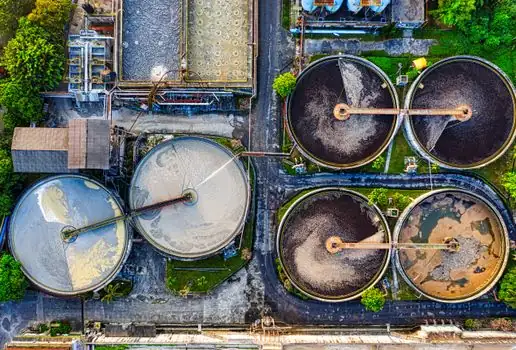
On four engineering decision criteria the tiers diverge sharply. (1) Parameter breadth: Hach and XOS cover the widest menu including TOC, TC, and trace metals; Shanghai Chunye and GAIMC cover the full conventional parameter set (pH, ORP, conductivity, DO, turbidity, SS, residual chlorine, COD, ammonia) but TOC is not in their stated online catalog. (2) Output protocol: Hach's analyzer line ships with 4-20 mA plus Modbus per FILTER's TOC datasheet; Chunye digital sensors expose RS-485/Modbus natively; Badger Meter ties parameter modules into AMI/AMR endpoints and remote telemetry units over its own communication stack [S3][S4][S5]. (3) Wet-side integration: Chunye sells 3/4 NPT digital probes designed for direct in-pipe mounting, GAIMC and Hach favor flow-cell panels and EZ-series assemblies, and FILTER ships analyzer-only units that the buyer integrates into a panel [S3][S4][S6]. (4) Service model: Hach and Badger Meter publish product documentation, CAD/BIM libraries, and calibration services directly; Chinese OEMs sell through OEM/ODM and export channels with English datasheets but limited local service networks outside China [S1][S3][S5].
Where each tier fits in real plant use
Municipal drinking water and large wastewater utilities typically run Hach or Badger Meter parameter modules tied into SCADA over Modbus or 4-20 mA, with Hach's spectrophotometers and turbidimeters used for both lab verification and online process trim [S1][S5]. Pharmaceutical, dairy, and food-and-beverage plants lean on FILTER-supplied HACH and XOS TOC analyzers with discontinuous, low-reagent cycles to control and validate purified water and product rinse water [S4]. Heavy-industrial wastewater, aquaculture, and environmental monitoring in Asia increasingly pair Shanghai Chunye or GAIMC digital sensors with a multi-parameter controller, since the digital probe plus 24 VDC transmitter architecture is easier to scale across many measurement points at lower unit cost [S3][S6]. For application context, see the online water quality analyzer picks for automotive process loops article, which walks through a representative industrial loop.
Selection criteria engineers should pin down before talking to any vendor
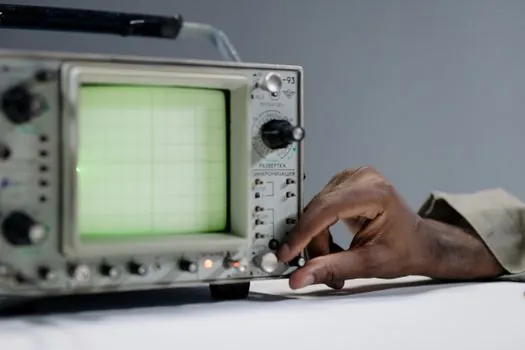
Lock down six items before requesting quotes. (1) Parameter list with range and required accuracy class (e.g. pH 0-14, conductivity 0-2000 µS/cm or 0-20 mS/cm, DO 0-20 mg/L, turbidity 0-1000 NTU). (2) Output: 4-20 mA loop-powered vs RS-485/Modbus digital probe, and whether the existing SCADA expects one, the other, or both. (3) Mounting: 3/4 NPT in-pipe insertion, immersion with submersion bracket, or flow-cell panel with auto-clean [S3]. (4) Maintenance interval: fluorescent DO probes typically run 6-12 months between cap replacements, while polarographic membranes need refills every 1-3 months and turbidity optical windows need scheduled wiper or ultrasonic cleaning. (5) Reagent and consumable model: Hach's Chemkeys and TNTplus chemistries and XOS's consumables are a recurring OPEX line; Chinese OEM probes tend to lower the consumable cost but require periodic electrolyte and membrane replacement [S1][S4]. (6) Compliance documentation: ISO 9001, CE, EMC, and for hazardous-area zones, ATEX/IECEx ratings for the transmitter head.
Limitations, failure modes, and known constraints
Online analyzers drift on three predictable paths: optical fouling on turbidity, TSS, blue-green algae, and chlorophyll probes; membrane and electrolyte depletion on polarographic DO and residual chlorine cells; and reference-junction fouling on pH/ORP probes in high-scaling or oily water [S3]. Self-cleaning options exist: Hach and FILTER highlight ultrasonic or air-burst cleaning on turbidity lines, while Chunye offers wiper-equipped suspended-solids and chlorophyll probes for dirty wastewater [S3][S4]. GAIMC and Chunye catalog fluorescent DO transmitters as the low-maintenance alternative to polarographic cells, at the cost of higher unit price and reduced response below 0.5 mg/L [S3][S6]. TOC analyzers avoid reagent-heavy combustion by running programmable discontinuous cycles, but they still require scheduled pump-tube and catalyst replacement on a 6-12 month cadence [S4].
Standards, sourcing, and a verifiable next step
Drinking-water plants typically anchor online analyzer selection to ISO/IEC 17025-cal lab methods for verification, USEPA-approved methods (e.g. 180.1 for turbidity, 410.4 for COD) as the regulatory benchmark, and Method 415.3 for TOC; wastewater effluent reporting additionally requires US EPA 40 CFR Part 136 methods and ISO 15681 for nutrient parameters. Communication wiring generally follows the 4-20 mA current-loop convention (NAMUR NE 43 for fault signaling) and Modbus over RS-485 for digital probes, which matches the interfaces Hach, Badger Meter, and Shanghai Chunye all publish in their online product lines [S3][S4][S5].
The verifiable next step is to request three side-by-side quotes: one Hach EZ-series panel (or Badger Meter equivalent) for the compliance-grade online parameter, one Shanghai Chunye or GAIMC digital multi-parameter probe for the cost-driven measurement point, and one FILTER/XOS TOC analyzer if pharma or food-and-beverage water is in scope; the response time on datasheets, the stated MTBF on the optical or membrane module, and the reagent OPEX for year one are the three numbers to lock in before issuing a purchase order [S1][S3][S4][S5][S6].
For component-level specifications, see online water analyzer, power quality analyzer, and air quality monitor.