
Automotive paint shops, pretreatment rinses, and cooling-tower loops in 2026 are spec'd around five parameters: pH, conductivity, TDS, turbidity, and free chlorine, with dissolved oxygen and ORP added on nickel-plating and e-coat lines [S4][S6].
Hach, s::can (Badger Meter), YSI, Hanna, and KETOS are the names that consistently appear on automotive RFQs this year, with Martek Instruments and Process Insights rounding out the August 2026 manufacturer ranking [S1][S2][S3][S7].
Where Online Analyzers Actually Sit in an Automotive Plant
An online water quality analyzer on an automotive line replaces the grab-sample routine, sampling rinse water, DI/RO loops, cooling-tower make-up, and boiler feed continuously and pushing values to the PLC or SCADA [S1][S5]. Hach's online analyzer family is built around real-time, continuous measurement using sensors, controllers, and dedicated analyzer panels, with an "EZ Series" front-end aimed at plant operators who don't want a lab-grade footprint [S1]. KETOS frames the same role as a SHIELD unit that runs autonomously, self-calibrates, and reports "lab-accurate" data in ppb resolution to its cloud platform [S5]. s::can, now under Badger Meter, attacks the same problem with a multi-parameter optical probe family that streams pH, free chlorine, and turbidity from a single insertion point [S3].
Automotive buyers should treat three loops as distinct: (1) pretreatment (zinc/iron phosphate, pH 3-5 stage rinses), (2) e-coat / cathodic dip (ultra-clean DI rinse, conductivity below 1 µS/cm), and (3) utilities (cooling tower, boiler feed, chiller). Each loop is dominated by a different parameter set, which is why multi-parameter probes are the workhorse on a paint-shop skid, not a wall of single-parameter benchtop units [S1][S4][S7].
The Five Parameters That Drive Every Automotive RFQ
pH on a phosphate pretreatment line is typically held between 3.0 and 5.5; deviation outside that window means poor coating weight and a downstream re-work queue, so spec sheets call for an analyzer with at least 0.01 pH resolution and automatic temperature compensation [S4][S6]. Conductivity is the gatekeeper for the final DI rinse on an e-coat line, where a reading above 1 µS/cm triggers dump-and-refill logic, and most online conductivity cells in this class deliver 0.1 µS/cm resolution across a 0-2000 µS/cm range [S6][S7].
TDS is a derived value off the conductivity cell on most platforms, but YSI's drinking-water analyzers and Hanna's portable line both report it as a standalone parameter for cooling-tower blowdown decisions, typically with a 0-1000 ppm display range [S4][S7]. Turbidity below 1 NTU is a hard pass/fail on the e-coat DI loop, which is why Hach's online turbidimeters and s::can's optical probes are the most quoted instruments on automotive skid packages [S1][S3]. Free chlorine is critical only on the sanitizing rinse at the end of certain pretreatment stages, with online amperometric cells spec'd at 0-5 ppm and pH-compensated output to the PLC [S3][S6].
Brand-by-Brand Fit: Hach, s::can, YSI, Hanna, KETOS
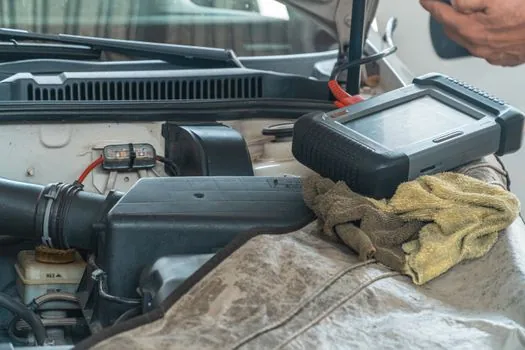
Hach fits the large Tier-1 paint shop that wants one vendor, one reagent shelf, and an established service network: their online catalog is split into "Sensors and Controllers", "Analyzers", "EZ Series", "Water Monitoring Panels", and "Flow" [S1]. s::can (Badger Meter) fits skid builders who want one probe body with a swappable cap for chlorine, pH, conductivity, or turbidity, reducing the number of tap points welded into the rinse tank [S3].
YSI's drinking-water process monitors are a strong match for the utility side of the plant (cooling-tower make-up, boiler feed) where EPA-style methods and long-proven optical DO membranes matter more than paint-shop reagent chemistry [S7]. Hanna is the spec for portable spot-checks and for plants that need a 14-parameter handheld (turbidity, pH, ORP, EC/TDS, DO, ammonium, chloride, nitrate, temperature) to back up the fixed online analyzers [S4]. KETOS is the option for plants that want to skip the PLC integration and read every parameter through a cloud dashboard, with autonomous self-calibration as the headline feature [S5]. For the lower-purity utility side of a gas analyzer room or boiler house, GAIMC's catalog of pH/conductivity/TDS/DO/turbidity/chlorine/heavy-metal online probes is a common China-sourcing alternative [S6].
Selection Criteria That Actually Filter the Shortlist
Five criteria separate a fit-for-purpose automotive analyzer from a generic municipal one: (1) loop compatibility (DI low-range conductivity vs raw wastewater turbidity, never both on one cell), (2) output protocol (4-20 mA + HART or Modbus RTU is the 2026 default, Ethernet-APL is appearing on new builds), (3) reagent autonomy (Hach Chemkeys, KETOS self-cal, s::can factory-calibrated caps each take a different maintenance burden), (4) wetted material (Kynar, PPS, stainless 316L, or titanium depending on the bath), and (5) data integrity (onboard log, cloud push, or SCADA-only) [S1][S3][S5][S6]. The wrong loop on a conductivity cell is the most common automotive-plant failure: a high-range 0-2000 µS/cm cell on a DI rinse gives a useless flat reading and never trips dump logic.
Plants running a moisture analyzer alongside the water loop, for example a compressor or paint-booth air dryer, often co-locate the analyzer panel to share the same 24 VDC power and Modbus drop, which is a useful layout signal when sizing skid space [S1].
Comparison: How the Five Vendors Line Up on the Decision Criteria
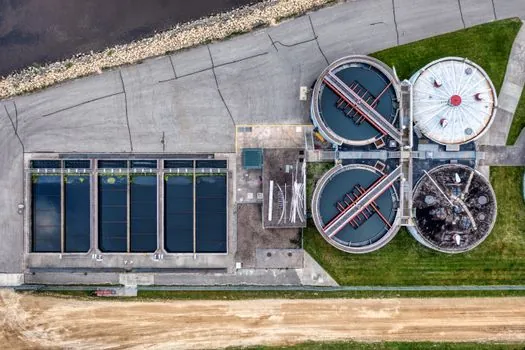
On parameter breadth, Hach and s::can cover the widest parameter list (pH, conductivity, chlorine, turbidity, DO, suspended solids, ozone, ammonia), Hanna is strongest on portable multi-parameter (14 parameters on one handheld), YSI is strongest on optical DO and drinking-water chemistry, and KETOS is strongest on autonomous self-calibration with ppb-level lab accuracy [S1][S3][S4][S5][S7]. On automotive fit specifically, s::can's modular probe body and Hach's EZ Series panel are the two most common skid-build choices, while KETOS is the choice for plants that want a subscription-style cloud readout instead of a hard-wired SCADA tag [S1][S3][S5].
On reagent/service footprint, Hach has the deepest field-service network in North America and Europe, YSI is well-established in municipal water, Hanna dominates the portable spot-check market, KETOS is the cloud-native newcomer, and s::can/Badger Meter bridges the European automotive OEM chain with strong skid-builder relationships [S1][S3][S4][S5][S7]. On price-per-loop, GAIMC and similar Chinese OEM analyzers sit at the budget end with comparable parameter coverage (pH, conductivity, TDS, DO, turbidity, chlorine, heavy metals), making them a frequent second-source on cost-driven automotive programs [S6].
Who This Is For, and Where It Falls Short
Online water analyzers are the right call for any automotive line running continuous chemistry on a pretreatment or e-coat loop, for any utility loop (cooling tower, boiler, chiller) where a grab sample once per shift is not enough, and for any plant with an effluent permit that needs continuous pH and turbidity reporting [S1][S5][S7]. They are not the right call for a small job shop running a single-stage iron-phosphate wash and dumping weekly, where a portable Hanna meter once per shift covers the same control intent at a fraction of the capex [S4].
Failure modes to spec against: chlorine-cell fouling on high-iron baths, turbidity-probe scratch on abrasive pretreat, conductivity-cell coating on oil-contaminated rinses, and reagent exhaustion on unattended panels, all of which show up in OEM service notes and are why Hach bundles a "PICK & SHIP" recurring-supply program and KETOS markets self-calibration as the headline differentiator [S1][S5]. For a power quality analyzer cabinet co-located with the analyzer panel, the same earthing and surge rules apply, which is why automotive plants tend to spec the analyzer panel on a dedicated clean-power drop, not a shared bus.
Trackable next signals: Hach's online catalog continues to expand the EZ Series family through 2026 [S1]; the August 2026 Metoree ranking lists Martek, Process Insights, and Hach in the top three, with no announced vendor consolidation [S2]; KETOS is positioning self-calibration as a standalone selling point versus the grab-sample and third-party-lab status quo [S5]. For related procurement signals, see the e-axle sourcing decision matrix and the PPR pipe selection for cleanroom water loops write-up, both of which touch the same automotive-plant water-side spec chain.