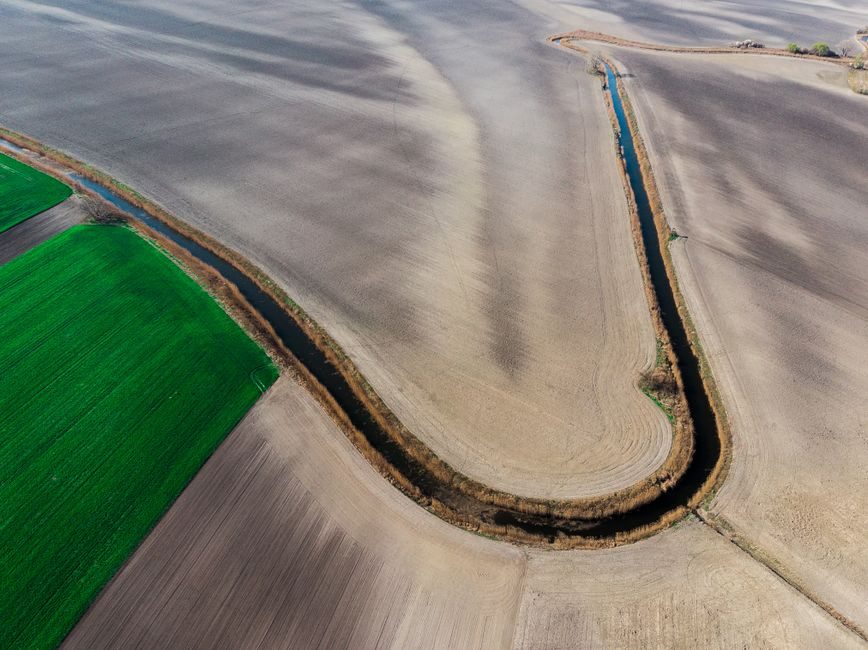
Open channel flowmeters quantify free-surface liquid flow by measuring head upstream of a primary device — typically a weir or flume — and converting that level into volumetric flow via a pre-defined rating curve.
Two reference builds published within the past year confirm the dominant architecture: an ultrasonic probe reads liquid level in the throat or stilling well, while a transmitter performs the head-to-flow calculation and exposes relays, totals, and a data log for SCADA [S1][S2][S3]. Sewage plant outlets, urban water-supply diversion canals, and thermal-power intake channels are the three most-cited duty points [S1][S3].
Sensor technologies: ultrasonic vs. non-contact alternatives
Ultrasonic is the de-facto non-contact level method for open-channel service because it carries no media-contact failure mode and tolerates the fouling common in wastewater [S1][S3]. The Ben-Hua Ultra3 illustrates the typical split: an ultrasonic sensor sits above the throat of a tank weir and feeds a transmitter that runs the rating-curve calculation [S1]. Trumsense's Range 2 economical unit follows the same architecture for diversion canals and power-plant intakes, indicating that the architecture itself — not a single OEM — defines the category [S3].
Non-contact is the headline advantage over submerged probes: the sensor never sees rag, grease, or grit that would blind a submerged level transmitter in raw sewage [S1]. Where ultrasonic cannot reach — high foam, extreme vapor, or very long open spans — radar is a viable non-contact fallback, though it is not described in the supplied source material and should be sized against the application's di-electric and temperature envelope. For an overview of how non-contact level sensing sits inside the broader flow measurement family, see the electromagnetic flowmeter and vortex flowmeter reference entries, which cover the closed-pipe technologies that share the same process-control rooms.
Primary devices: weirs, flumes, and the rating-curve constraint
The transmitter cannot deliver a number until the primary device is named: flow = f(head, primary). The FlowCERT controller exposes 32 universal flow-calculation setpoints, which is the engineering way of saying it has 32 pre-loaded rating curves for the most common flume and weir geometries [S2]. Ultra3 is explicitly sold to work in conjunction with a tank weir, not as a stand-alone flow computer [S1].
Practically, this means selection is a two-step: first pick the flume (Parshall, Palmer-Bowlus, H-flume, trapezoidal) or weir (V-notch, rectangular, broad-crested) for the channel hydraulics; then pick the level instrument and controller that cover that geometry in their curve library. A device with 32 setpoints [S2] covers most plant duty; if your geometry is non-standard, confirm the controller supports a custom curve entry before purchase. Closed-pipe users comparing technologies will recognize the same primary-element-first discipline used for coriolis flowmeter sizing, where the sensor and the process connection drive the spec before the electronics.
Signal stack: relays, data logging, and SCADA outputs
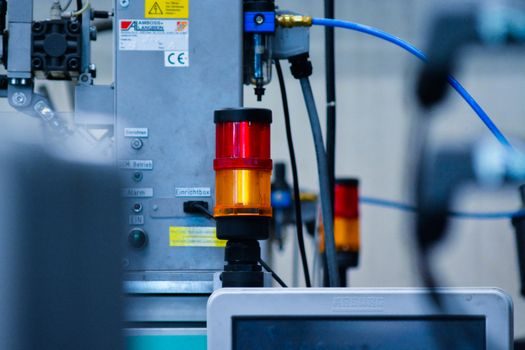
FlowCERT ships with 5 control/alarm relays, flow totalization, and standard on-board memory that retains 1 year of data at 10-minute logging intervals [S2]. That combination — 5 relays + 1-year memory + totalizer + universal calculation — is the practical baseline for a modern open-channel station.
For SCADA integration, look for mA/HART or Modbus on the transmitter so the head value, the calculated flow, and the daily total all reach the plant historian. Penstock control is also a stated FlowCERT function [S2], which is the option you want when the open channel is the inlet to a screen or grit chamber and the gate must move on flow. For comparison with closed-pipe technologies that share the same HART layer, see the turbine flowmeter and ultrasonic flowmeter encyclopedia entries.
Selection criteria, ordered by impact
Use this 4-criterion ranking when short-listing: (1) Primary device match — does the controller's curve library cover your weir/flume geometry [S2]? (2) Channel dimensions — Range 2 is named for short diversion canals [S3]; longer throats need a sensor with adequate beam angle and dead-band. (3) Fouling and chemistry — non-contact ultrasonic wins in sewage [S1]; corrosive or sticky media need a stilling well to protect the sensor face. (4) I/O and logging — minimum 5 relays, 1-year on-board memory, mA/HART, and totalizer [S2].
A weighted view: for raw sewage and stormwater, a non-contact ultrasonic paired with a Parshall flume and a 5-relay controller is the default build [S1][S2]. For clean water-supply canals the same architecture applies but with tighter accuracy needs, so specify a higher-resolution ultrasonic probe and confirm the controller's curve library covers your exact flume [S3]. For power-plant intake channels, match Range 2-class economics to a long-throat Parshall and verify penstock control is wired [S2][S3].
Who this is for — and who it is not for
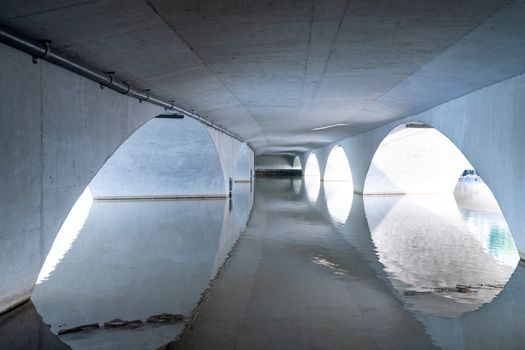
This instrument class is the right pick for free-surface flow in weirs and flumes at sewage works, water-supply canals, irrigation laterals, and power-plant intakes [S1][S3]. It is the wrong pick for full-pipe flow, for high-pressure process lines, and for any duty that requires a custody-transfer-grade accuracy statement — closed-pipe technologies such as coriolis flowmeter or turbine flowmeter belong there. It is also a poor fit for media that foam heavily or carry large floating debris that would shield an ultrasonic beam.
For shop-floor metrology cells that need non-contact dimensional checks rather than flow, the selection logic differs — see the optical comparator selection criteria article, which applies the same sensor-first discipline to a different measurement.
Failure modes and installation constraints
Three failure modes dominate the field. (1) Foam and vapor blinding the ultrasonic beam — mitigate with a stilling well or a foam-dampening nozzle. (2) Siltation in the flume throat changing the rating curve — schedule annual re-survey of the primary device. (3) Sensor misalignment after channel works — re-verify the blanking distance and the calibration setpoint after any civil change. The 1-year on-board log at 10-minute intervals [S2] is short enough to catch all three with routine SCADA polling.
Standards discipline: open-channel calculation methods trace back to ISO 1438 (weirs) and ISO 4359 (flumes); controllers that publish 32 setpoints [S2] are typically pre-loaded to those curves. Confirm this in the OEM manual before specifying — do not assume "universal" covers a non-standard geometry without a custom-curve entry path.
Comparison against closed-pipe alternatives
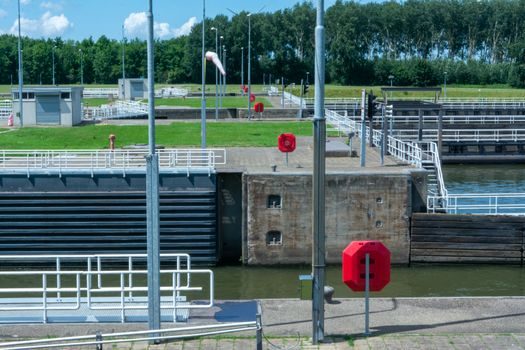
On four decision criteria the open-channel class lines up against the closed-pipe classes as follows. (a) Accuracy: open-channel is generally lower than Coriolis and only competitive with carefully built flumes. (b) Cost per measurement point: open-channel is the lowest-cost option for free-surface flow. (c) Maintenance burden: non-contact ultrasonic is the lowest in the open-channel class [S1] but still higher than a fully-buried electromagnetic flowmeter on a clean water line. (d) Suitability for dirty/abrasive media: open-channel ultrasonic is the best of the four; closed-pipe meters require lined or special-alloy tubes in the same service. A plant running mixed duties — clean cooling water, raw sewage, and chemical dosing — typically specifies all three classes from the same vendor family to share the HART maintenance stack.
Trackable signals for the next procurement cycle
Two verifiable signals to watch through the rest of 2026: (1) OEM release of expanded curve libraries covering non-standard flume geometries — FlowCERT's 32 setpoints [S2] is the current practical ceiling and is the metric to beat. (2) Integration of cellular or LoRa telemetry into the controller's standard build, which would change the deployment math for remote irrigation sites where SCADA wiring is the dominant installed cost [S2]. For related dosing-skid selection where conductivity and flow are specified together, see the conductivity meter selection criteria article.