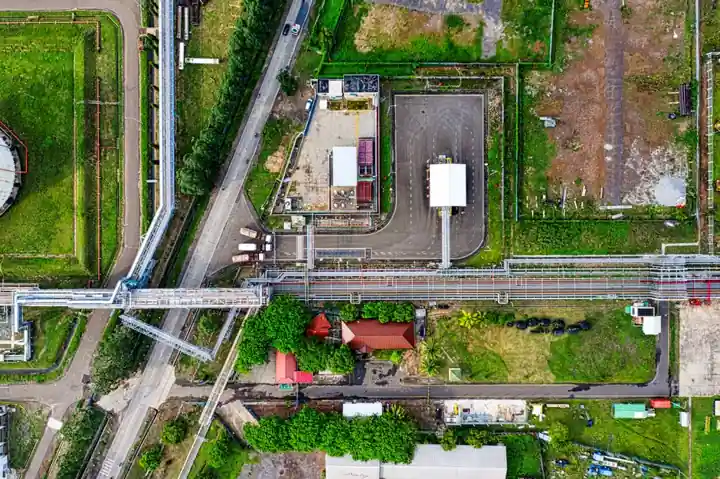
Open-path infrared gas detectors do not report a single concentration; they integrate the gas cloud along the beam and express the reading in LEL·m, the product of local concentration and path length, with standard models set to alarm at 50% LEL·m, providing early warning ahead of point detectors at 100% LEL·m [S2][S8].
Point LEL sensors, by contrast, use volumetric %LEL setpoints: 10% LEL warning and 20% LEL alarm are the documented default for both fixed and portable monitors under OSHA-aligned configurations [S1][S4][S5].
What LEL·m actually means on an open-path beam
Open-path gas detectors integrate concentration over the beam path, so a 100% LEL cloud that is 0.5 m thick reads as 0.5 LEL·m, the same as a 50% LEL cloud filling a 1 m slice of the beam [S2]. This is why a 50% LEL·m alarm is functionally a fractional-cloud trigger, not a fractional-concentration trigger.
For methane (LEL = 5.0% vol), 1.0 LEL·m corresponds to 5.0%·vol over 1 m of path, or 2.5%·vol over 2 m; the relationship scales linearly with path length and gas type, which is why a single 50% LEL·m setpoint has to be cross-checked against the worst-case LEL of the target gas list [S4]. A complementary open-path flowmeter shares the line-of-sight measurement concept but operates on a different physical principle (water surface detection), which is why it is not interchangeable with flammable-gas open-path units.
Default setpoints: open-path vs point LEL
The LBNL PUB-3000 specification requires fixed flammable-gas detection systems to be listed by UL, FM, CSA, or the California State Fire Marshal, and to alarm at 20% LEL with a separate 10–15% LEL warning relay and an independent trouble relay [S1]. Industrial Scientific's published default table aligns exactly: 10% LEL low, 20% LEL high, field-adjustable over 0–60% LEL on most LEL/CH4 sensors [S5].
For open-path detectors, peer-reviewed field testing reports a 50% LEL·m alarm as the standard factory setting, chosen so the beam triggers before the integrated cloud reaches a stoichiometric 100% LEL concentration across the protected path [S8]. Dräger's Polytron 8700 IR (point) and Pulsar 7000 (open-path) product lines are explicitly differentiated this way: point units read in %LEL, open-path units read in LEL·m [S3].
Selection criteria: when to use open-path vs point
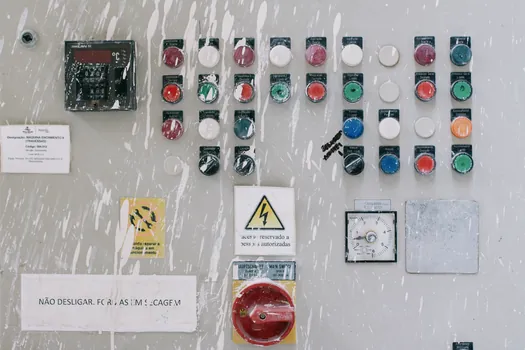
Open-path detection is specified for line-of-sight coverage over distances typically 4–120 m, large outdoor process areas such as LNG loading arms, tank farms, compressor stations, and turbine enclosures where a gas cloud could drift across a wide footprint before reaching a point sensor [S2][S3]. Coverage mapping per the geographic method uses a 5 m diameter 100% LEL cloud for enclosed, 8 m for semi-enclosed, and 10 m for open environments, with a rounded-cylinder field-of-influence for each open-path beam [S2].
Point LEL sensors are the right tool for confined-space entry, leak pinpointing at flanges and valves, and personal monitoring, with 4-gas (LEL/O2/H2S/CO) diffusion or pumped units as the typical configuration [S4]. A gas detector or combustible gas detector in point form cannot substitute for an open-path beam in large-volume outdoor coverage, and vice versa; they complement each other in layered plant designs.
Setpoint comparison: open-path LEL·m vs point %LEL
The two setpoint families are not directly convertible, because LEL·m is an integral and %LEL is a scalar. The table below lines up the decision criteria an engineer weighs when setting each: [S2]
Open-path (50% LEL·m warn / 100% LEL·m alarm typical): best for large open or semi-enclosed areas, drift detection, beam paths of 4–120 m, wind-exposed sites; setpoint is in fractional-cloud units, so it is independent of cloud thickness; not suitable for pinpointing or confined-space entry [S2][S3][S8]. Point LEL (10% LEL warn / 20% LEL alarm default, 0–60% LEL adjustable): best for confined-space, leak pinpointing, personal monitors, indoor well-ventilated process skids; setpoint is a concentration; performance degrades in wind because the cloud may bypass the sensor head [S1][S4][S5]. Both require gas-specific correction factors, since a methane-calibrated sensor reading 50% LEL in pentane (LEL 1.8% vol) is effectively at 100% LEL [S4].
Real-world setpoint choices and failure modes
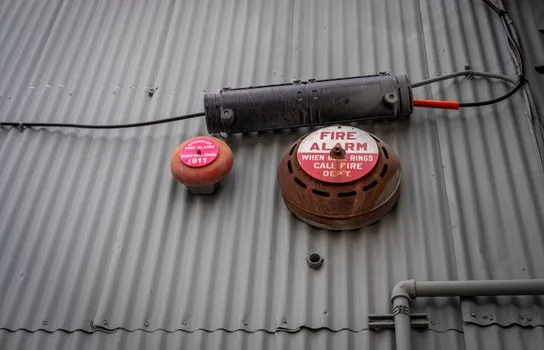
Field engineers regularly push the point-detector alarm down to 10% LEL rather than the 20% LEL OSHA-cited default, on the rationale that LEL sensors do not discriminate target gas: a methane-calibrated head exposed to pentane can under-report by roughly 2× at the same readout [S4]. Open-path setpoints are similarly tuned down from 100% LEL·m to 50% LEL·m to give the fire-and-gas system time to initiate isolation before the integrated cloud reaches stoichiometric concentration [S8].
Failure modes to spec around: fog, snow, or beam blockage can desensitize an open-path unit; catalytic-bead point sensors can be poisoned by silicones, lead, or sulfur compounds and will read low after exposure, which is why bump testing with calibration gas on a defined schedule is mandatory in LBNL's procedure and aligns with NFPA maintenance practice [S1]. Both detector families must drive a separate trouble relay for malfunction, distinct from the warning and alarm relays, so a sensor failure cannot masquerade as a clean bill of health [S1].
Standards and codes anchoring the setpoints
The 10% LEL warning and 20% LEL alarm defaults trace back through OSHA's combustible-gas citation framework and are echoed in LBNL PUB-3000 Appendix A, which requires UL/FM/CSA listing, separate warning/alarm/trouble relays, fixed-in-place hardware, and a licensed PE plus EH&S industrial-hygienist sign-off on toxic and oxygen designs [S1]. Coverage-mapping practice references BS 60080:2020 and ISA TR84.00.07 for fire-and-gas performance methodology, with HSE OTO-93-002 as the underlying 6 m stoichiometric cloud experiment [S2].
Coverage and setpoint choices on real projects are increasingly cross-checked with dispersion modeling (CFD) to replace the 5/8/10 m spherical-cloud defaults, particularly for congested modules where the historical 5 m spacing rule no longer applies after BP's 2017 general practice update [S2]. For related process-control coverage decisions, see the spec-based selection logic in HP Bearing Pile vs W-Shape spec-based selection for driven foundations and the engineering trade-off framing in SF6 gas-insulated vs air-insulated load break switch design trade-offs, both of which use the same criteria-based comparison discipline.