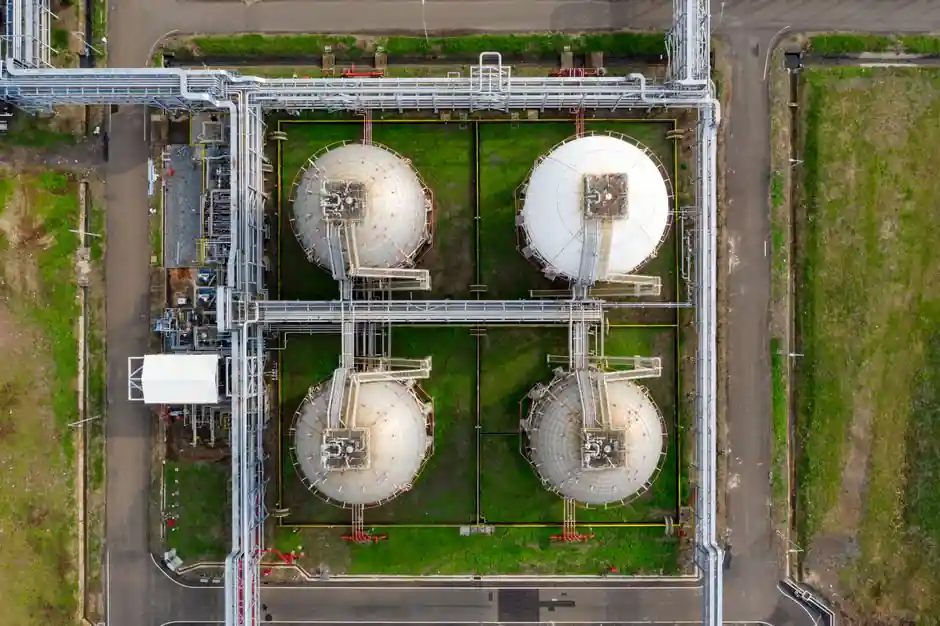
Open path gas detectors are line-of-sight infrared or ultraviolet beam systems whose path length defines the protected area: short-range kits start at roughly 5 m, mid-range units cover 30–120 m, and the long-range Searchline Excel Edge extends to 330 m (1,082 ft) for hydrocarbon detection [S3][S5].
Path length is a hard constraint in the spec sheet, because the same optics that catch a 0–5 LEL·m methane cloud at 5 m will run out of signal margin at 200 m, which is why vendors segment products into short, medium, and long range families rather than offering one adjustable beam [S1][S6].
What "open path" means and why path length is a spec, not a knob
Open path detection uses a separate transmitter and receiver, with the gas cloud crossing the beam between them; the reading is reported in LEL·m (lower explosive limit times metres of beam), a unit that combines gas concentration and path length into a single integrated signal [S1][S3].
That unit is the reason a 5 m short-range system and a 200 m long-range system can both use the same 0–5 LEL·m scale: doubling the path at fixed gas density doubles the integrated reading, so the receiver has to be designed for the specific minimum and maximum optical path it will see [S3]. The Wikipedia entry on infrared open-path detection covers the optical principle, and the broader category page on gas detection instruments shows how open-path fits beside point and catalytic-bead families. For flammable-vapour service in particular, the combustible gas detector category is the natural parent classification.
Short-range models: 5–30 m and the aperture kit trick
Det-Tronics' Open Path Eclipse (OPECL) is specified for 5–120 m on a 0–5 LEL·m scale, with a dedicated aperture kit supplied for short-range applications to prevent receiver saturation when the beam is too strong [S3].
The aperture approach is the standard way one detector family covers both a 7 m cabinet-room span and a 120 m turbine hall: the same transmitter/receiver optics ship with a clip-on aperture that knocks down the received signal at short range, and the installer removes it at long range [S3][S6]. Honeywell's Searchline Excel covers short to long range in the same product line, with a T90 response under 3 seconds, operating temperature of -40 to +65 °C, and a patented double band-pass filter that keeps the unit on-spec through fog and rain [S1]. For interior skid packages, fume hood arrays, and analyser shelters, short-range 5–30 m beams are the norm because the alternative, packing the same area with point detectors, multiplies cost per square metre.
Mid-range workhorse: 30–120 m and the toxic 60 m ceiling
Most hydrocarbon open path detectors sold today sit in the 30–120 m band: GDS Corp's Spectrex line is specified 7–200 m on infrared, Det-Tronics' OPECL runs 5–120 m, and the generic industry summary groups short to medium at 5–120 m [S3][S4][S6].
Toxic-gas open path detectors run shorter than hydrocarbon units because the UV absorbance bands of H2S, NH3, and chlorine are weaker and the regulatory alarm thresholds are in ppm, not LEL·m: Emerson's Rosemount UV open path toxic detector is rated to 60 m (200 ft), roughly a quarter of the hydrocarbon long-range ceiling [S2]. That 60 m toxic ceiling shows up across vendor line-ups and is the practical limit before false alarms from rain, snow, and partial obscuration dominate the signal budget.
Long-range edge: 200–330 m and the 1,082 ft record
The Searchline Excel Edge from Honeywell extends the maximum operating distance to 330 m (1,082 ft), which Det-Measure described in 2021 as a "best in class" figure specifically aimed at monitoring entire brine pond lengths from a single beam [S5][S8].
Cross-checking vendor claims, the 200 m figure is the most common long-range ceiling on general-purpose IR hydrocarbon detectors, and 330 m sits as the upper outlier [S4][S6][S8]. The engineering reason long-range units are not simply "more powerful" is signal-to-noise: at 330 m the receiver sees roughly 1/100th of the photons it sees at 30 m (inverse square), so the lamp current, optical band-pass filter, and detector noise floor all have to be re-engineered, not just scaled, and that is why long-range products ship as their own SKU with separate approval files [S5].
Selection criteria: gas type, path length, climate, and false-alarm rejection

Three criteria decide the model: target gas (hydrocarbon IR vs toxic UV), required path length (5–30 m short, 30–120 m mid, 120–330 m long), and environmental false-alarm rejection (sun, fog, flare stacks, partial obscuration) [S1][S2][S3].
Hydrocarbon IR beams are the default for LEL·m coverage of methane, ethane, propane, and mixed refinery gas; toxic UV beams are the default for H2S and NH3 where ppm sensitivity matters more than path length [S2]. For comparison across the three product tiers, a short-range IR beam (5–30 m) is cheap and forgiving but needs an aperture kit to avoid saturation; a mid-range IR beam (30–120 m) is the volume seller and covers most refinery unit perimeters; a long-range Edge-class beam (200–330 m) is justified only when one beam replaces several mid-range units across a tank farm, brine pond, or LNG jetty [S3][S5][S6]. Climate is the disqualifier: detectors without a double band-pass filter or equivalent will false-alarm in heavy fog, which is the documented failure mode the Searchline Excel design explicitly targets [S1].
Operating limits and failure modes engineers should not ignore
Open path detectors report 0–5 LEL·m on the standard Searchline Excel, with high alarm at 3 LEL·m and low alarm at 1 LEL·m; T90 response is under 3 seconds, and the operating envelope is -40 to +65 °C [S1].
Partial beam obscuration is the documented failure mode that separates serious designs from cheap ones: the Searchline Excel is specified to "correct operation under partial obscuration conditions," and vendors warn that competitive devices sometimes mask this weakness with software tricks that compromise gas detection [S1]. Alignment tolerance is the second practical limit: OPECL ships with a sample-and-reference detector arrangement and a HART field communicator calibration path specifically to keep alignment drift from silently killing coverage [S3]. For engineers comparing life-cycle cost, the relevant trade-off is laid out in open path vs point detectors: per-metre coverage cost compared, and the alarm-threshold side of the same spec is covered in open-path gas detector alarm setpoints in LEL·m.
Sign-off checklist and trackable signals
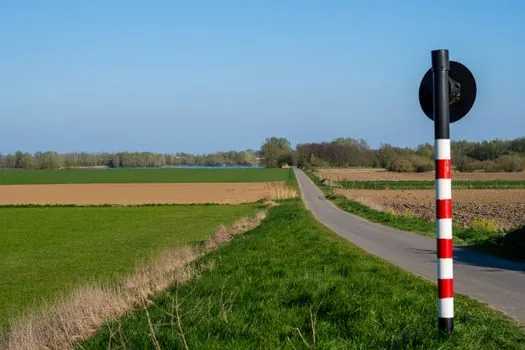
A specifier should walk away with four numbers locked in: target gas and wavelength (IR 2–5 µm for hydrocarbons, UV 200–300 nm for toxic), minimum and maximum path length (5 m to 330 m depending on tier), LEL·m alarm setpoints (1 low, 3 high on Honeywell units), and operating temperature (typically -40 to +65 °C) [S1][S2][S3].
Trackable signals to watch: any new vendor publishing a 400 m+ path length on a hydrocarbon IR beam, and any update to FM/CSA approval files for short-range aperture kits, since those two changes would shift the 5–330 m envelope that currently anchors the market [S3][S5].