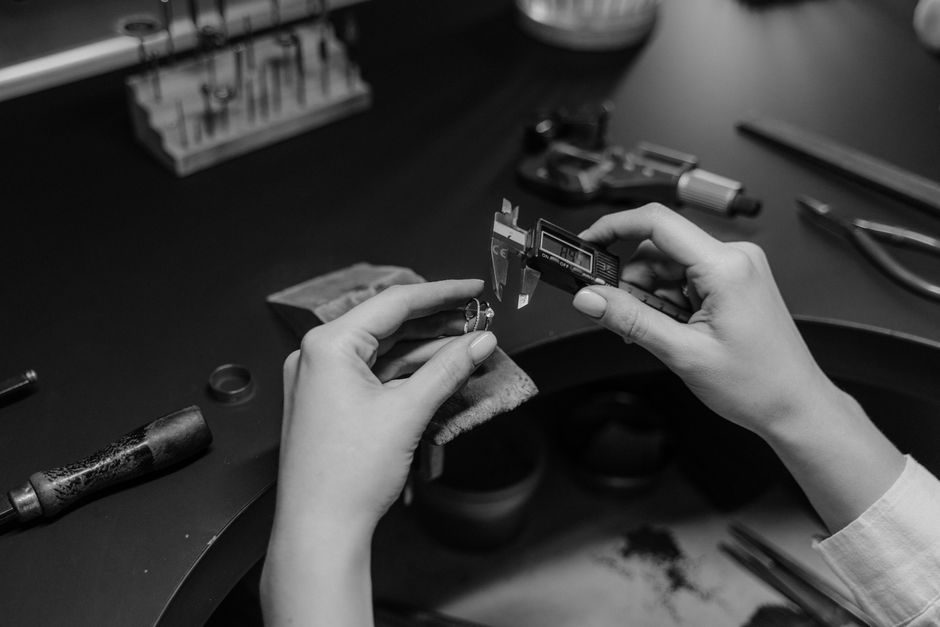
An optical comparator projects a magnified silhouette onto a glass screen so the operator measures the part against a scale or via an edge sensor, whereas a caliper reads a single linear dimension between two jaws and a caliper micrometer resolves a single diameter to ±0.001 mm on a thimble.
On a 2026-05 DirectIndustry index, the optical-comparator manufacturer category lists 5 companies and 6 products [S1]. On the demand side, Keyence markets the IM-8000 instant-measure system as a "place and press" replacement for both optical comparators and vernier calipers, with single-part measurement runs of ~1–3 s [S2].
Working principle and measurable envelope
An optical comparator (profile projector) shines collimated light through or onto the part, projects a magnified shadow onto a screen 300–600 mm in diameter, and reads dimensions from a reticle or an automated edge-detection unit. The 2026 vendor index groups six products from five manufacturers, with working envelopes typically between 200 × 150 mm and 400 × 300 mm on the stage [S1]. A Keyence IM-8000 instant-measure system, by contrast, captures a full field in one snapshot, with the manufacturer citing a 1–3 s per-part measurement cycle [S2].
A vernier caliper typically resolves to 0.02 mm over a 0–300 mm range, and an outside micrometer to 0.01 mm (or 0.001 mm on a vernier thimble) over 0–25 mm per anvil pair. Both are point-to-point instruments: you place the jaws, you read the dimension. They cannot quantify form, angularity, or radius without an additional calculation or accessory.
Selection criteria: accuracy, field of view, speed, operator skill
Three criteria separate the three families in practice. Accuracy: micrometer ±0.001 mm on small dimensions; caliper ±0.02 mm typically; optical comparator ±(0.05% + 5 µm) on the projected image, with magnification from 10× to 200× [S1][S2]. Field of view: a micrometer sees one OD at a time, a 300 mm caliper sees one linear dimension at a time, a 300 mm comparator screen sees the whole 2D silhouette.
Speed and skill: an instant-measure microscope completes one full 2D dimension set in roughly 1–3 s, which Keyence positions against manual comparator and caliper workflows where an operator walks the edges with a cursor [S2]. Manual optical comparators still demand a trained operator to align the part, focus, and read the reticle; calipers and micrometers require only the ability to feel the correct contact pressure. For high-mix, small-batch shops, the skill ceiling is often the deciding line.
Options compared on four decision criteria

The table below lines the three instrument families against the four criteria that actually drive a purchase order in 2026. [S1]
Criterion 1 — Accuracy on a single dimension: micrometer wins (0.001 mm); caliper next (0.02 mm); optical comparator last (typically ≥0.01 mm on screen, plus pixel/edge-detector error). Criterion 2 — 2D profile, radius, angle: optical comparator wins because the projected silhouette is the measurement, not a single dimension; instant-measure microscopes cover this with software auto-edge tools [S2]. Criterion 3 — Throughput on small parts: IM-8000 instant-measure at ~1–3 s per part outpaces manual optical comparator and caliper routines, where the operator drives a stage or slides a jaw for each feature [S2]. Criterion 4 — Operator skill and inspection routine: caliper and micrometer need the least training; optical comparator mid; instant-measure microscope is the most automated but requires fixture and recipe setup up front.
Who it is for — and who it is NOT for
Optical comparators fit QA rooms that measure formed sheet, stamped profiles, threaded sections, and small turned parts where 2D geometry matters more than absolute dimension. They are NOT for high-mix, sub-µm tolerance work — that belongs on a vision measuring machine or a coordinate measuring machine. [S2]
Calipers and micrometers fit machine-shop benches, receiving inspection, and field service where a single dimension has to be checked quickly. The micrometer is the right pick when you need a single diameter to 0.001 mm and the part fits between the anvil and the spindle. Neither is right when the spec calls for GD&T form tolerances, runout, or full profile capture — there, a comparator or an optical comparator with edge detection is the honest tool. Engineers selecting calibration-bench fixtures may cross-reference gauge block work when settling length-standard traceability.
Use cases pulled from current vendor positioning
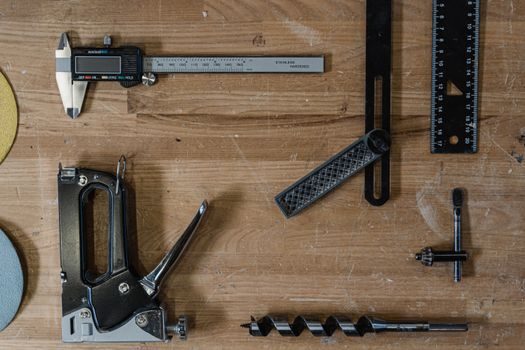
Keyence's 2026-05 product page groups the IM-8000 instant-measure system with measuring microscopes and optical comparators as a single "place and press" workflow aimed at "fast dimensional measurements over a large area" [S2]. DirectIndustry's manufacturer index for 2026-05 lists 5 vendors and 6 profile-projector SKUs, which is the live catalog the procurement team is searching through when the spec sheet says "screen diameter ≥ 300 mm" [S1].
A typical QA workflow on a stamped bracket: optical comparator for first-article inspection of the profile, micrometer for the critical hole diameter, caliper for the as-received dimensional check. The three instruments do not replace each other; they cover three different decision gates on the same part. On calibration routines for mechanical strength tests, you can also weigh the lab setup against a spectrum analyzer calibration path.
Limitations, failure modes, and standards touchpoints
Manual optical comparators fail when the operator misreads the reticle, when ambient light leaks into the projection path, or when the part height exceeds the depth of field at the chosen magnification. Automated edge-detection units (and instant-measure microscopes) trade that human error for a calibration dependency on the pixel scale and the focus curve, so the calibration interval is the new failure mode [S2].
Caliper and micrometer errors usually trace to parallax, worn anvils, thermal expansion of the part (steel gains ~0.001% per °C), or zero-drift on a digital caliper. None of the three instrument families is a length standard on its own — traceability runs back to gauge blocks or laser interferometers per ISO 3650. For work that sits at the boundary of dimensional and electronic measurement, the load cell side of mechanical strength testing covers the force-channel equivalent of the same traceability argument.
Sourcing, vendor count, and 2026 signals
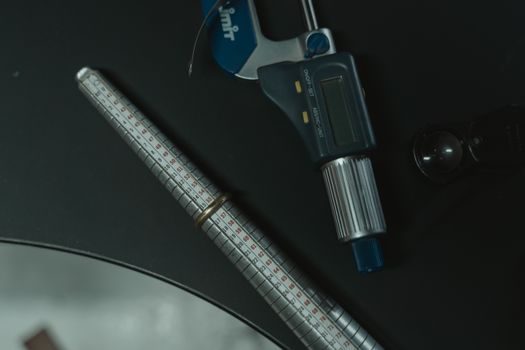
On 2026-05-24, the DirectIndustry optical-comparator manufacturer index showed 5 companies and 6 products in the category, with the standard "compare this product / remove from comparison tool" tooling on each listing [S1]. On 2026-05-29, Keyence's India product page positioned the IM-8000 instant-measure system, the measuring microscope, and the optical comparator as three routes into "fast and easy measurement over a large area" [S2]. On 2026-05-30, the Keyence America resource hub cross-linked photochemical-etching application notes and profile-projector support under a single optical-comparator umbrella [S3].
Trackable next signals: the DirectIndustry product count and vendor count for the optical-comparator category on a 90-day refresh cycle [S1], and any new IM-series instant-measure system release from Keyence that pushes the per-part cycle below the current 1–3 s window [S2]. A third signal worth watching is the optical glass supply note on the comparator lens — when a vendor specifies a new crown-flint element, expect a change in chromatic-aberration behavior on the projected edge.