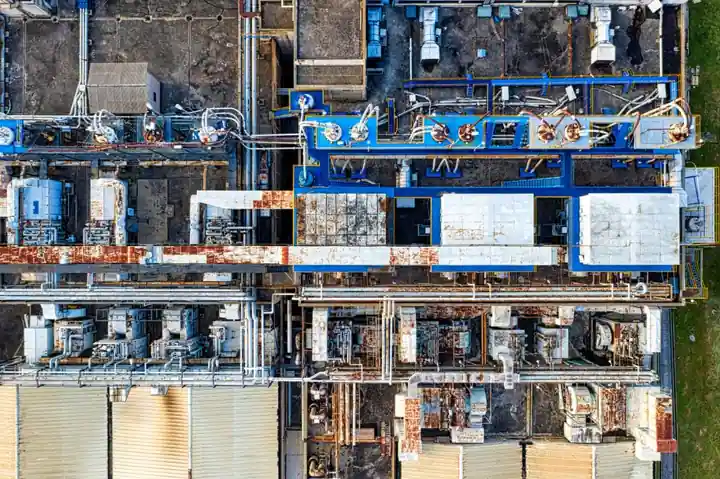
OT security assessment quotes are rarely flat fees because they depend on project-specific factors such as site footprint, asset criticality, and assessment scope.
Budgeting should distinguish a basic network survey from a full adversarial penetration test because the scope and specialized engineering effort differ.
What Determines a Single-Plant OT Assessment Price
The primary cost drivers are site footprint, asset criticality, and whether a basic network survey or a full adversarial penetration test is required.
These variables explain why an OT assessment does not carry a defensible universal price. A plant-safe OT cybersecurity assessment should include passive network capture, hands-on review with operations, an asset inventory, a network map, findings ranked by operational risk, and a remediation roadmap.
Assessment Scope Versus Penetration Testing
A plant-safe assessment normally begins with perimeter and passive discovery, then covers the control room and field equipment without sending traffic to a running controller without operations approval [S3]. The deliverable normally includes an asset inventory, network map, findings ranked by operational risk, and a remediation roadmap [S3].
A penetration test is different because engineers actively attempt to exploit identified weaknesses and demonstrate business impact. Specialized engineering hours command different rates than automated scanning tools.
The choice is straightforward: a network assessment establishes exposure, configuration weaknesses, and compliance gaps through passive monitoring, configuration review, and approved vulnerability scanning. A penetration test demonstrates exploitability and impact, making it appropriate only where active validation and a controlled test window are justified [S2].
Which OT Environments Fit Each Engagement

A questionnaire or paper gap assessment provides a framework comparison without proving what is connected to the network, so it suits preliminary screening, budget planning, and organizations that need a compliance gap list [S3]. It does not establish the real exposure of a live control environment.
A plant-safe technical assessment is suited to operating industrial plants because it traces the path from the industrial DMZ at Level 3.5 down to PLCs, remote terminal units, safety systems, drives, and analyzers [S1][S3]. It is also the appropriate starting point for chemical, oil and gas, power, water, manufacturing, port, and terminal environments where availability and safety take priority [S3].
A full adversarial penetration test fits security owners who need validated exploit paths, but it is not the best value for a small or operationally sensitive plant seeking an initial asset inventory and risk roadmap [S2][S3]. Organizations using IEC 62443 should also examine how IEC 62443 security levels compared affect the evidence and controls required at each site.
Cost Drivers That Matter Most
Site footprint is a direct cost driver because each additional location adds travel, permitting, and coordination overhead. A single office building is materially simpler than an estate spanning remote refineries, a pipeline control center, and corporate headquarters [S2]. Remote-only delivery may reduce labor and travel costs, but it can miss physical-layer and field-access issues that require a plant walkdown [S2].
Legacy equipment adds labor rather than simply adding software licenses. Controllers with limited network stacks, old operating systems, and constrained patching options require conservative procedures and may need engineered workarounds during testing [S1]. A supplier quote should therefore separate travel, on-site engineering, passive-analysis hours, report preparation, and any active test phase rather than presenting one undifferentiated day rate.
Safety and Downtime Constraints
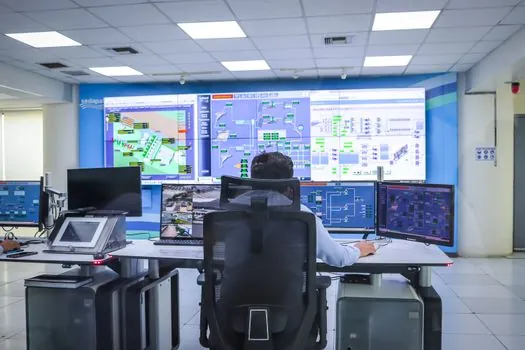
The work is passive by default because an IT-oriented port scan can exhaust a controller connection table or fault a CPU into a STOP condition [S1]. The assessment method therefore centers on copied traffic from a switch span port, reviewed configuration, and plant walkdowns, with no data sent to a controller unless operations has approved that step [S1][S3].
It is what can reach the controller, from where, and what operational or safety consequence would follow [S1]. This framing shifts the assessment from a generic IT audit toward reachability, exposure, and consequence analysis across the Purdue model.
That approach also changes the expected schedule. One plant assessment is commonly a few days on site plus analysis and reporting time, while a full site engagement can run three to four weeks [S1][S3]. Downtime is not a routine deliverable of a properly scoped passive assessment, although agreed testing may still require an outage or off-shift window [S1].
Compliance, Evidence, and Total Cost
NIST SP 800-82 Rev. 3, IEC 62443, and NIS 2 address different parts of the assessment and should not be treated as interchangeable choices [S1]. A plant subject to NERC CIP requires a different evidence package from a private manufacturing site aligned with ISO 27001, and IEC 62443 alignment adds zone, conduit, and trust-boundary documentation [S2].
Purchase price is only part of the financial case. Passive assessment reduces the chance of an assessment-caused outage, while the resulting inventory and remediation roadmap can reduce duplicated discovery work, unnecessary scanning hardware, avoidable engineering changes, and repeated consultant mobilization [S1][S2]. Long-term monitoring or managed services may add recurring cost, but they can extend the useful life of the assessment by tracking remote access, flat networks, shared accounts, and remediation evidence [S3].
Automated OT assessment platforms offer a different procurement model. One published platform price starts at $5,000 per location for one year and allows multiple assessments during that period, while its vendor reports approximately 57% less assessment work time [S5]. This is not equivalent to a consultant-led live-plant engagement: it represents a software-led assessment and reporting option rather than a substitute for the plant-specific engineering scope [S5].
Planning the Plant Budget

For a small single-line plant, the defensible starting budget is $8,000–$15,000, while a full site with several production areas generally requires $18,000–$35,000 [S1]. A plant with multiple remote locations, hundreds of endpoints, thousands of sensors, or extensive legacy equipment should expect quotations above $40,000 [S1][S2].
Ask bidders for a work breakdown covering passive network assessment, configuration review, engineering interviews, field walkdowns, risk ranking, compliance mapping, and report delivery. Any active penetration-test phase should be separately priced with its safety plan, test window, escalation rules, and evidence requirements [S2][S3].
The next procurement checkpoint is the signed scope: site count, assessed Purdue levels, asset inventory, protocols, controller and HMI counts, required standards, test method, reporting depth, and remediation support. If those fields are defined, the quote can be compared on hours and deliverables rather than on a headline price [S1][S2][S3].