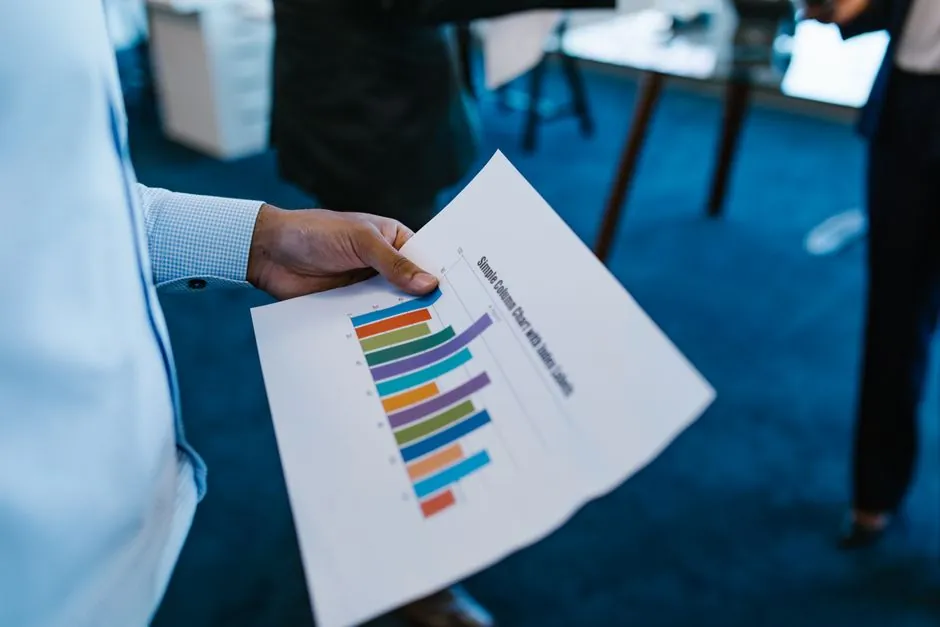
Alkaline water electrolysis leads the 2015–2025 patent sample with 1,112 of 1,347 patents, compared with 214 SOEC patents and 21 PEM patents.
The comparison covers alkaline, PEM, and SOEC electrolyzers for hydrogen production, using operating density, response behavior, efficiency, capital cost, materials, and heat integration as selection criteria [S1][S4][S7].
Market share cannot be inferred from patents
No audited 2026 global installation or revenue share for PEM, alkaline, and SOEC is present in the supplied evidence, so a percentage split would be unsupported. The defensible market-position indicators are technology maturity, patent activity, manufacturing depth, project economics, and the PEM electrolyzer market estimate of USD 1,462.4 million for 2026 [S4][S6].
Alkaline is the most mature route, with low capital cost, established manufacturing capacity, long operating lives, and 1,112 patents in the analyzed 2015–2025 dataset [S3][S4]. PEM is more compact and responds faster, while SOEC is a high-temperature system designed to use heat for higher system efficiency [S4]. These are different measures of market position: patent volume does not equal operating capacity, and a market-value estimate does not disclose the installed-base mix.
For procurement decisions, the practical 2026 hierarchy is alkaline for cost-sensitive, steady baseload production; PEM for compact systems and variable renewable input; and SOEC for projects with dependable high-grade waste heat. The patent distribution supports alkaline's maturity, not a claim that it holds a specific share of 2026 global capacity [S3].
Alkaline, PEM, and SOEC compared
PEM also supports compact installation and rapid response to intermittent renewable generation [S4].
Alkaline offers the lowest capital-cost profile and the deepest manufacturing and materials base, but it is less suitable where footprint and fast load-following dominate the design [S2][S4]. PEM carries higher material cost because it uses platinum-group metals, while its power density and operating flexibility can justify that penalty in smaller or variable-load installations [S2][S4].
SOEC is the strongest option only when the plant can maintain steady heat. One technology comparison estimates about 30% less power than PEM or alkaline under that condition, while emphasizing that the advantage depends on sustained thermal input [S7]. Without a continuous heat source, the efficiency advantage can disappear into thermal integration complexity [S7].
Select by operating profile, not technology labels
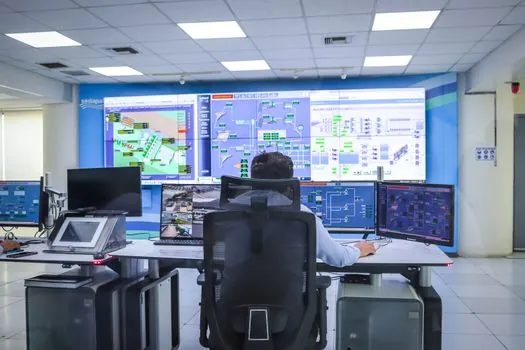
PEM is dynamic and compact [S2].
Alkaline is the better fit for large, steady hydrogen-production facilities where low capital cost, proven supply chains, long operating lifetimes, and abundant renewable electricity matter more than compactness or second-to-second load following [S4]. It is less attractive for sites with limited floor space or a duty cycle dominated by sharp renewable-power swings.
SOEC fits industrial parks, steam-intensive facilities, and synthetic-fuel projects with continuous waste heat at the required operating level. Its heat utilization can provide superior system efficiency and about 30% lower power demand than PEM or alkaline when steady heat is available [S4][S7]. It is not the default choice for a small standalone installation without dependable heat.
Materials and supply constraints define the downside
PEM relies on rare platinum-group metals [S2].
Huaneng Clean Energy Research Institute leads with 23 alkaline patents focused on nickel-based catalyst optimization, while the Dalian Institute of Chemical Physics, CAS, contributes 18 alkaline and 9 SOEC patents advancing perovskite electrode materials and zero-gap architectures [S3]. SOEC innovation includes nine Samsung Electro-Mechanics patents targeting metal-supported cell architectures, while the Dalian Institute of Chemical Physics, CAS, contributes 18 alkaline and 9 SOEC patents advancing perovskite electrode materials and zero-gap architectures [S3].
Cost and integration determine the economic winner
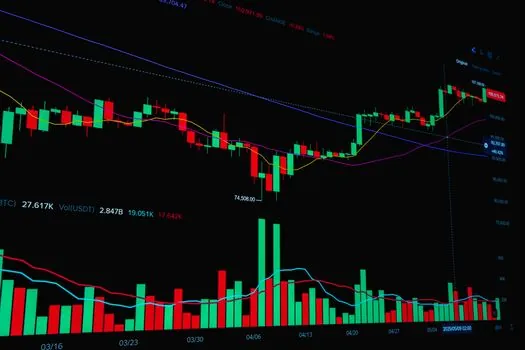
Alkaline leads on capital cost because its manufacturing base, materials chain, and operating lifetime are established; PEM adds precious-metal cost, and SOEC adds high-temperature equipment and heat-system requirements [S2][S4]. These are relative engineering positions, not guaranteed levelized-cost rankings, because electricity price, utilization hours, heat value, financing, replacement schedule, and plant scale can reverse the result [S4][S5].
PEM has the strongest case when saved footprint, faster response, and renewable-power tracking create enough operating value to offset higher material cost [S1][S4]. SOEC has the strongest case when usable waste heat lowers electricity demand by about 30% and the heat supply remains steady throughout operation [S7]. Alkaline has the strongest case when the objective is the lowest entry cost and dependable long-run production at a stable load [S4].
The maximum decision mistake is comparing stack efficiency alone. Compare delivered hydrogen cost at the actual plant load, including power conversion, water treatment, compression, heat integration, catalyst or membrane replacement, financing, and annual utilization. The IDTechEx assessment explicitly benchmarks levelized cost of hydrogen across AEL, PEMEL, AEMEL, and SOEC, with forecasts segmented by technology, end use, and region [S4].
Use verifiable project and cost indicators
Track the four variables that can change the selection: contracted electricity price per kWh, annual electrolyzer utilization hours, continuous waste-heat availability, and delivered hydrogen cost per kilogram. Any comparison lacking those four inputs is incomplete, even if it quotes a nominal efficiency or a headline technology ranking [S4][S5].
For market monitoring, distinguish the PEM electrolyzer market value estimate of USD 1,462.4 million in 2026 from global installed capacity, annual electrolyzer shipments, and hydrogen-production output [S6]. Patent totals can be updated from the 1,347-family dataset, but they remain an innovation indicator rather than a deployment-share measure [S3].
A sensible 2026 specification route is alkaline for a steady, cost-led plant, PEM for renewable intermittency or tight space, and SOEC only where a verified heat source supports continuous operation; then validate the choice with delivered hydrogen cost at the intended utilization rate.