
A pH meter quantifies hydrogen-ion activity in an aqueous sample on a 0-14 pH scale and resolves millivolts (mV) or oxidation-reduction potential (ORP) on the same probe, while a turbidity meter quantifies suspended particles by measuring light scatter in nephelometric turbidity units (NTU) or formazin nephelometric units (FNU) [S1][S4].
The two instruments answer fundamentally different questions: pH is a chemical-potential measurement, turbidity is an optical-density measurement. Modern multi-parameter benches such as the INESA M600L and portable M510T combine pH, conductivity, DO and ISE channels in a single chassis, yet turbidity almost always ships as a dedicated optical bench because its cuvette geometry is incompatible with immersion-style electrochemical probes [S1].
What Each Instrument Actually Measures
A pH meter reads the voltage developed across a glass-reference electrode pair, then converts that millivolt signal to pH using the Nernst slope (about 59.16 mV per pH unit at 25 degrees C). INESA's benchtop PH500T and portable PH510T both accept pH, mV, ORP, pX and temperature inputs from dedicated electrodes, with reference, glass and temperature-compensation probes listed as separate accessories [S1].
A turbidity meter measures the loss of intensity, or the side-scatter at 90 degrees, of a light beam passing through a fluid carrying suspended particles. MANTECH's T20 turbidity meter conforms to EPA 180.1, ASTM D1889 and Standard Method 2130 B (white light), plus ISO 7027 and EN 27027 (infrared, 800 nm), and resolves down to 0.01 NTU from a 15 mL sample [S4]. The Eijkelkamp TB 211 IR infrared turbidity meter covers 0.01 NTU upwards for field water-quality work [S3]. VWR/Avantor lists nephelometric and ratio turbidimeters covering EPA 180.1 and ISO 7027 compliance for laboratory and process use [S5].
Selection Criteria: pH vs Turbidity, Criterion by Criterion
Parameter scope: a pH meter reports acidity/alkalinity, ORP, ion concentration (with an ISE) and temperature; a turbidity meter reports only optical scatter, expressed as NTU, FNU, or FAU depending on the optical design [S1][S4].
Sensing principle: pH uses a high-impedance glass electrode plus Ag/AgCl reference; turbidity uses a controlled light source (tungsten white at 400-680 nm for EPA, 780-900 nm IR for ISO 7027) and a photodetector at 90 degrees for nephelometric designs [S4].
Sample preparation: pH probes are immersion-style and tolerate gentle stirring; turbidity requires a clean optical cuvette, degassed standards (formazin primary standards, StablCal or AMCO-AEPA polymer secondary standards), and avoidance of air bubbles that scatter light. The MANTECH T20 mitigates this with a bottom-fed flow cell whose sample can be returned to the original 50 mL vessel for downstream pH, conductivity, alkalinity, color, fluoride or turbidity analysis from one tube [S4].
Output and standards: pH meters output pH, mV, ORP and temperature with reference-junction diagnostics; turbidity meters output NTU/FNU with EPA 180.1, ISO 7027 or Standard Methods 2130 B compliance and, in modern benches, LIMS-ready RS-232/USB export. See a general reference on turbidity meter working principles and on pH meter electrode maintenance.
Who Each Instrument Is For, and Who It Is Not For
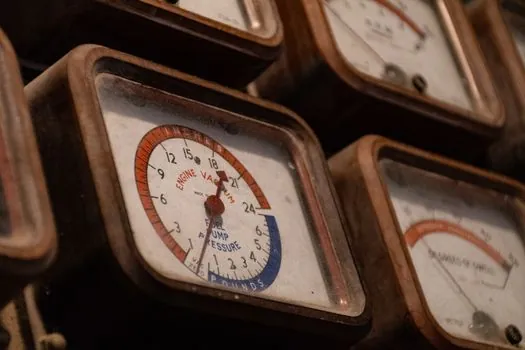
Buy a pH meter if your process needs acid/base control, neutralization verification, ORP for sanitizer residuals (chlorine, ozone), or ion-selective work (fluoride, ammonia, nitrate via ISE). INESA's PH500T and I500T pH/Ion models cover this span on a single platform with replaceable pH, EC, ISE, DO and ORP electrodes [S1].
Buy a turbidity meter if you are monitoring filter breakthrough, drinking-water clarity (US EPA finishes at 1 NTU for surface-water treatment, with 0.3 NTU as a tighter target), wastewater discharge limits, food/beverage haze (the HI83749 measures turbidity in wine from 0.00 to 1200 NTU for bentonite fining checks) or cooling-tower particulate load [S4][S5][S6].
Do not try to substitute one for the other. A pH probe immersed in a turbid slurry still returns a valid mV if the reference junction is clean, but turbidity cannot be inferred from pH, and a nephelometric turbidimeter gives no chemical information about a sample. If your facility needs both, the practical answer is a multi-parameter bench with a separate turbidity channel, or a TOC-style colorimetric analyzer that can pair pH with free chlorine, turbidity and temperature in one kit (such as the Hanna HI-3897 type multi-parameter case used for Legionellosis control) [S7].
Use-Case Match: Drinking Water, Process Water, Field Sampling, Lab QC
Drinking-water treatment: combine a continuous online pH (for coagulation pH 5.5-7.0 control) with an EPA 180.1 nephelometric turbidimeter (target settled water under 1 NTU, finished water under 0.3 NTU). The MANTECH T20's bottom-fed flow cell, 15 mL minimum volume and ability to return sample to the original 50 mL tube allow pH, conductivity, alkalinity, color, fluoride and turbidity to be run from one aliquot, which is a real productivity gain for multi-parameter compliance reporting [S4].
Field water-quality: a portable multi-parameter with pH, EC, DO and turbidity, such as the Eijkelkamp series that measures pH, mV, ORP and temperature alongside the TB 211 IR turbidity meter (0.01 NTU upward) is the spec-first choice for surface-water, groundwater and aquaculture surveys [S3].
Food and beverage: bentonite fining in wine requires a dedicated turbidity reading; the Hanna HI83749 reports 0.00 to 1200 NTU with a bentonite-specific calibration curve, a measurement a pH meter simply cannot make [S6].
Industrial cooling water and Legionellosis control: bundled cases that include a turbidimeter, a free-chlorine photometer, a pH meter and a thermometer support the four-parameter audit, with readings logged at each outlet and at the hot-water storage vessel, as called out in 3tres3's facility guidance [S7].
Limitations, Failure Modes and Maintenance
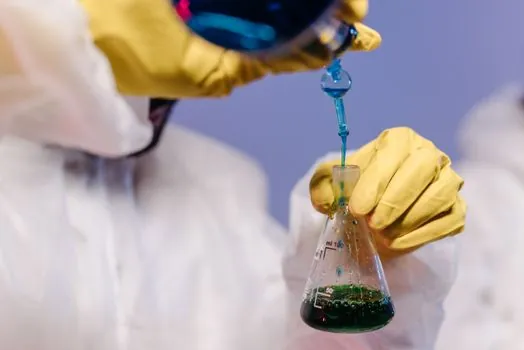
pH meter failure modes: reference junction fouling, glass bulb cracking, drift from temperature gradients, and slope degradation (Nernst slope below 90% signals probe replacement). INESA's electrode catalog lists pH, EC, ISE, DO, temperature, ORP, reference and titration probes as discrete, replaceable consumables, which keeps cost-of-ownership predictable [S1].
Turbidity meter failure modes: scratched or fingerprint-contaminated cuvettes, stray light, air bubbles, condensation on the optical window, and fouling in flow cells. The T20 addresses several of these by using a non-removable flow cell and bottom-up sample feed, eliminating operator handling of the cuvette entirely [S4]. Calibration drift is caught with formazin primary standards or AMCO-AEPA polymer secondary standards; primary standards below 0.1 NTU are notoriously unstable and most labs cross-check with sealed polymer standards.
Cross-sensitivity to remember: pH glass electrodes do not read in absolute non-aqueous solvents, and at very high or low pH the Nernst slope rolls off (acid error below pH 0, sodium error above pH 12). Turbidity readings spike on degassing, on microbubble generation from aggressive pouring, and on color absorption that mimics scatter, which is why ISO 7027 prefers near-infrared 860 nm to suppress false positives from colored dissolved species [S4].
Standards, Sourcing and Spec Discipline
For pH work, the recognised references are ASTM E70 for aqueous pH, IUPAC recommended pH buffer values, and ISO/IEC 17025 calibration traceability. For turbidity, the binding methods are EPA 180.1 (tungsten white light, 90-degree scatter), ISO 7027 / EN 27027 (860 nm IR, 90-degree scatter), Standard Methods 2130 B and ASTM D1889, the last two explicitly listed on MANTECH's T20 datasheet [S4].
Sourcing: in 2026 the benchtop INESA 500T series (PH500T, EC400F, I500T, M510T) and 200E/100B economy series cover the lab pH/EC/ISE/DO range, with TU4000S/E, TU2000, TU1000, TU500 and the P-suffix portable variants covering nephelometric turbidity from 0 to over 1000 NTU across the same catalog [S1]. Distribution channels for consumables and benchtop units run through Avantor/VWR, Royal Eijkelkamp North America, and direct OEM channels [S3][S5].
Spec discipline: write the parameter first (pH to 0.01 resolution with three-point NIST buffer calibration, or turbidity to 0.01 NTU with EPA 180.1 plus ISO 7027 dual compliance), then the form factor (benchtop, portable, online), then standards compliance, then electrode/cuvette consumable cost. On multi-parameter projects, see how instrument choice scales against other level and flow decisions in a guided-wave radar specifier cost guide and against an ultrasonic vs general flowmeter selection map, which use the same spec-first discipline this article applies to water-quality analyzers.
For component-level specifications, see clamp meter.