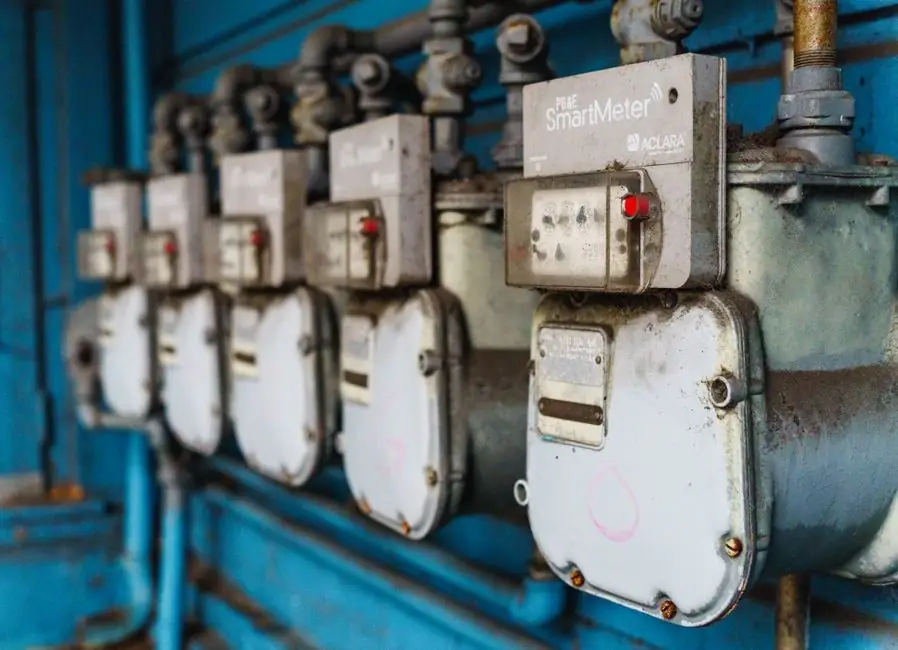
Ultrasonic flowmeters measure volume flow by detecting fluid interaction with acoustic pulses, requiring no moving parts and no process penetration, which makes them the natural pick when pressure loss and contamination risk must stay near zero [S6][S8].
Across 2026 vendor catalogs, the ultrasonic segment now covers water/wastewater, district heating, custody-transfer hydrocarbons, cryogenic LNG, and superheated steam up to 620°C and 200 bar, a span most other flow technologies cannot match in a single product family [S1][S2][S3][S4].
Where Ultrasonic Wins, and Where It Fails
Ultrasonic meters are non-intrusive: the OPTISONIC 3400 district-heating model uses a fully welded construction with no internal moving parts, eliminating magnetite-scaling susceptibility that plagues reflector-path designs [S2]. The OPTISONIC 8300 steam/gas meter carries a stated 20-year calibration interval with no bypass or removal needed, a maintenance profile that conventional turbine flowmeters and differential-pressure primaries cannot match [S4].
The trade-off is fluid cleanliness: ultrasonic transit-time and Doppler methods both require an acoustically conductive medium, and the GWF Q-Eye PSC explicitly targets "slightly to heavily polluted media" while still specifying ±2% of reading accuracy [S1]. For high-solids slurries, gas with heavy liquids, or multiphase flows where bubbles or particles scatter the beam, an electromagnetic flowmeter (conductive liquids only) or Coriolis flowmeter (cleaner service, mass flow plus density) is the more defensible spec [S2][S3].
Spec Range Across the 2026 Ultrasonic Catalog
Process-temperature coverage in the current DirectIndustry listings runs from -200°C (ALTOSONIC 5 cryogenic and OPTISONIC 3400 district heating) to +620°C (OPTISONIC 8300 superheated steam), with pressure ratings spanning 0-10 bar in open-channel water meters to 100-200 bar in steam service [S1][S2][S3][S4]. Pipe diameters stretch from clamp-on portable units on DN50-700 mm lines (TUF-2000M class hardware) to in-line custody-transfer bodies up to DN1000 / 40" [S4][S7].
Turndown ratios are a key discriminator: ALTOSONIC 5 publishes a 75:1 custody-transfer turndown for crudes and refined products, OPTISONIC 8300 quotes 60:1 for steam, and the Q-Eye PSC handles bi-directional velocity down to 0.04 m/s with up to 32 measurement cells in open-channel profiles [S1][S3][S4]. Accuracy claims cluster around ±1-2% of reading depending on site conditions and path count, with the multi-path KROHNE designs adding diagnostic vertical-path sensors for gas-in-liquid detection [S1][S3].
Custody Transfer, District Heating, and Steam: Three Distinct Spec Profiles
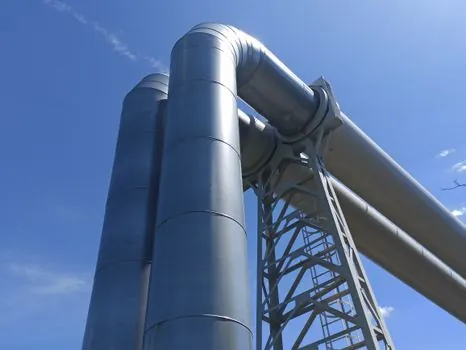
For custody transfer (CT) the ALTOSONIC 5 is OIML R117 and API compliant, flange-rated 4-24" up to ASME Cl 600, and certified for viscosity up to 1500 cSt, with a 24/7 condition-based monitoring system that flags accuracy drift inside the meter [S3]. For district heating and energy billing the OPTISONIC 3400 is certified to OIML R75 and MID MI-004 (Classes 1, 2, 3) under MID 2014/32/EU Annex VI, with 3-path direct measurement across DN25-DN2000 [S2].
For high-temperature gas and steam service the OPTISONIC 8300 accepts external pressure and temperature inputs, runs the IAPWS-IF97 steam model on its integrated flow computer, and targets boiler monitoring and steam billing where the alternative is an orifice plate with a 20:1 turndown and significant permanent pressure loss [S4]. The same logic is spelled out in a side-by-side orifice plate comparison for engineers weighing differential-pressure primaries against ultrasonic. Across all three profiles, the recurring OEM claim is the same: full-bore design, no pressure drop, bi-directional measurement, and a service life decoupled from mechanical wear.
Comparison Matrix: Ultrasonic vs Competing Flow Technologies
For a procurement engineer, four criteria usually drive the call: pressure drop, fluid-conductivity requirement, turndown ratio, and installed cost per meter run. [S4]
Ultrasonic transit-time meters (OPTISONIC 3400, ALTOSONIC 5, OPTISONIC 8300) sit at zero pressure drop, require acoustically clean liquid or gas, and reach 60:1-75:1 certified turndown, but pricing per line ranges from ~USD 180 for clamp-on portable units on eBay channel listings (TUF-2000M, DN50-700 mm) to five figures for multi-path CT bodies [S3][S4][S7]. Electromagnetic flowmeters also give zero pressure drop and add insensitivity to many coatings, but require conductive fluid (water, slurries with ionic content) and lose accuracy on hydrocarbons and steam; pricing sits in the low-to-mid thousands for typical process sizes, as outlined in the 2026 magmeter cost guide. Coriolis flowmeters deliver mass flow plus density measurement with ±0.05-0.1% accuracy, tolerate most clean fluids, but carry a permanent pressure drop similar to a turbine and a unit cost 3-10x higher than equivalent-size ultrasonic; selection logic is detailed in the Coriolis spec-first guide. Turbine and vortex meters remain the cheapest path for clean, steady, single-phase flow, but the moving parts or bluff bodies introduce pressure loss and a wear-limited service interval, the same reliability story that pushes CT and steam billing toward ultrasonic.
Open-Channel and Water/Wastewater: A Separate Sub-Class
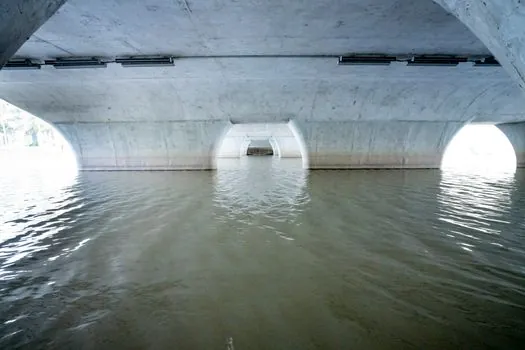
Open-channel and partially-filled-pipe metering is a distinct sub-class where ultrasonic area-velocity units (Q-Eye PSC family) coexist with radar level sensors in the same housing, computing flow from wetted cross-section times measured velocity [S1]. GWF's Pulse-Coherent cross-correlation technology evaluates velocity profiles directly, removing the periodic on-site calibration that single-point Doppler meters demand, and the IP66 aluminum wall-mount body is specced for outdoor wastewater and stormwater sites [S1].
For clean-water utility metering, Chinese OEM Dalian Sonic Meter ships wall clamp-on, plug-in, wall-mounted host, handheld, and portable ultrasonic water meters out of a 9,500 m² Dalian facility, illustrating the breadth of form factors that fall under the ultrasonic umbrella [S5]. The defining spec here is not pressure rating or temperature class but the ability to measure bi-directional flow at near-zero velocity (0.04 m/s on Q-Eye PSC), which matters for nighttime leakage and inflow/infiltration studies [S1].
Selection Workflow: From Process Constraints to Vendor Model
Step one is fluid phase: liquid, gas, steam, or multiphase. Step two is the conductivity and cleanliness profile: clean water, clean hydrocarbon, dirty wastewater, slurry, or two-phase mix. Step three is the accuracy and certification target: ±2% general service, ±0.5% for energy billing, or OIML R117/API custody transfer. Step four is the process envelope: temperature from -200°C cryogenic to +620°C superheated steam, pressure from 0 bar open channel to 200 bar steam header [S1][S2][S3][S4].
If the answer to step one is steam or high-temperature gas and step two is clean single-phase, the OPTISONIC 8300 class (DN100-1000, 60:1 turndown, IAPWS-IF97) is the only ultrasonic in the 2026 catalog that fits; if step one is custody-transfer hydrocarbon and step two is clean liquid to 1500 cSt, ALTOSONIC 5 with OIML R117/API is the documented match [S3][S4]. If the application is district heating with MID MI-004 billing, OPTISONIC 3400 with 3-path direct measurement across DN25-DN2000 is the listed solution [S2]. If the application is open-channel wastewater with variable levels, Q-Eye PSC with up to 32 measurement cells and radar level input handles the profile [S1]. When the answer to step two is dirty or multiphase, ultrasonic falls out and the spec path branches to electromagnetic for conductive liquids or Coriolis for clean mass-flow service.
Integration, Communications, and Installation Footprint
2026 ultrasonic product lines ship with the protocols plant engineers expect: 4-20 mA analog plus HART, Modbus RTU/TCP on RS-485, and on selected models wireless LAN, 4G/LTE, and Ethernet 10/100 Mbps for SCADA and AMI backhaul [S1]. The Q-Eye PSC adds 4 digital inputs, 4 relay outputs, 2 pulse outputs, and a 16 GB MicroSD data logger, enough for a remote wastewater site with no permanent telemetry [S1].
Power input on GWF's wall-mount is 9-36 V DC or 100-240 V AC, allowing solar-battery or mains operation in the same SKU [S1]. KROHNE's in-line ultrasonic meters add diagnostic status flags and integrated flow-computer options (mass flow and enthalpy for steam) that remove the need for a separate calculator in many energy-metering skids [S2][S4]. For a procurement engineer sizing spare parts, this means ultrasonic across vendors tends to converge on the same I/O and protocol stack, simplifying cross-site standardization.
The next trackable signal is the OIML R117 and MID MI-004 revision pipeline for ultrasonic CT and heat meters, and the IAPWS-IF97 steam-model update cadence, both of which will gate which 2026 ultrasonic platforms can be re-specified for billing-class service through the next maintenance cycle.