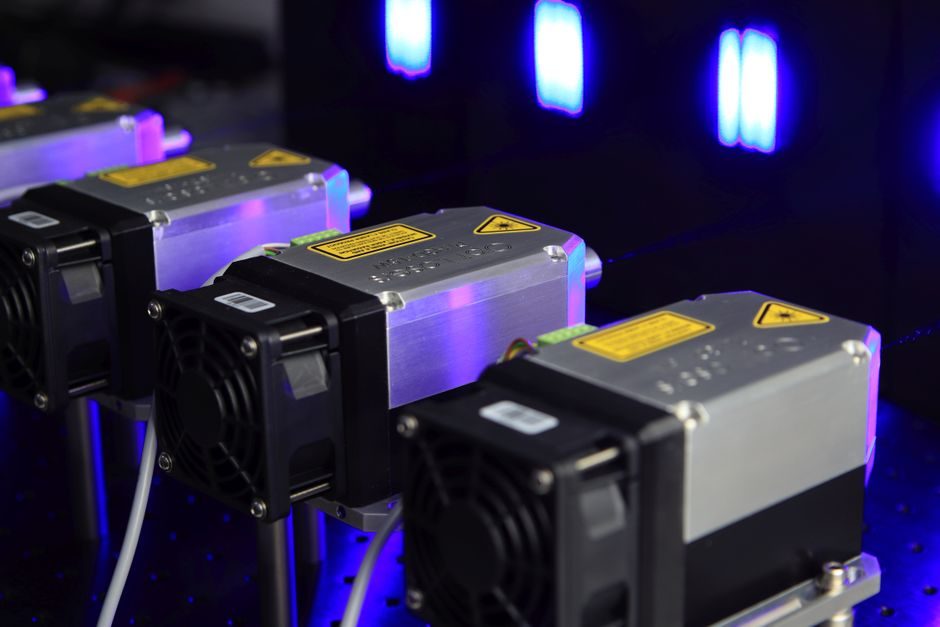
The 2026 industrial PID catalog on DirectIndustry lists 23 manufacturers and 62 photoionization products, with output mixes dominated by 4-20 mA analog (13 products), digital (22), wireless (10), and LoRaWAN (3) variants; Beijing Zetron Technology alone fields 17 PID SKUs, followed by Shenzhen Nuoan Environmental Safety with 7 and Tianjin Zwinsoft Technology with 5 [S1].
A PID sensor ionises gas molecules with a UV lamp and measures the resulting current, which scales with target-gas concentration; the technique is restricted to compounds with ionisation potential below the lamp's photon energy, and a 10.6 eV lamp is the de-facto workhorse for benzene, toluene, and most C6+ VOCs [S4]. For buy-side decisions, that photon-energy threshold — not marketing copy — is the first spec gate.
How a PID works and what the 10.6 eV lamp really gates
Photoionisation in a PID cell is governed by the relation IP(gas) < E(photon): any molecule with ionisation potential above the lamp's photon energy passes through the detector with near-zero response [S4]. The classic separation point is 10.6 eV versus 11.7 eV, with the higher-energy lamp adding methane and a handful of low-IP permanent gases but costing roughly two to three times more in replacement-lamp price across OEM service channels [S1][S3]. A 1980 Chromatographia paper quantified the detection limit at 10⁻¹⁴ mol/s for benzene with a 10⁴ linear dynamic range when the discharge and detection compartments are isolated [S5]; modern ppb-class handhelds such as the mPower NEO bracket 1 ppb to 15,000 ppm in a single instrument [S3].
PIDs are non-destructive: the ionised molecule typically re-binds after charge neutralisation, which is why a PID can sit upstream of an FID or MS without disturbing the sample [S5]. That architecture, combined with a 3-second response time on handhelds and sub-10-second response on diffusion-mode fixed units, makes PIDs the default front end for VOC mapping in semiconductor fabs, refinery turnaround campaigns, and indoor-air-quality audits [S1][S3].
Supplier landscape: who actually makes PIDs in 2026
DirectIndustry's PID category resolves to 23 companies and 62 products, with the brand stack reading: MSA (ALTAIR 5X with integrated PID, E4000), Honeywell Analytics (Gas-Pro PID, BW Clip series), RAE Systems / Byron (RAEGuard 2 PID on 10-28 VDC, 4-20 mA three-wire, QRAE 3), Ion Science, Drager, Crowcon (Gas-Pro PID, PS500 with catalytic + PID), Tyne Tees/Teledyne, GrayWolf (DirectSense XM, AdvancedSense TVOC), Baseline-MOCON (VOC-TRAQ II with piD-TECH eVx), and Beijing Zetron [S1]. On the lab-and-handheld axis, Fisher Scientific distributes PID/FID handhelds from Agilent (5 SKUs), MSA (13), Perkin Elmer (44), RKI Instruments (2), and Thermo Scientific (2) [S6].
Chinese PID makers cluster on Made-in-China and DirectIndustry with the visible names being Beijing Zetron Technology (17 SKUs), Shenzhen Nuoan Environmental Safety (7), Tianjin Zwinsoft Technology (5), and Optosky (Xiamen) Photonics (1) [S1][S2]. For a buyer auditing the China side, the practical question is not who is listed but who holds an in-house UV-lamp supply chain: most PID OEMs buy lamp blanks from a small group of specialty fabricators and tune the electrode stack themselves, which is why service manuals across brands share a near-identical lamp-replacement procedure [S3].
Selection criteria: lamp energy, range, output, and IS rating

Four spec gates separate a fit-for-purpose PID from a re-calibration liability. First, lamp energy: 10.6 eV covers ~95% of field VOC work; 11.7 eV is needed only for low-IP compounds and methane, and should be specified with a written justification. Second, range: handhelds now span 1 ppb to 15,000 ppm in one enclosure (mPower NEO, 21-day lead time ex-Taiwan), while fixed detectors are commonly dual-range with a low-scale ppb mode and a high-scale percent LEL mode [S1][S3]. Third, output: fixed PIDs ship with 4-20 mA three-wire at 10-28 VDC, with HART, Modbus, and wireless options including ISM-band and LoRaWAN; SRI Instruments and ASDevices list SIL2-capable PID loops for safety-instrumented functions [S1].
Fourth, hazardous-area certification: ATEX/IECEx Zone 1 and UL Class I Div 1 marking is non-negotiable for refinery and offshore work, and most fixed PIDs in the DirectIndustry feed carry a SIL2-capable variant alongside a standard variant [S1]. The 4-20 mA three-wire analogue loop on the RAEGuard 2 PID runs on 10-28 VDC and is the dominant fixed-instrument rail; wireless variants using LoRaWAN appear on three SKUs and are typically specified where cabling cost dominates [S1]. A related comparison on gas-detector sensor principles, which lines up PID against electrochemical, infrared, and catalytic-bead on range, cross-sensitivity, and sensor life, is covered in the sensor-principle spec map.
Fixed vs handheld: a criteria-based comparison
Fixed PIDs (RAEGuard 2 PID, AdvancedSense TVOC) deliver continuous 4-20 mA output on 10-28 VDC, can be paired with HART or wireless, and are specced for SIL2 loops in safety-instrumented systems; handhelds (NEO, Gas-Pro PID, QRAE 3) trade loop-power for battery operation, add ISM-band wireless for tether-free roaming, and reach 1 ppb detection floor with a 3-second response [S1][S3]. The decision axis is simple: if the measurement point is fixed and the output must drive a DCS or ESD, specify a fixed PID; if the work is leak-survey, confined-space entry, or fenceline mapping, specify a handheld with man-down alarm and an integrated correction-factor library of 200+ compounds [S3].
Detection floor differs by an order of magnitude between the two: 1 ppb on ppb-class handhelds versus a typical 0.1 ppm lower-detection-limit on fixed continuous units, and the calibration-gas cost (isobutylene or benzene at 100 ppm balance air) is identical for both, so the operational saving of a fixed unit is cabling plus sensor-replacement interval rather than consumables [S1][S3]. On the electrochemical gas detector selection axis, PIDs win on broad-spectrum VOC response but lose on selectivity; for benzene-specific work, specify a benzene-specific PID version (NEO BENZ, 0.05-200 ppm) rather than a broadband unit and apply a correction factor [S3].
Use cases and the limits you actually hit in the field

PIDs are the right tool for VOC leak-survey at petrochemical terminals, IAQ audits in commercial buildings, soil-gas surveys at Brownfield sites, and tank-vapour headspace screening — any application where the analyte mix is broad and unknown. A second failure mode is cleaning-fluid and silicone contamination, which kills both sensitivity and response time within hours; operators who spray silicone-based lubricants near a PID inlet will see the calibration drift visibly [S4].
For environmental monitoring of fixed-point sources such as SO2, the PID is the wrong tool and electrochemical or NDIR should be specified instead; the DirectIndustry SO2 category lists 22 manufacturers and 71 products with electrochemical (45) and infrared (37) dominating the technology mix, and the nearest PID alternatives are broadband VOC monitors that are not SO2-selective [S2]. The same logic applies to methane and carbon monoxide, where TDLAS and electrochemical cells are the standard instrument and a PID will under-read by orders of magnitude [S2].
Standards, compliance, and what to ask the supplier before PO
Compliance checkpoints for a 2026 PID procurement: ATEX 2014/34/EU for Zone 1 fixed units in EU refineries, IECEx Scheme for IECEx-marked jurisdictions, UL 913 for intrinsically safe handhelds in North-American Class I Div 1, and the IEC 60079-0 / IEC 60079-11 series for general Ex protection concepts. On the emissions side, EPA Method 21 references PID response factors for fugitive VOC monitoring at petroleum refineries, and Method 25A references flame-ionisation detection rather than PID for source-level VOC — buyers who confuse the two cite the wrong method in their permit and the audit fails. For benzene-specific work, the EN 16017 reference method pairs a PID with a Tenax sorbent tube and GC/MS; do not accept a stand-alone PID for regulatory benzene fenceline without this sample train. Sensor-life and cross-sensitivity behaviour is documented in this selection guide on range, cross-sensitivity, and sensor-life and a parallel map of 2026 electrochemical gas-detector suppliers. [S1]
Before issuing a PO, confirm: lamp energy (10.6 eV or 11.7 eV), response time at the actual RH and temperature of the measurement point, output protocol (4-20 mA, HART, Modbus, LoRaWAN), ATEX/IECEx/UL marking and certificate number, sensor warranty in months of continuous operation, and a written correction-factor list for the target VOCs. For total-cost-of-ownership, assume a UV-lamp replacement every 12 months on continuous-duty fixed PIDs and a 3-year cap on the ppb-class PID sensor before baseline drift exceeds the 10% factory spec. Track two signals into Q4 2026: whether DirectIndustry's PID category exceeds 70 SKUs (the 2024 baseline of 62 products is on a +5% YoY trajectory [S1]) and whether the 11.7 eV lamp price gap to 10.6 eV narrows, since that single component is the gating cost on the most selective PID variant.
Spec-level background on the components involved: dust detector, gas detector, and heat detector.