An electrochemical gas detector uses a liquid or gel electrolyte with a working, counter, and reference electrode to oxidize or reduce the target gas, producing a current proportional to concentration; a general gas detector is a broader category that accepts any sensing principle — catalytic bead, NDIR, semiconductor, PID, or electrochemical — chosen by target gas and hazard class [S1][S4].
The two categories overlap when the general detector is shipped with an electrochemical cell, but they diverge sharply on range, selectivity, and cross-sensitivity behaviour; matching the sensing principle to the target gas is the single largest determinant of detector accuracy and operating cost [S1][S4].
Sensor Principle and Target-Gas Match
Electrochemical cells are specified for toxic gases such as CO, H2S, NO, NO2, SO2, NH3, Cl2, and for O2 measurement, with typical full-scale ranges of 0-100 ppm for H2O2 and 0-500 ppm for CO on portable units [S1]. The Safegas H2O2 portable detector lists a 0-100 ppm range with IP66 protection and an electrochemical sensor, aimed at pharmaceutical and clean-room service [S1].
Catalytic-bead (pellistor) and NDIR sensors cover combustible hydrocarbons and refrigerants where the target is an explosive mixture above the lower explosive limit, not a low-ppm toxic leak; semiconductor sensors respond broadly to reducing gases but with poor selectivity, and PIDs are reserved for VOCs at ppb-to-ppm resolution [S1][S4]. A general combustible gas detector almost never uses an electrochemical cell because LEL measurement requires a different physical response curve.
Range, Resolution, and Cross-Sensitivity Behaviour
Electrochemical CO cells typically resolve 0-500 ppm with ±5 ppm or ±10% of reading accuracy, while H2S cells are specified at 0-100 ppm with ±2 ppm tolerance; O2 cells use a lead-free galvanic design with 0-30% volume range and ±0.5% O2 typical accuracy [S1]. Cross-sensitivity is the dominant error source: a CO cell will respond to H2 and certain alcohols, and an H2S cell can be poisoned by silicone vapours, requiring filter caps and routine bump testing [S4].
General gas detectors without electrochemical cells trade resolution for robustness; NDIR CH4 sensors run 0-100% LEL or 0-100% volume with ±3% LEL accuracy and zero cross-sensitivity to most toxic gases, which is why fixed combustible detection in gas cabinets uses NDIR or catalytic bead rather than electrochemistry [S1][S4]. Resolution in ppm terms is not directly comparable between an electrochemical toxic sensor and an NDIR combustible sensor because the regulatory alarm setpoints differ by orders of magnitude.
Certification, Enclosure Rating, and Field Deployment
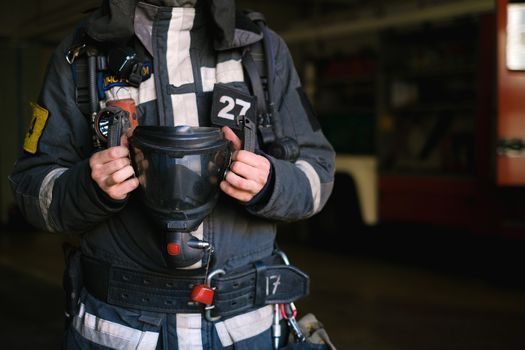
ATEX and IECEx certification is standard on portable and fixed detectors sold into European and offshore hazardous areas, and the same units typically carry IP66 or IP67 ingress protection for wash-down and outdoor service [S1]. The Safegas portable H2O2 and the confined-space multi-gas detector both list CE/ATEX/IECEx with IP66/IP67 ratings and 24-hour battery life on a charge [S1].
A portable gas detector used for confined-space entry commonly bundles four sensors — O2, LEL, CO, and H2S — in one enclosure so that a single worker carries one instrument instead of four; the same form factor with an electrochemical-only sensor bank is sold for clean-room and laboratory toxic-gas monitoring [S1]. A fixed gas detector at a gas-cabinet or pipeline interface is specified separately for life safety (combustible) and process control (electrochemical toxic or NDIR), and the two signal loops are independent [S1][S4].
Comparison Matrix: Electrochemical vs Other Common Sensor Principles
Across the four sensor principles a process engineer will see in 2026 product listings, the decision matrix is best read in terms of target-gas fit, range, selectivity, and typical service interval: (1) Electrochemical — best for toxic gases and O2 at 0-1000 ppm, ppm resolution, 2-3 year sensor life, susceptible to chemical poisons; (2) Catalytic bead (pellistor) — best for combustible gases at 0-100% LEL, percent-LEL resolution, susceptible to silicone and lead poisoning, requires periodic calibration with calibration gas; (3) NDIR — best for refrigerants, CO2, and CH4 at 0-100% volume or 0-100% LEL, percent resolution, long life, no oxygen dependency, higher unit cost; (4) PID — best for VOCs at ppb-to-ppm resolution, requires a UV lamp and periodic lamp cleaning, higher consumable cost [S1][S4].
For a multi-gas detector carrying CO, H2S, O2, and LEL, the practical build is three electrochemical cells plus one catalytic-bead or NDIR LEL channel in a single IP67 housing, exactly the configuration seen on the Safegas VOC/H2S/NH3/O2 monitor and the confined-space CO/SO2/NO/O2 unit [S1]. A toxic gas detector intended for clean-room or pharmaceutical service uses only electrochemical cells, dropping the pellistor because there is no combustible hazard in the target process [S1][S4].
Selection Criteria, Sourcing Signals, and Failure Modes
Selection should start with three written-down facts: target gas, required measurement range in ppm or %LEL, and certification zone (ATEX/IECEx Zone 1 or Zone 2, or non-classified). With those fixed, the sensor principle is a direct lookup: ppm toxic → electrochemical; %LEL combustible → catalytic bead or NDIR; ppb VOC → PID; refrigerant leak → NDIR or semiconductor; oxygen enrichment or depletion → electrochemical or galvanic [S1][S4].
Common failure modes specific to electrochemical cells include electrolyte dry-out at high temperature, reference electrode drift in dry environments, and irreversible poisoning by silicone, lead, or acid gases; mitigation is a 3-6 month bump-test cycle and a 24-36 month sensor-replacement interval [S4]. A practical sourcing check for 2026 procurement is to confirm the OEM publishes a per-sensor replacement part number, a calibration-gas recipe, and an ATEX/IECEx certificate number traceable to a notified body, all of which appear in the Safegas, MSA, and equivalent OEM datasheets reviewed in the Made-in-China and ATO listings [S1][S2][S3][S4]. Pricing on these listings runs from roughly US$39 for an entry-level 4-in-1 O2/CO/H2S/LEL unit to US$2,600+ for an MSA Altair 5X-class multi-gas monitor, with US$328 for an ATEX/RoHS portable chlorine 5-in-1 detector as a mid-band reference point [S2][S3].
For deeper spec data on the electrochemical side, see the Electrochemical Gas Detector Selection: Range, Cross-Sensitivity, and Sensor-Life reference, the [Electrochemical gas detector suppliers mapped: 2026 spec gates and sourcing signals](/news/electrochemical-gas-detector-suppliers-mapped-2026-spec-gates-and-sourcing-signals.html) supplier map, and the contrast piece Catalytic Gas Detector vs Gas Detector: Spec-First Selection for the combustible-side equivalent.