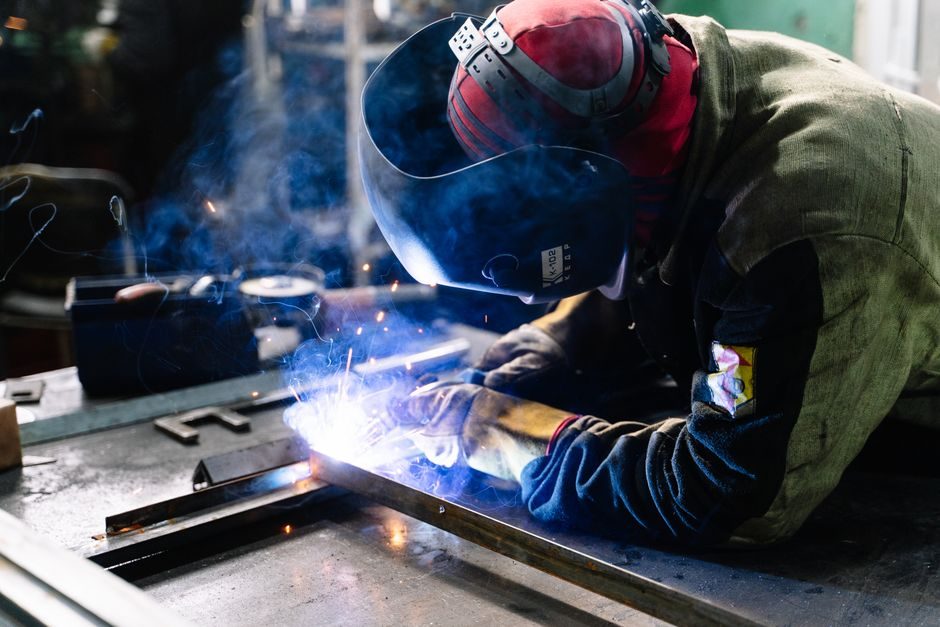
Plasma and oxy-fuel remain the two dominant thermal cutting processes in metal-fabrication shops, and the 2026 product line-up shows them increasingly co-residing on the same gantry: ERMAKSAN's SMART PLAZMA, United ProArc's Master series and Shandong Jiaxin's CNC series all carry dual plasma/oxy-fuel heads on a single CNC bridge [S2][S3][S4].
Oxy-fuel still leads in installed base because the rig cost is a fraction of a mechanised plasma: the process cuts mild steel from 0.5 mm up to 250 mm in industrial form, and Vanad's BLUESTER platform extends that envelope to 400 mm sheet thickness when paired with an automatic 3D plasma head for beveling, drilling and tapping. Plasma's edge is material breadth — it slices stainless, aluminum, copper and high-carbon steel that an oxy-fuel jet cannot even ignite [S5].
Process Fundamentals: Heat Source & Cuttable Materials
Oxy-fuel cutting is a combustion-driven oxidation process: a fuel gas (acetylene, propane, MAPP, propylene or natural gas) preheats steel to its 700–900 °C ignition temperature, after which a high-purity oxygen jet burns the iron and blows the oxide out of the kerf. That chemistry is why the process is restricted to mild and low-carbon steel; stainless steel, cast iron, high-carbon steel and non-ferrous metals either form refractory oxides or won't sustain exothermic oxidation, and the torch simply sputters and refuses to pierce them [S5].
A plasma cutter uses a constricted electric arc that ionises a gas (air, nitrogen, argon-hydrogen or oxygen) into the 20,000+ °C plasma state, and that jet melts and blows the metal regardless of its metallurgy. Hypertherm's own process comparison is explicit: plasma cuts "nearly any type of metal" — stainless, aluminum, copper, high-carbon steel — while oxy-fuel is limited to mild steel and clean wrought iron [S5]. A cutting machine buyer who routinely runs mixed-stock sheet has no fallback in an oxy-only bay.
Thickness, Speed & Tolerance Envelope
Oxy-fuel's headline number is range. TWI's process reference quotes a working thickness window of 0.5 mm to 250 mm for industrial oxy-fuel rigs, and the Vanad BLUESTER pushes that commercial ceiling to 400 mm when configured for heavy-plate work. The process is also the most widely deployed industrial thermal cutting method because the equipment cost is low and the fuel gases are commodity items. [S1]
Plasma's comparable industrial ceiling for quality dross-free cuts on mild steel sits around 50 mm with high-amperage mechanised systems, with thinner gauges (under 10 mm) cutting dramatically faster and with a tighter kerf than oxy-fuel. ERMAKSAN's SMART PLAZMA gantry posts a 35 m/s (114.8 ft/s) maximum cutting speed and a 38 mm maximum cutting height on the plasma side of its dual-process table [S2]. On the same gantry, Shandong Jiaxin's CNC machine targets 1,200–1,600 mm X travel with 2,000–5,500 mm Y travel options, prioritising plate size over headline speed — Y travel maxima of 5,400 mm and 5,500 mm cover full 4×2 m and 6×2 m sheet formats common in structural-steel shops [S4].
Cut Quality, Heat-Affected Zone & Secondary Operations
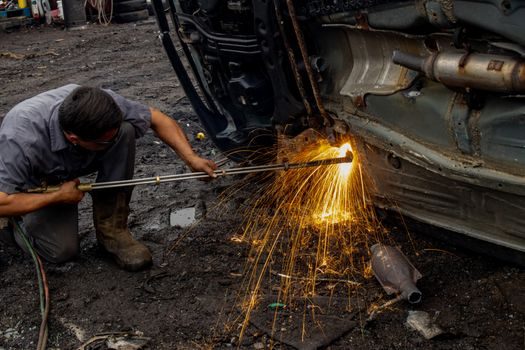
Hypertherm's engineering position is that plasma produces a smaller heat-affected zone (HAZ) and tighter kerf on thin metal, where oxy-fuel's broader flame distorts the workpiece and demands wider cut-clearance [S5]. The HAZ difference compounds downstream: a narrow, low-distortion plasma kerf usually goes straight to welding, while a wide oxy-fuel kerf on thin plate often needs grinding before fit-up.
Bevel cutting is the new battleground. Hypertherm's plasma-bevel literature frames beveling as "a complex cutting application that's critical for weld prep," and its rotating-head systems handle compound angles automatically on plate. United ProArc flags "beveling" as a built-in function of its Master-series gantry alongside the oxy-fuel/plasma head combination [S3]. The trade-off: oxy-fuel bevel heads are cheaper but slower and less repeatable than a powered plasma bevel head, and they cannot produce an acute-angle land on stainless because they cannot cut stainless at all.
Cost Structure, Safety & Shop Footprint
DirectIndustry's 2026-05 manufacturer index lists 21 cutting-torch suppliers offering 68 distinct torch products, led by Hypertherm (9), Messer Cutting Systems (7), Changzhou Huarui (8) and ESAB (3) [S1]. That supplier density — small hand torches through to CNC machine torches — is a direct read on oxy-fuel's installed-base advantage: a fabricator can put a usable oxy-fuel station on the floor for under a thousand dollars in regulated gear, while a 100 A mechanised plasma system with a CNC table is a five-figure capital line.
Plasma requires three-phase power, a compressed-air or bottled-gas supply, fume extraction, and (in many jurisdictions) EMC/arc-flash PPE beyond the standard auto-darkening helmet. Oxy-fuel needs cylinder storage with proper flashback arrestors, gas-specific regulators, and well-ventilated cutting bays; acetylene in particular is unstable above 2 bar gauge and cannot be piped. Shop floor planning in 2026 still defaults to oxy-fuel for outdoor structural work and heavy-plate yards, with plasma in the enclosed, climate-controlled precision bay. The Vanad BLUESTER and Vanad PROXIMA product families are explicitly dual-process machines sized for "up to 400 mm" and "up to 200 mm" respectively, signalling that high-end OEMs now treat the two processes as complementary stations on a single plate-flow line rather than a choice.
Decision Matrix: When to Spec Plasma vs Oxy-Fuel
Spec plasma when the cut list includes stainless, aluminum, copper, galvanised or any non-ferrous; when plate is under ~25 mm and tolerance/HAZ matter; or when the downstream step is automated welding with tight fit-up. Spec oxy-fuel when the work is plain mild steel, plate is over 50 mm and cost-per-metre-of-cut matters more than edge finish; outdoor structural work, heavy shipyard plate, and dismantling are still oxy-fuel's stronghold. A riser-cutting-machine bay in a foundry and a rebar-cutter line on a rebar fabrication table are classic oxy-fuel use-cases where the process is hard to beat on cost. For mixed-stock fab shops, the 2026 default is a dual-head gantry carrying both processes on one bridge — exactly the configuration ERMAKSAN, United ProArc and Shandong Jiaxin are shipping this year [S2][S3][S4].
2026 Manufacturer & Product Landscape
Hypertherm, Messer, ESAB, Binzel, Castolin Eutectic and Migatronic remain the headline oxy-fuel/plasma torch brands in industrial distribution, with Chinese OEMs Changzhou Huarui, Shanghai Huawei and Shandong Jiaxin adding volume at the gantry-machine end of the catalogue [S1][S4]. ERMAKSAN (Turkey) and United ProArc (Taiwan) ship CE-marked gantry machines that combine high-precision CNC control with both plasma and oxy-fuel heads as a stock configuration rather than an option [S2][S3]. THERMACUT continues to maintain separate Laser, Plasma and Oxy-Fuel replacement-part catalogues, indicating that consumables remain a three-stream business even as machines converge [S6]. Otinus, a US metalworking machinery manufacturer, lists Plasma Cutters alongside Fiber Lasers, Press Brakes and Guillotine Shears as in-stock product lines, with a published US sales line and live demo offering — evidence that the 2026 distribution channel treats plasma as a default SKU rather than a specialty build.
For an adjacent cut-quality comparison on weld-prep tools, see the Arc Welder vs TIG Welder: 2026 Spec Cut for Fabricators and Buyers reference, which covers the downstream joining step these cuts feed into. Cross-reference the Oxygen Detector vs Portable Gas Detector: 2026 Spec & Selection Cut guide when sizing combustion-gas safety monitoring for the oxy-fuel bay. Track for the next 90 days: (1) any new high-amperage air-plasma systems breaking the 50 mm quality-cut ceiling on mild steel, and (2) revised EU machinery-safety guidance on dual-head gantries carrying plasma and oxy-fuel on the same bridge.