
That gap in dosage tracks the gap in water reduction: plasticizers typically cut mixing water by 5% to 15%, while superplasticizers reach 12% to 40% water reduction at the same target slump, which is the central engineering reason a mix designer picks one over the other [S3][S4].
Standard Dosage Bands by Admixture Type
For a Portland-cement concrete with roughly 350 to 400 kg/m³ of binder, the working numbers are: lignosulphonate-based plasticizer at 0.20% to 0.25% of binder weight, PCE-based superplasticizer at 0.5% to 1.0% of binder weight, and older SNFC/SMFC superplasticizers at 0.5% to 1.5% of binder weight [S5][S1]. A common rule of thumb published by admixture suppliers places the superplasticizer "standard dosage" at 0.5% to 1% of total binder by weight, with the upper end (up to 2%) reserved for high-range water reducers in self-consolidating concrete (SCC) [S1][S5].
Plasticizer liquids land lower, typically 0.3 to 0.8 L/m³, because their active solids content is higher and their effective dosage window is narrower [S2].
Water Reduction and Strength Trade-off
Standard water reducers (plasticizers) provide 5% to 12% water reduction per ASTM C 494 Type A, while superplasticizers classified as Type F (HRWR) deliver 12% to 30% water reduction at standard dosage and up to about 40% at the upper end of their band [S3][S2]. Every 5% drop in mixing water at constant workability typically buys roughly 8 to 10 MPa of additional 28-day compressive strength, which is why a self-consolidating mix targeting C50/60 will routinely call for a PCE at 1.0% to 1.5% by binder weight rather than a plasticizer at 0.2%.
The mechanism is the same in both chemistries: anionic surfactant adsorption gives cement grains a like-charge so they disperse, freeing the water that was trapped in flocs. PCEs do this with side-chain steric hindrance, which is why they remain fluid longer at lower solids than SNFC or SMFC condensates; the latter rely on electrostatic repulsion alone and lose slump faster at equivalent dosage [S6][S5].
Selection Criteria: When Each Chemistry Fits

For high-performance mixes (C50 and above, bridge decks, precast prestressed members, or any mix with a w/c below 0.40), a PCE superplasticizer at 0.8% to 1.5% of binder weight is the default because no plasticizer chemistry can deliver the required 25% to 40% water cut without overdosing into bleeding territory [S1][S4].
For self-compacting concrete (SCC) targeting 650 to 800 mm slump flow, the working range moves to 1.0% to 2.0% of binder weight for PCE, often combined with a viscosity-modifying admixture; this is the upper edge of the standard dosage band and is where overdosing symptoms (segregation, bleeding, excessive air) start to appear [S1][S5]. Plasticizers are not viable in SCC: their 5% to 15% water reduction cannot reach the required spread without doubling the paste fraction.
Side-by-Side Comparison on Decision Criteria
Comparing the three admixture classes on the criteria that drive a mix design: [S3]
Dosage range (% binder weight): plasticizer 0.1 to 0.25, SNFC/SMFC superplasticizer 0.5 to 1.5, PCE superplasticizer 0.5 to 2.0 [S5][S1]. Water reduction: plasticizer 5 to 15%, SNFC/SMFC 12 to 25%, PCE 20 to 40% [S3][S4][S5]. Slump retention at 25°C: plasticizer 30 to 60 minutes, SNFC/SMFC 45 to 90 minutes, PCE 90 to 180 minutes (longer with slump-retaining PCE grades) [S6][S1]. Cost per kg of active solids: plasticizer lowest, PCE highest, typically 2 to 4 times the plasticizer price for the same water-reduction result [S3].
Compatibility: PCEs are sensitive to cement alkali content and sulfate balance, and overdosing above roughly 1.5% of binder weight commonly introduces 1% to 2% extra entrained air that must be corrected with a defoamer; SNFC and SMFC are more forgiving on cement variability but lose slump faster in hot weather [S1][S6]. Plasticizers are the most forgiving on cement variability but cannot reach the water-cuts that high-strength or SCC mixes need.
Failure Modes of Over- and Under-Dosing
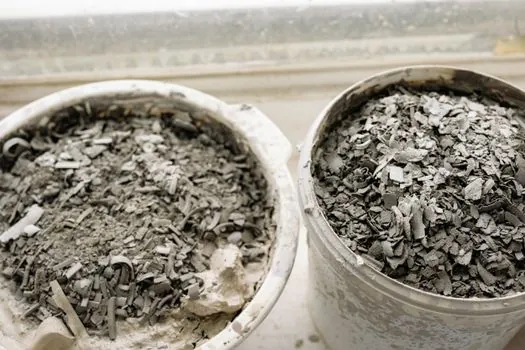
Under-dosing any of the three chemistries shows up as low initial slump, rapid slump loss, and a mix that is hard to pump or finish; the failure mode is operational, not structural [S1]. Over-dosing a plasticizer above roughly 0.3% of binder weight triggers excessive retardation (set delays beyond 3 hours) and air-entrainment problems, because lignosulphonates carry entrained air and sugars that retard hydration [S5][S2].
Over-dosing a superplasticizer is more dangerous: at 1.5% to 2.0% PCE, the mix segregates, bleeds water at the surface, and may show "false set" followed by severe retardation; naphthalene-based superplasticizers specifically show rapid slump loss after placement, so a high dosage does not buy working time, it just buys initial fluidity [S1][S6]. The working rule is to dose to the slump target, not to a fixed percentage: start at 0.6% to 0.8% PCE for a 100 mm target slump and titrate up in 0.1% increments using a Marsh cone or cement-paste flow test [S1].
Verification Tests and Standards Anchors
The mix-side benchmark tests are the Marsh cone (flow time vs. dosage, used to find the saturation point of the admixture) and the mini-slump or cement-paste flow test (spread diameter at fixed w/c), both described in admixture-supplier technical bulletins and run before any production pour [S1]. On the spec side, ASTM C 494 defines Type A (water reducer), Type D (water reducer + retarder), Type F (HRWR / superplasticizer), and Type G (HRWR + retarder), and the same Type-F designation appears in EN 934-2 for European supply [S2].
Two field signals to track on every pour: (1) initial slump vs. target within ±20 mm, and (2) 30-minute slump loss of no more than 30 to 40 mm for normal pours, or 20 to 30 mm for long-haul ready-mix; a PCE slump-retaining grade is the usual answer when the second number breaks the limit [S1]. For deeper coverage of how these admixtures interact with binder and aggregate selection in a real mix design, the concrete admixture reference on the spec side and the broader concrete and cement encyclopedia entry lay out the surrounding test methods, and the Nano-Silica vs Silica Fume for Early Strength: Spec-Level Decision Guide is the natural next read if the mix target is high early-age strength rather than just high final strength.
Detailed specification references: concrete fiber.