
Closed-cell rigid polyurethane and polyisocyanurate (PUR/PIR) foam insulation typically delivers a thermal conductivity of 0.020-0.025 W/(m·K) at a 30-35 kg/m³ density range, the lowest lambda of any common industrial board insulation [S1]. That performance sets the lifecycle math: a TCO analysis must capture purchase, use, maintenance, support, and disposal costs over the asset life [S1], not the line-item price per m².
PUR/PIR is most cost-effective on operating-temperature window -196 °C to roughly +110-150 °C, with PIR skewing higher under hot service. Above that envelope, mineral wool or calcium silicate re-enter the spec window; below -100 °C, elastomeric or cellular glass systems begin to displace PUR because of vapour-pressure and brittleness concerns. Lifecycle cost work therefore lives or dies on the temperature-and-moisture envelope first, and the k-value second.
Where the money goes over a 20-30 year service life
A standard TCO framework splits lifecycle cost into purchase, use, maintenance, support, and disposal elements, and explicitly exposes the hidden costs that budget planning often misses [S1]. For PUR insulation on a pipe or vessel jacket, the stack typically lands in these bands: material 20-35%, installation labour 30-50%, jacket/cladding and vapour barrier 15-25%, inspection and repair 5-10%, and disposal 1-3%. Energy loss through the insulation over its life frequently dwarfs the original purchase price.
Where PUR underperforms is wet or cryogenic duty: water ingress drives lambda up sharply, and below roughly -100 °C PUR loses flexibility and is outperformed by elastomeric nitrile foam or cellular glass.
Material and spec drivers that move price
Three spec choices move the PUR/PIR price line most: foam density, facing/jacket type, and fire/smoke certification. A 32 kg/m³ PIR block with a factory-applied aluminium foil and vapour barrier typically costs 20-40% more than a bare 30 kg/m³ block; add a 0.5-0.8 mm aluminium sheet cladding and the installed cost roughly doubles. [S1]
Specifiers should also weigh the cell-gas ageing penalty: PUR boards lose 5-15% of their initial R-value over 5-10 years as the pentane/HCFC blowing agent diffuses out and air diffuses in [S1]. Specifying a 5-10% design margin on declared k-value at the point of purchase is standard lifecycle practice. For embedded polyurethane insulation specifiers, density and lambda must be quoted on the aged value, not the as-made value, otherwise the first-year energy model diverges sharply from years 5-25.
Installation labour, jacketing, and on-site cost stack
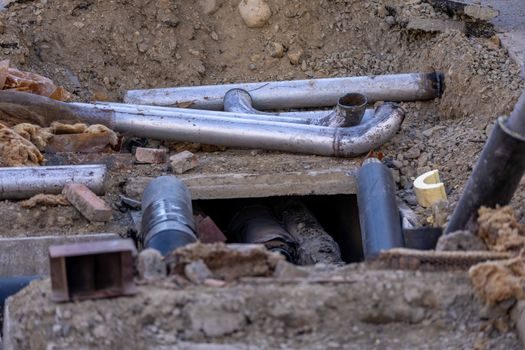
Installation labour typically outranks material as the single largest TCO line item on a PUR-insulated pipe or vessel, often reaching 40-50% of the in-place cost on small-diameter piping [S1]. Labour cost drivers include cutting and fitting at fittings/elbows (PUR cuts cleanly, but shop-fabricated segment elbows are common for cryogenic service), vapour-barrier continuity at joints, and jacketing field labour which is often 30-50% of the total installed cost on its own.
A proper spec calls for a continuous vapour barrier (foil scrim kraft, aluminium sheet, or PVC/PCV jacket) sealed at all joints, since a 1-2% moisture ingress by mass in a closed-cell PUR board can raise lambda by 10-30% [S1]. Jacketing selection is a TCO decision: 0.5 mm aluminium sheet costs more up front than PVC but typically doubles the service life in outdoor/UV service. Review the broader methodology in Polyurethane Insulation Installation: Method Map, Spec Limits, Acceptance to lock the field procedure before pricing.
Energy-loss model: how to compute the 20-30 year delta
The energy component of TCO for insulation is calculated from surface area, delta-T, lambda, and operating hours: annual heat loss (kWh) = U-value × area × delta-T × hours. For a 100 mm PUR shell with lambda 0.022 W/(m·K), a 50 m pipe run at 150 °C, ambient 20 °C, and 8,000 operating hours per year, annual loss is roughly 8,800-9,500 kWh per metre of pipe; over 25 years at a 0.08-0.12 €/kWh gas tariff the energy cost line reaches €17,600-€28,500 per metre, several times the installed PUR price [S1].
This is the hidden cost that TCO frameworks are designed to surface: the purchase price is recovered by the energy delta versus the next-best alternative inside the first 3-7 years on most hot-service lines, and the remainder is net lifecycle benefit [S1]. For cold-service lines (chilled water, LNG) the math reverses: thinner or lower-lambda PUR pays back faster because the avoided refrigeration kWh is more valuable than avoided heating kWh.
Comparison: PUR/PIR vs mineral wool vs elastomeric vs cellular glass

On the four criteria that drive TCO most, the four main industrial insulation families land as follows. Thermal conductivity: PUR/PIR 0.020-0.025 W/(m·K); mineral wool 0.035-0.045; elastomeric NBR/PUR 0.030-0.038; cellular glass 0.038-0.045. Maximum continuous service: PUR/PIR roughly +110-150 °C; mineral wool up to 700 °C+; elastomeric typically +85-105 °C; cellular glass -260 to +430 °C. Moisture resistance: closed-cell PUR/PIR and cellular glass are vapour-tight; mineral wool absorbs water and must be jacketed; elastomeric is closed-cell and resists absorption but is vulnerable to mechanical damage.
Decision rule: for cold and low-temperature hot service inside the PUR/PIR envelope, PUR/PIR wins on lambda and on installed cost per kW of heat-flow controlled. For temperatures above roughly +150 °C, mineral wool wins. For cryogenic LNG service below -100 °C, elastomeric foam and cellular glass share the spec window. For hydrocarbon and offshore fire exposure, the IMO-rated PIR blocks with metallic cladding are typically the only PUR-family option that passes muster. For elastomeric applications, the parallel analysis in Polyurethane Elastomer TCO: Cost Drivers, 10-Year Math, and Spec Map covers the dynamic-load side of the polymer family.
Inspection, repair, and disposal line items
Annual or biennial inspection typically accounts for 5-10% of TCO on an insulated industrial asset, dominated by visual jacket checks, spot thermography, and selective sampling of suspect areas [S1]. PIR boards in outdoor/UV service should be re-coated or re-jacketed every 12-18 years; PVC jacketing typically fails by 10-15 years, aluminium sheet 25-35 years. The repair-cost line grows with jacket failure rate more than with PUR degradation itself, which is another argument for metallic jacketing on TCO grounds.
Newer PIR scrap streams with recovered blowing-agent content can route to chemical recycling at a small negative cost, but this option is still regional. Note also the polyurethane elastomer recycling loop: trim and off-cut from moulded elastomer parts can be reground and re-used at 5-15% loadings, but rigid PUR insulation boards do not generally re-enter the same scrap stream and are typically handled separately.
Selection logic and sourcing rules

Specify PUR/PIR only inside its thermal envelope (-196 °C to +110-150 °C), with an aged k-value 5-10% above the declared fresh-foam figure. Match the jacket to environment: aluminium sheet for outdoor/UV, PVC for indoor clean service, stainless steel for hydrocarbon fire exposure. Require third-party certifications for the specific application: ASTM C518 or EN 12667 for thermal conductivity, EN 13501-1 Euroclass B-s2,d0 or equivalent ASTM E84 Class A for fire/smoke, and ISO 12623 or ASTM C871 for water-vapour permeability where closed-cell performance matters [S1].
For volume purchases, tier by lambda, density, and aged thermal-resistance warranty — not by price per m² — and lock the jacketing and fixing schedule to the same supplier for warranty continuity. Independent TCO frameworks flag hidden costs in purchase planning, including disposal, support, and energy loss [S1], and a PUR TCO model that omits the energy line is not a TCO model. Match the spec to the full-service envelope, then re-check on a 5-year cycle against actual energy bills. Tracking these signals over 2026-H2 will show whether the PIR market tightens on blowing-agent supply and whether Euroclass B-s2,d0 board pricing normalises back toward Class C equivalents.
The underlying component specifications are covered under total station.