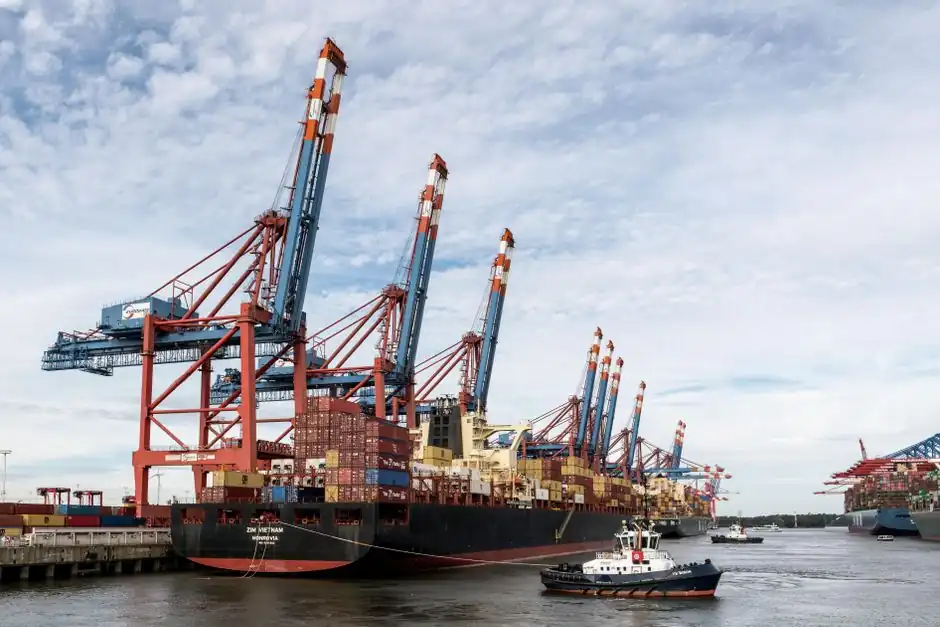
Port and cross-dock checkweighers in the logistics class cover a 50 g to 300 kg capacity range with ±0.1% or ±5 g accuracy (whichever is greater) and 0.3 to 2 second per-item cycle times, per current OEM shipping-grade specifications [S2].
Throughput at the dock door runs 300 to 1,200 parcels per hour for in-motion units, with belt speeds of 0.5 to 5 m/min, PU-coated high-friction belts, and conveyor widths from 400 to 1,200 mm to handle parcel footprints up to 1,200×800×800 mm [S2]. Legal-for-trade builds carry NTEP or MID 2014/32/EU certification, with safety per UL 61010-1 and CE marking, and operate between −10 °C and +50 °C at 10 to 95% non-condensing humidity [S2].
Capacity bands and what each one is for
Three box-checkweigher tiers cover most port logistics flows: 15,000 g, 30,000 g, and 60,000 g units, each tuned to a different parcel size and conveyor geometry [S1]. The 15 kg class suits small-parcel e-commerce and postal hubs where the typical outbound is below 10 kg; the 30 kg class is the workhorse for general freight and courier cross-dock; the 60 kg class covers heavier cartons, master cases, and airline-baggage-equivalent flows where underweight detection prevents revenue leakage on weight-based billing [S1].
Auto-tare with 10 to 50 kg preset container weights lets the same lane handle mixed pallets without operator intervention, and overload protection at 150% of nominal capacity absorbs the shock of dropped or mis-loaded cartons common at busy gates [S2]. For buyers mapping capacity to throughput, the practical rule is: match the upper capacity tier to roughly 1.5 to 2× your heaviest realistic parcel, leaving headroom for both container tare and dynamic loading spikes.
Accuracy, resolution, and legal-for-trade gates
The class-standard accuracy statement of ±0.1% or ±5 g (whichever is greater) means a 10 kg parcel resolves to ±10 g, while a 100 kg pallet resolves to ±100 g, which is the floor most carriers and customs authorities accept for revenue-weight billing [S2]. Static dimensioning variants hit ±0.05% for freight billing where corner-load compensation and over-dimension alerts are needed, and they pair naturally with checkweighers in logistics and packaging lanes that already barcode every parcel.
Two non-negotiable gates separate a serious port unit from a generic floor scale: legal-for-trade approval (NTEP in the US, MID 2014/32/EU in Europe) for invoiced weight, and a documented overload margin. Bench-class static units like the ZM223 use an IP69K stainless torsion base rated for over 500% overload and shock-load protection, with stable readings in under 0.43 seconds, a useful benchmark when comparing dynamic checkweighers that quote 0.3 to 2 second cycle times [S4].
Throughput, belt speed, and volumetric capture
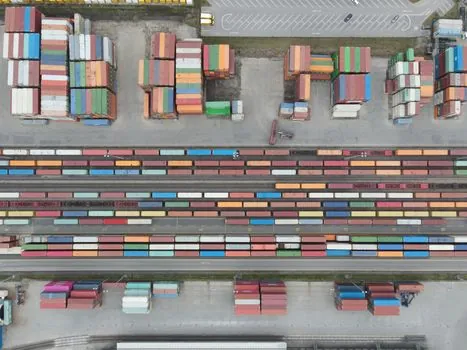
Belt speed of 0.5 to 5 m/min is the controllable variable that links capacity, accuracy, and parcel spacing, and exceeding it is the most common reason a spec'd unit underperforms in the field. Volumetric accuracy of ±5 mm on L/W/H with scanning height from 50 to 1,000 mm gives the dimensioner side enough resolution to feed cubic-weight billing (DIM weight) used by most integrators and 3PLs [S2].
Data output latency of 10 to 100 ms is the practical ceiling for inline divert decisions: a 50 ms line keeps a 1.2 m/s sorter honest, while anything above 100 ms forces a longer parcel gap and erodes throughput. REST API, JSON, and XML protocol support covers most modern WMS and TMS stacks, and dual 1D/2D plus QR and RFID reading on the same conveyor frame removes the need for a separate scan tunnel [S2]. For an apples-to-apples comparison lane against warehouse-automation checkweighers, the 2026 spec map for warehouse automation checkweighers lays out the same accuracy and protocol gates in a non-port context.
Integration: barcode, WMS/ERP, and the data that actually moves freight
A port checkweigher earns its keep only when its weight and dimension data land inside the WMS, TMS, or carrier billing API within the same scan cycle, not as a separate batch upload. Modern units push JSON or XML payloads over REST with sub-100 ms latency, mapping 1D, 2D, QR, and RFID reads to a single parcel ID so freight class, weight, and DIM weight are reconciled against the same booking [S2].
USB-based export from the line-side indicator remains common for QA and audit trails, and OEM operator manuals still treat the USB stick as the fallback for parameter backup and user import when the network drops [S6]. For sites that also handle regulated cargo, the same lane that feeds WMS should log to a retained weight record so customs or carrier disputes can be answered with a timestamped weight trace rather than a screenshot.
Selection criteria: comparing the three logistics checkweigher types

In-motion, static dimensioning, and mobile checkweighing stations are the three logistics-relevant architectures, and they do not compete on the same axis. In-motion units deliver 300 to 1,200 parcels per hour for e-commerce fulfillment and postal sorting, accepting the accuracy trade-off of dynamic weighing for throughput; static dimensioners hit ±0.05% for freight billing and add corner-load compensation for pallet weighing, which in-motion lanes cannot match; mobile battery-powered stations cover loading-dock verification and cross-dock QC where a fixed conveyor is not available [S2].
For a port gate, the comparison reduces to four decision criteria: (1) throughput tier (in-motion wins above ~300 parcels/hour, static wins below), (2) legal-for-trade status (mandatory for invoiced weight, available on all three), (3) parcel size envelope (in-motion up to 1,200×800×800 mm, static wider via platform scales, mobile limited by handling), and (4) protocol fit (REST/JSON/XML on modern in-motion and static, mobile often limited to local logging). Buyers who already run a WMS should default to the architecture whose native protocol matches their stack, not the one with the highest headline speed.
Operating environment, failure modes, and what to derate for
Outdoor and semi-covered port environments push the standard −10 °C to +50 °C operating window and 10 to 95% non-condensing humidity to its limits, especially where morning condensation or salt air is present. PU-coated belts handle the abrasion of mixed freight but need scheduled cleaning to keep friction coefficient stable; a glazed belt reads light and triggers false underweight rejects [S2].
Common failure modes are predictable: belt speed set above the loadcell's settling time causes oscillation in the weight reading, parcel-to-parcel gap below the data output latency causes attribute swap, and RFID reader overlap on dual-lane conveyors causes cross-reads that mis-attribute weight.
Vendor landscape and what to look for on the datasheet

Established OEM checkweighers in this class share a common spec envelope, and the differentiation lives in the option list rather than the headline numbers. Mettler Toledo's XE2 line targets compact footprints with a phased-out but still referenced platform carrying multiple data connection ports for plant-network integration [S3]. Avery Weigh-Tronix's ZM223 is a static, food-grade, IP69K washdown unit with 500% overload margin and a sub-0.43 s stable read time, useful as the bench-class reference point for accuracy and durability [S4]. Wipotec-OCS separates its range into EC-E (compact), HC-M (mid-range precision), and HC-A (high-end dynamic) series, with VA stainless variants for wet areas, WD washdown variants, and MDi units that combine weighing and metal detection in a single frame [S5].
For a port buyer, the datasheet checklist is short: capacity range, accuracy statement with the ±0.1% or ±5 g (whichever is greater) wording, weighing speed, legal-for-trade certificate number, supported protocols, and the documented overload protection factor. Anything missing on that list is a negotiation item, not a detail. For pharmaceutical or distribution lines that share a port-adjacent warehouse, the 2026 selection map for pharmaceutical checkweigher spec gates covers the GMP-side gates that the port unit does not need to meet.
Trackable signals for the next buying cycle: carrier DIM-weight billing rule changes (most major integrators revise annually, and a tighter DIM divisor raises the bar on volumetric accuracy), port-side WMS upgrades that move from batch to event-level weight capture, and the spread of RFID-as-standard on parcel belts, which currently sits alongside 1D/2D rather than replacing it [S2].
Detailed specification references: checkweigher, and pressure transmitter.