
PPH, PP-B, and PP-R are all polypropylene, but their comonomer placement puts each in a different operating envelope: PPH caps near 95°C with the best chemical resistance, PP-B trades some of that for high impact at low temperatures, and PP-R (or the upgraded PP-RCT) targets 70–80°C continuous service in pressurized plumbing [S1][S3].
Specifying the wrong grade is a common source of early pipe failure, because the selection hinges on the actual fluid, temperature profile, and mechanical stress, not on what the local distributor happens to stock. For projects that need a quick primer on polypropylene pipe families, the three grades below cover roughly 90% of the industrial and plumbing decisions in 2025–2026.
How the three grades differ at the molecular level
PPH (Polypropylene Homopolymer) is polymerized from propylene monomer only, producing a highly crystalline, rigid chain with strong chemical resistance and a continuous service ceiling near 95°C [S1].
PP-B (Polypropylene Block Copolymer) inserts ethylene units as discrete blocks along the chain; this disrupts crystallization just enough to raise impact toughness, especially below 0°C, while keeping decent chemical stability. The trade-off is a lower continuous temperature rating, around 80°C, and only moderate chemical resistance [S1].
PP-R (Polypropylene Random Copolymer) distributes ethylene units randomly throughout the chain, giving the highest flexibility and the best long-term creep resistance at hot-water temperatures; standard PP-R is rated for continuous service up to 70°C, with short excursions higher, and PP-RCT (the crystalline-tuned variant) extends pressure capability at elevated temperatures for high-rise risers and commercial hot-water mains [S2].
Decision matrix: PPH vs PP-B vs PP-R against four criteria
The fastest way to choose is to score the application on chemical exposure, peak temperature, mechanical/impact stress, and required joint type. PPH wins on chemical resistance and stiffness; PP-B wins on impact and low-temperature ductility; PP-R wins on hot-water pressure rating and fusion-weldability for plumbing [S1][S3].
On temperature, the published continuous ceilings are PPH ~95°C, PP-B ~80°C, PP-R ~70°C (standard) with PP-RCT pushing higher-pressure envelopes above 70°C, and plain homopolymer PP kept under 60°C for long-term reliability [S1][S3]. On chemical resistance the order is PPH (excellent) > PP-B (moderate to good) > PP-R (moderate), and on impact resistance it flips: PP-B (high) > PP-R (moderate to high) > PPH (moderate) [S1].
For pressurized plumbing, HVAC chilled- and hot-water loops, and building risers, PP-R and PP-RCT remain the safer pick because they retain more strength at higher temperatures and form strong fusion-welded joints; for chemical, fertilizer, or industrial wastewater lines where fluids run hot and aggressive, PPH is the conservative choice [S2][S3]. PP-B sits between them and is most often specified for buried water mains, sewer laterals, and external drainage where ground movement or impact loads dominate [S1].
Where each grade is actually specified
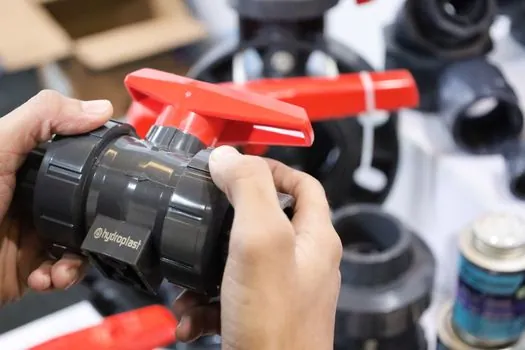
PPH shows up in industrial chemical pipelines, fertilizer handling, and high-temperature process water, with published continuous service up to 95°C and excellent chemical resistance to acids, alkalis, and many organic solvents, but its rigidity rules it out where the line must bend or absorb ground movement [S1].
PP-B is the go-to for underground water mains, sewer and drainage systems, and structural lines that take mechanical abuse; its ethylene blocks give it impact resistance below 0°C that homopolymer PP cannot match, at the cost of some heat tolerance and chemical headroom [S1].
PP-R and PP-RCT are the default for hot and cold potable water, radiator connections, underfloor heating, and high-rise risers. PP-RCT is increasingly specified for tall-building hot-water risers because it carries more pressure at elevated temperatures than the older PP-R base grade [S2]. Practical ceiling for standard PP-R is around 70°C continuous, with short excursions to 80–95°C depending on pressure class, versus homopolymer PP which the supplier community recommends keeping under 60°C for long-term reliability [S3].
Limits, failure modes, and things that bite in the field
PPH fails by brittle crack propagation in cold or high-impact environments; if the line will see sub-zero handling, ground movement, or hammer, switch to PP-B for that section. PP-B's weaker chemical resistance means concentrated acids or chlorinated solvents can attack the matrix faster than they would PPH or PP-R [S1].
PP-R's known weak spot is oxidation from prolonged exposure to UV or to high levels of free chlorine in the water; specifiers add UV shielding for outdoor runs and confirm disinfectant residual with the water utility. Plain PP homopolymer pipes are limited to roughly 60°C continuous service and become the wrong choice the moment a line sees domestic hot water, HVAC supply above 60°C, or any pressure cycling, because the homopolymer loses strength at temperature faster than PP-R or PP-RCT [S3].
For systems that need the chemical resistance of PPH but the temperature behavior of PP-R, the industry trend visible in 2025–2026 supply literature is to step up to PP-RCT, not to push PPH into hot-water service it was not designed for [S2].
Sourcing, standards, and what to verify with the mill
Before signing a PO, confirm the resin grade on the manufacturer's datasheet (PPH, PP-B, PP-R, or PP-RCT) along with the applicable pipe standard for the region: DIN 8077/8078 and EN ISO 15874 cover PP-R and PP-RCT pressure pipe systems, while PPH process piping commonly falls under DIN 8080 or the relevant industrial piping code [S2].
Ask for the long-term hydrostatic pressure (LTHS) curve at the design temperature, not just the room-temperature burst pressure, because the gap between 20°C and 70°C performance is where most PP-R misapplications show up. For PP-RCT, request the MRS (Minimum Required Strength) class, typically MRS 10.0 for PP-R and MRS 11.2 for PP-RCT, and the corresponding S-series dimensioning [S2].
When joining, PP-R and PP-RCT are designed for socket fusion; PPH can be butt-welded but needs careful hot-plate temperature control. For a broader look at fittings, fusion methods, and clamp selection across all three grades, the pipe fitting and pipe clamp reference pages walk through the practical differences. For PPR-specific installation guidance and pressure classes, the PPR pipe encyclopedia entry covers dimensioning and jointing in more detail.
For related coverage, see Stainless Steel Procurement Signal Brief: 6.83mm Power Banks, 41mm Watch Cases, and Tro....