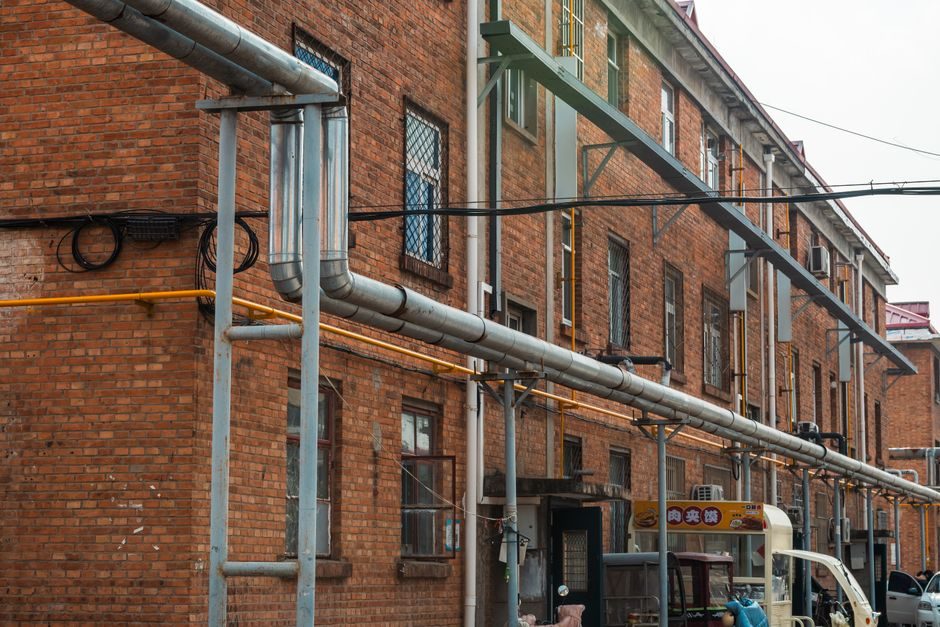
PPR (Polypropylene Random Copolymer) pipe total cost of ownership is a 50-year lifecycle stack where material grade, fusion-labour hours, and certification paperwork move the number more than the per-metre resin price [S1][S2].
Across residential hot/cold water, building HVAC risers, and light-industrial process lines, the same TCO framework applies: acquisition cost is one line item, while installation, energy losses through heat transfer, maintenance access, and end-of-life replacement dominate the full 30-50 year ledger [S1][S2].
What TCO Means for a PPR Piping Run
TCO (Total Cost of Ownership) is a 3-5 year averaged spend model that captures acquisition cost plus annual operating cost, and it is the standard technical-economics frame procurement engineers use when comparing pipe systems [S2]. For a PPR installation, the typical TCO buckets are: pipe + fittings (material), fusion-machine and electrician time, hanger/insulation, annual maintenance hours, energy loss through standing heat, water-damage risk reserve, and decommissioning [S1][S2]. The purchase price of the resin-and-fittings line is commonly under 25% of the 50-year stack on a building riser, with the remainder split across labour, energy, and risk.
Material Cost Drivers: PPR vs PPR-CT vs PPR-FIBER
Three PPR-family grades show up in tenders: standard PPR (Type 3 homopolymer random), PPR-CT (crystalline-resistant random copolymer for chlorinated-water and higher-T applications), and PPR-FIBER (PPR-FGF, glass-fibre reinforced middle layer). Standard PPR (PN 20 / SDR 7.4) is the price baseline, used for cold water up to 20 °C and hot water up to 60 °C continuous at 10 bar [S1]. PPR-CT typically commands a 15-30% material premium over standard PPR but extends usable hot-water service to 70 °C continuous and tolerates higher chlorine residual, which matters for municipal and hospital specs. PPR-FIBER cuts linear thermal expansion roughly to one-third of plain PPR, which reduces hanger count and slider-block quantity on long risers, recovering a share of the material premium in installation labour [S1].
Installation Labour: The Single Largest Line
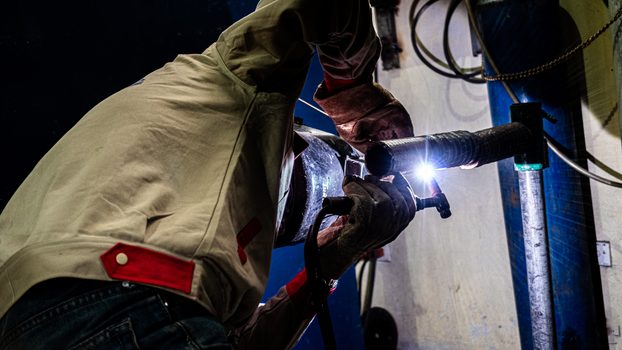
Socket fusion of PPR runs at roughly 1.5-2.5 minutes per 20 mm joint for a trained installer with a thermostatically controlled welding machine, and the 260 °C heating-soak cycle, 4-6 second changeover, and 30-second cool-hold govern joint throughput on site. On a 4-storey residential riser with 80-120 fusion points, fusion time alone consumes 6-12 labour-hours per stack, and the welding machine rental, generator power, and calibration log add indirect cost that frequently exceeds the fittings' purchase price on small-diameter work [S1]. A wrong spec (using plain PPR on a 70 °C heating loop, for example) shows up not at installation but in year 8-12 as creep deformation, and the remediation cost on a finished riser is typically 8-15x the original joint cost. This is why material-grade selection belongs in the spec-gate, not the procurement gate.
Operating-Cost Stack Over a 50-Year Service Life
At 60 °C hot-water service and PN 20 class, a properly installed PPR system has a design service life of 50 years under ISO 15874 reference conditions, and the 50-year energy line item is dominated by standing-heat loss through uninsulated runs in plant rooms and ceiling voids [S1]. A 32 mm uninsulated PPR line at 60 °C ΔT 50 K loses roughly 30-50 W/m to ambient; adding 13 mm closed-cell elastomeric insulation drops that loss to under 10 W/m, and the insulation cost amortises through energy savings in 3-6 years on continuously circulated hot water. Maintenance on PPR is low compared with metallic systems: no anode replacement, no internal corrosion monitoring, and joint failure modes are typically gross (visible leak) rather than pinhole, which simplifies condition-based inspection.
Who Should Specify PPR vs Who Should Walk Away
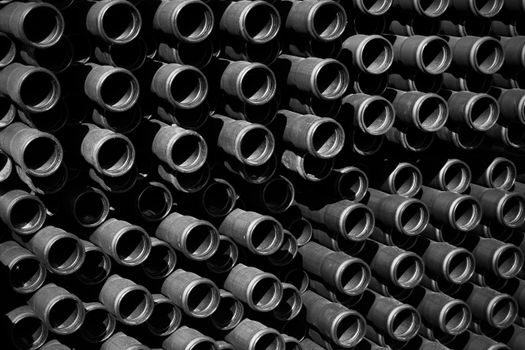
PPR is the right call for hot/cold potable water, building HVAC risers up to about 110 mm diameter, compressed-air drops at low pressure, and light-industrial process water where peak temperature stays below 70 °C and chemistry is near-neutral (pH 6-9) [S1]. It is the wrong call for outdoor UV-exposed runs without a UV-stabilised jacket, for fuel-oil or solvent service, for open-flame proximity where ASTM E84 / EN 13501-1 fire class is unacceptable, and for any continuous service above 95 °C. For these cases, the related spec map on PPR pipe pros, cons, and selection gates lays out the substitution logic against PPR pipe selection and competing plastic-pipe families like PE-RT and PEX. For the broader TCO frame on building products, the SPC flooring 10-25 year cost stack provides a parallel reference.
Failure Modes and Inspection Cadence
PPR's three field failure modes are: (1) fusion-joint cold-weld from under-heating or dirty sockets, which fails at pressure test, not in service; (2) creep rupture on over-temperature cycles, typically at threaded adapter transitions where stress concentrates; and (3) oxidation-driven Stage 2 brittle failure on hot-water service when stabiliser package is undersized. Visual inspection at 5-year intervals, pressure-test at year 1 and year 25, and ultrasonic wall-thickness spot checks at transitions are the standard condition-monitoring set, and a 50-year leak-free track record is achievable when the spec and fusion protocol are both right [S1][S2].
Total-Cost Levers Procurement Can Actually Pull

The four cost levers that move the TCO line the most: (a) grade standardisation on PN 20 SDR 7.4 across a project, which keeps fusion parameters identical and reduces operator error; (b) pre-fabrication of riser sections off-site under factory weld logs, which cuts on-site fusion time by 30-50%; (c) insulation specification at the design stage, not as a site afterthought; and (d) joint traceability through numbered welds and GPS-tagged fusion logs, which collapses insurance reserve on water-damage risk [S1]. The TCO concept itself is a procurement frame for owning, not buying, the asset, and the same logic that Busch applies to vacuum pumps - that initial purchase price is only a fraction of lifetime expense - applies directly to a 50-year plastic-pipe run [S1].
Spec gate to set before issuing a tender: PN class, SDR, raw-material grade (PPR / PPR-CT / PPR-FIBER), fusion protocol reference (DVS 2207 or ISO 15874), insulation k-value and fire class, and a 50-year service-life certificate from the manufacturer.
The underlying component specifications are covered under total station, and pe pipe.