
For 3mm aluminum veneer panels, the practical PVDF film-thickness band sits at 25-40 microns for a two-coat system and 40-60 microns for a three-coat primer + PVDF topcoat + clearcoat stack, with the primer, color coat, and clearcoat each measured as a discrete layer rather than blended into a single reading [S7].
The 3mm substrate itself is a stock item in both aluminum composite panel (ACP) and solid aluminum veneer (SAV) families, with stock panel widths of 1000-1570 mm and lengths of 2440-5800 mm on the ACP side, and aluminum skin gauges between 0.25 mm and 0.50 mm selected to balance dent resistance and dead load on the curtain-wall rail [S4][S5].
Why 3mm Aluminum Veneer Is the Default Stock Geometry
The 3mm total panel thickness is the most common exterior ACP stock size at 1220x2440 mm, paired on the heavier side with 4mm; interior partitions typically drop to 3mm while exterior cladding is more often built up to 4mm when longer spans are needed [S2]. The reason 3mm persists for exterior aluminum veneer panel builds is the combination of bending stiffness against wind load and a thin enough profile that the standard cassette-style sub-frame accepts it without retooling.
Panel flatness is verified by laying the sheet on a precision surface and reading edge straightness with a 1000 mm steel rule plus feeler gauge, while warpage is read against the same reference rule with a 0.5 mm resolution scale; this is the same flatness regime the coating line must respect, because coil and spray PVDF both follow the substrate rather than level it [S2].
PVDF Coating Stack Anatomy and Where the Micron Budget Goes
A two-coat PVDF system on architectural coil applies a conversion/primer layer plus a 70 percent PVDF resin topcoat, with a baked metal temperature window of 230-250 degrees C during cure, the same thermal regime that drives pigment choice and resin flow [S4]. A three-coat system adds a clearcoat on top, and that is the system where the 40-60 micron total film budget applies, with each layer measured separately against the AAMA 2605 weathering and dry-film-thickness test methods [S7].
70 percent PVDF resin-based coatings were introduced commercially in 1965, and have since become the dominant architectural exterior specification because the fluoropolymer backbone gives both low erosion rate and color retention that no PE or polyester topcoat can match over the same weathering exposure [S3]. The two most-cited resin families on the U.S. market are Hylar (Solvay Solexis) and Kynar (Arkema), and both are qualified to the same weathering standards regardless of which coating brand (Fluropon, Duranar, etc.) blends them [S3].
How PVDF Thickness on 3mm Panel Compares Against Other Topcoats
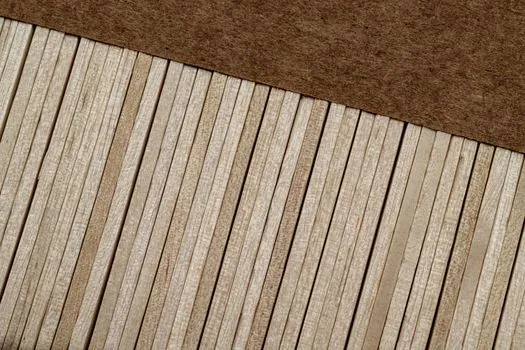
PE-coated ACP has a documented service life of 5-8 years and is normally restricted to interior partitions or short-term exterior signage, while PVDF-coated ACP carries a 15-20 year exterior service life away from heavy salt spray, with light colors (white, gray, black) holding their shade across that full window [S1]. The same source notes dark PVDF colors still fade over time, only more slowly than dark PE colors, which is why premium 3-coat stacks with a clearcoat are standard for dark-color specifications [S1][S7].
The structural difference behind those lifespans is the film system itself, not just resin chemistry. PE is a single-coat polyester film of roughly 20-30 microns; PVDF two-coat is 25-40 microns; PVDF three-coat is 40-60 microns; and the additional 10-20 microns on a three-coat dark-color spec is what pays for the extra fade budget [S7]. For salt-spray zones, even PVDF 3-coat is often insufficient, and that is where the specifier either steps to AAMA 2605-tested thicker films or moves to solid aluminum veneer with the same PVDF stack but no PE core wicking moisture at cut edges [S1][S5].
Substrate and Process Rules That Constrain the PVDF Film
Aluminum skin thickness under the coating has its own tolerance band, with 0.25 mm, 0.30 mm, 0.35 mm, 0.40 mm, 0.45 mm, and 0.50 mm the typical envelope, and the measurement excludes the coating thickness when read with a micrometer of 0.001 mm resolution at four corners and center [S2][S4]. Skipping the coating exclusion step is the most common cause of falsely rejected skins during incoming inspection, and it also throws off the PVDF coating thickness gauge reading if the calibration is not on bare substrate of the same alloy.
Solid aluminum veneer variants of 3mm (rather than 3mm ACP) are commonly stocked in 1.5, 2.0, 2.5, and 3.0 mm thicknesses, with maximum sheet widths of 2000 mm and lengths up to 6000 mm in aluminum alloys of the 1xxx/3xxx/5xxx families, and a per-sqm price band of roughly USD 25-55 at factory gate for PVDF-finished stock [S5]. Cutting, CNC routing, bending, and painting are typical downstream steps, and any field bend near 90 degrees is where thinner PVDF films show cracking first, which is why 3-coat stacks on 3mm SAV often get a 50-60 micron target rather than the lower 40 micron end of the band [S5][S7].
Standards, Verification, and the Tests That Actually Catch a Bad Film
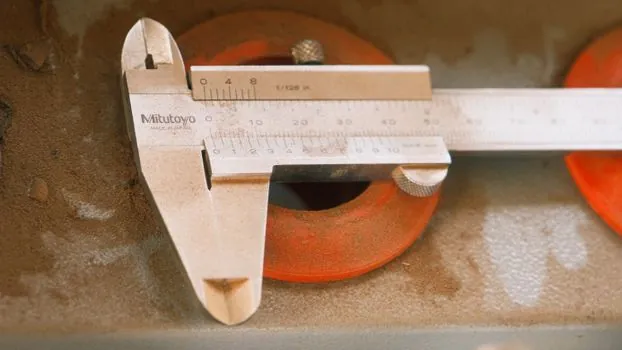
Coating thickness on aluminum veneer is verified per GB/T 4957 (eddy-current/magnetic methods on aluminum substrate) at enough points to read the full panel face, and the result is the total film thickness across primer plus topcoat (and clearcoat, if present) [S2]. Where the spec calls for an AAMA 2605-class PVDF system, the same coating line is expected to deliver separate primer, color, and clearcoat film builds, each with its own minimum, rather than a single composite number [S7].
The Sherwin-Williams coil-extrusion guide and ALPOLIC/fr data sheet both confirm that 3mm and 4mm are stock substrate thicknesses for PVDF-finished architectural panels, with panel widths 965 mm, 1270 mm (and other stock widths) and Performance Requirements aligned to AAMA 2605 weathering classes when the job is high-exposure [S3][S6]. The ALPOLIC/fr technical data sheet in particular ties PVDF finishes on 3 mm, 4 mm, and 6 mm panels to a documented Performance Requirements and Test Procedures framework, which is the reference most specifiers use to write a 25-40 micron two-coat or 40-60 micron three-coat line item on the data sheet [S6].
What Goes Wrong on 3mm PVDF Panels in the Field
Three failure modes dominate: under-cure at bake (peak metal below 230 degrees C), which yields a soft film that erodes fast; over-cure (peak metal above 250 degrees C), which embrittles the film and cracks at panel-bending stations; and excessive clearcoat over dark PVDF basecoats, which traps solvent and shows delamination within 5 years [S4][S7]. All three are caught by industrial coating QA: cross-hatch adhesion per ASTM D3359, pencil hardness, and a coating thickness gauge cross-check at coupon level rather than relying on the line's setpoint only.
Two practical pointers from the field: 3mm ACP with a PE core must not be field-cut and re-sealed on the cut edge with a generic enamel, because the PE core wicks moisture and pushes the PVDF film off the aluminum at the cut; solid 3mm SAV avoids that mode entirely but adds dead load that the sub-frame must be designed for [S4][S5]. For dark colors (RAL 9005, 8019, 7016) on coastal or high-UV facades, hold the spec to a 3-coat 50-60 micron PVDF system with a separate clearcoat, verified layer-by-layer rather than as a single composite reading.
For a tighter spec on the same 3mm aluminum stock, the waterproof coating reference covers primer and topcoat selection by exposure class, while the broader aluminum veneer panel entry covers panel flatness, alloy, and skin gauge envelopes. On a procurement audit, ask the mill for a layer-by-layer coating thickness gauge printout (primer, PVDF topcoat, clearcoat), a coil-bake log showing peak metal temperature, and a weathering class certificate per AAMA 2605; if any of the three is missing, treat the data sheet as incomplete.
Related analysis: PT slab tendon drape calculation: load-balancing math and design limits.