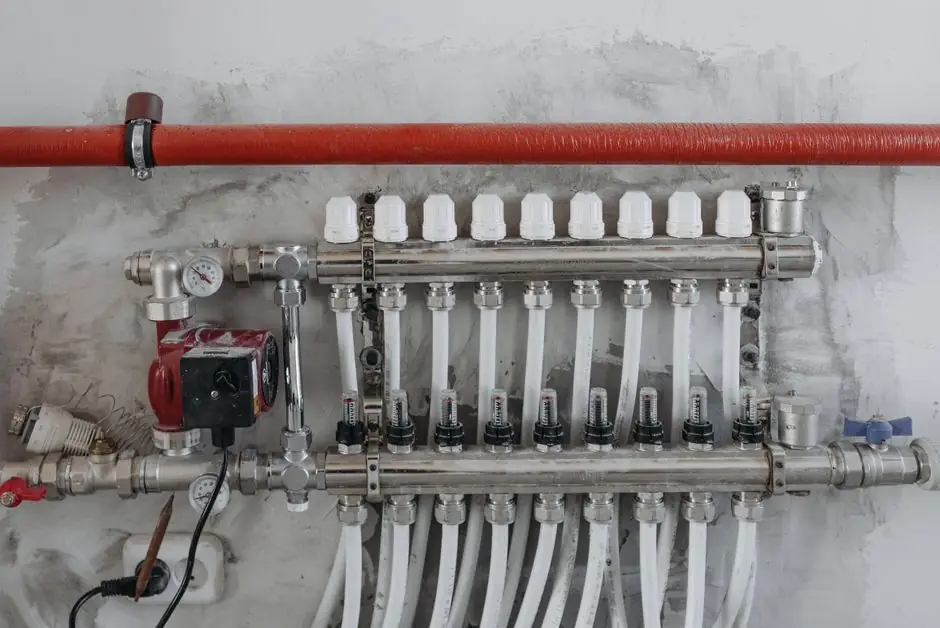
Specifiers who budget on per-meter pipe price alone under-allocate by 15-30% on the fittings column, because heat-fusion socket fittings, brass-transitional unions, and shut-off valves carry higher unit prices ($0.50-$2.50 per fitting class tier) and inflate through joint-count geometry on every change-of-direction [S4][S5].
Cost driver 1: resin exposure and 2026 price sensitivity
Approximately 75-85% of PPR pipe and fitting manufacturing OpEx traces back to polypropylene random copolymer resin, the same feedstock used across hot/cold water, HVAC, and industrial lines [S4].
For a 2026 budget, monitor crude and propylene spreads as the leading indicator, not the pipe supplier's quarterly list. Asian-sourced lots (China, Turkey, Vietnam integrated petrochemical clusters) carry 20-40% lower unit cost than EU or North American equivalents, but require DIN 8077/8078 or ISO 15874 documentation verification before acceptance [S4].
Cost driver 2: fitting geometry versus pipe footage
A typical residential PPR manifold uses 1.5-2.5 fittings per linear meter of pipe, so on a 200 m branch layout the fittings line reaches 300-500 pieces, comparable in mass and frequently higher in cost than the pipe itself [S4]. Elbows (90 and 45 degree), equal tees, reducers, and male/female threaded adapters dominate the count, with brass-insert transition fittings the single most expensive SKU at $1.50-$3.00 per piece in mid-2026 catalogs [S5].
Industrial and HVAC runs shift the ratio further: long straight radiator feeds can drop fittings to 0.5-0.8 per meter, while multi-storey risers with multiple branches and service valves climb to 3-4 per meter, which is why the PPR pipe price reference entry on fitting-to-pipe ratios belongs in every cost engineer's working folder [S4].
Cost driver 3: certification tier and pressure class

Pressure rating drives fitting wall thickness: PN10, PN16, PN20, and PN25 PPR fittings differ in material mass by 20-60%, and PN25 (glass-fibre reinforced, higher-temperature service) carries a 30-50% price premium over PN20 cold/hot-water fittings in the same diameter [S5]. Cold-water-only plumbing can hold PN16 or PN20 to control cost, while continuous hot-water recirculation at 60-95 degC forces PN25 specification, locking in the higher tier across the entire fittings line [S5].
Certification adds another 5-15% to the unit price depending on the body: DIN 8077/8078 (Germany), ISO 15874 (international), or regional marks (GB/T 18742 China, GOST Russia). Bulk procurement against a single certification standard compresses documentation overhead and is the single most controllable spec-side cost lever [S4].
Material comparison: PPR, PEX, PVC, CPVC, copper
Per-foot material price as of 2026 catalogs: PPR $3-$6 (4-inch), PVC $2-$4, PEX $0.30-$1.80, CPVC $0.40-$1.50, copper $3-$8, with PPR competitive with PEX and CPVC, and 40-60% cheaper than copper on the pipe line alone [S3][S4][S5].
Across five decision criteria, PPR scores: cost (low-medium, tied with PEX), max service temperature (~95 degC continuous, 200 degF peak per supplier data, below copper's 400 degF ceiling), corrosion resistance (high, polymer), installation labor (low for heat-fusion crews, but +$200-$500 in tooling and +15-20% time vs PVC solvent welding), and service life (50+ years vs PVC's 25-40 years) [S2][S3][S5].
The "PPR is cheaper" headline holds only on the pipe line; total installed cost including fittings, fusion tooling rental, and brass transitions is the figure that should drive the bid, which is why the broader pipe fitting cost reference frames fittings as a separate budget line rather than a pipe-line footnote [S3][S4].
Installation and labor: where fitting counts translate to money
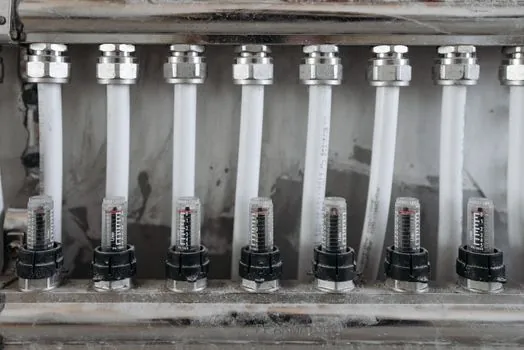
Heat-fusion joining is fast once a crew is trained, but the per-joint cycle is 30-90 seconds versus 10-20 seconds for PVC solvent welding, and each fusion joint consumes a socket-fitting face, so a 200-joint PPR system burns 2-4 hours more welding time than the PVC equivalent [S3]. Skilled PPR fitters command premium rates, and on tight urban projects the labor delta offsets part of PVC's material savings, typically flipping the total-cost verdict back toward PPR once joint count crosses 150 per dwelling [S2][S3].
Joint reliability flips the long-run ledger. Properly fused PPR joints are monolithic with the pipe, eliminating the solvent-cement or solder interface that fails first in PVC and copper systems; field failure rates on correctly made PPR heat-fusion joints are below 1% over a 50-year design life, which is the piping fitting assembly basis that drives the maintenance-cost line down 30-50% versus copper [S2][S3].
Total cost of ownership: a 20-year view
On a 20-year ownership horizon, a PPR system outpaces PVC on lifecycle cost despite PVC's 20-30% lower upfront pipe price, because PPR's 50+ year service life versus PVC's 25-40 year life halves the replacement cycle, and PPR's lower thermal conductivity (~0.22 W/mK versus copper's 400) cuts hot-water standby losses by 10-30% depending on insulation class [S2][S3].
For copper comparisons, 30-50% lifecycle savings are typical when switching to PPR on residential and small-commercial water systems, driven by elimination of pinhole-leak repair, scale-induced flow loss, and the periodic re-soldering copper joints demand in aggressive-water regions [S2]. On the material side alone, PPR delivers 40-60% savings against copper, competitive with PEX on pipe price, but with stronger joint integrity at continuous high temperature [S4].
Limitations and failure modes that affect cost
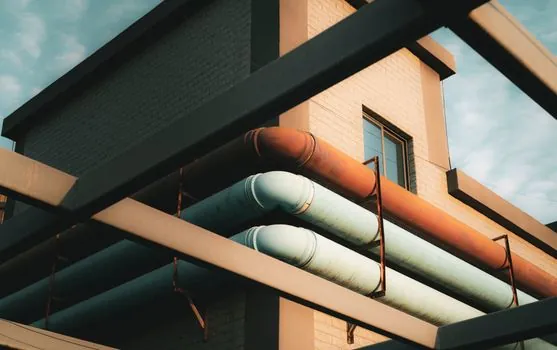
UV degradation, thermal expansion (0.15 mm/m degC, roughly 10x copper), and sensitivity to certain chemicals (concentrated chlorine, aromatic solvents) bound PPR's applicability, and the advanced material compatibility matrix is the right place to verify service chemistry before locking a spec [S1][S5]. Specifying PPR where any of these limits apply pushes total cost upward through early replacement, not through fitting markup, so the constraint check belongs upstream of the budget exercise.
Sourcing and standards checklist for 2026 bids
For 2026 procurement, anchor the spec to ISO 15874-2 (fittings) and ISO 15874-3 (pipes) for international projects, DIN 8077/8078 for EU, and GB/T 18742 for China-domestic supply, with each shipment carrying a batch-level resin traceability sheet so the 75-85% OpEx exposure to feedstock can be audited [S4]. Insist on PN pressure-class marking on every fitting (PN10/16/20/25), and reject lots that mix classes within one fittings carton, a common shortcut that complicates warranty claims [S5].
Request a fittings-to-pipes mass or piece-count ratio from the supplier before signing the PO; reputable vendors disclose 0.6-1.2 kg of fittings per kg of pipe on residential work, and any quote sitting well below that range is almost certainly missing brass transitions, valves, or supports, and will be back-charged during installation, a pattern visible in the construction aggregates cost structure for parallel commodity budgeting. Track the next node: Q1 2027 propylene contract settlements, which historically lead PPR list-price revisions by 30-60 days and will set the floor for the 2027 fittings line.