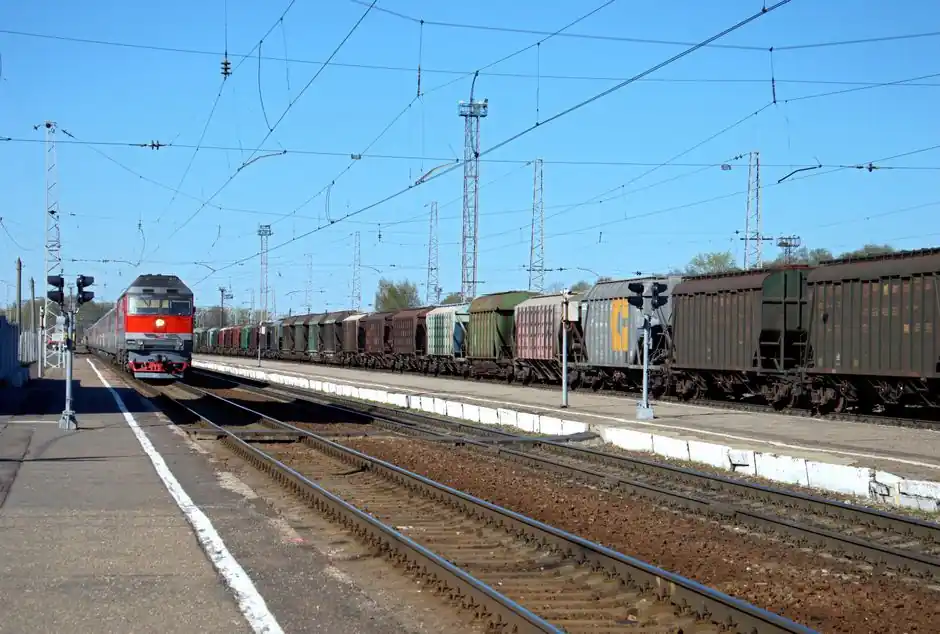
EN 45545-2 has become the de facto fire-safety gate for every thermoset and thermoplastic landing in a passenger railcar, with hazard levels HL1 through HL3, halogen-free formulations, smoke density ceilings, and a CIT (Critical Irradiance Toxicity) index typically held under 0.75 for tunnel-operating stock [S1][S4].
Resin chemists serving metros, light rail, EMU high-speed trains, and locomotive interiors now optimize around three linked targets simultaneously: EN 45545-2 compliance, a structural lightweighting brief, and processing routes (hand lay-up, SMC, RTM, infusion, pultrusion) that fit large-format interior trim panels, seat frames, lavatories, and front-end structures [S2][S3][S5].
Where rail-grade synthetic resin actually lives in a train
FRP and carbon-fiber composite parts built on synthetic resin backbones dominate interior and semi-structural rail hardware: fairings, seat shells, interior panels, lavatory modules, vehicle beams, floor panels, and front-end structures on metros, light rail, and 200 km/h-class EMUs [S2].
Each part family maps to a different mechanical and fire load. A seat back carries impact and scratch duty, with published rail-interior impact strength targets sitting at or above 85 kJ/m² for FST-grade SMC formulations, while a tunnel-stock interior panel has to clear HL3 smoke and toxicity thresholds on top of any structural ask [S4].
EN 45545-2 hazard levels and resin chemistry choice
EN 45545-2 sorts rail materials into HL1 (lowest hazard, surface stock), HL2 (intermediate), and HL3 (highest, tunnel and underground operation), and the resin backbone shifts with each step: orthophthalic unsaturated polyester for general-purpose laminates, isophthalic polyester where higher heat distortion and hydrolytic stability are needed, and vinyl ester or modified epoxy where flame, smoke, and toxicity (FST) budgets tighten [S1][S3][S4].
For HL2 and HL3 interior trim, the published formulation set is alumina-filled polyester with intumescent char-forming chemistry, pre-filled SMC systems for uniform flame-retardant distribution, and a flame-spread rating landing at Class 1 / V-0 on the test pyramid [S4]. Halogen-free, low-smoke, low-toxicity chemistries are the explicit EN 45545-2 specification target, since smoke density and toxicity, not just ignitability, drive survivable egress in tunnel fires [S1][S4].
Resin family comparison for rail specifiers

Orthophthalic unsaturated polyester is the workhorse for cost-driven FRP laminates and panels where general mechanicals and surface finish dominate; it is the cheapest route into EN 45545-2 HL1 and many HL2 interior parts, and processes on hand lay-up, spray-up, RTM, infusion, and SMC lines with good fibre wet-out [S3].
Isophthalic polyester pushes heat distortion, hydrolysis resistance, and wet mechanicals upward, and is preferred for tanks, piping, and rail sub-components that see hot or wet service, while still being compatible with the same moulding routes as ortho grades [S3].
Vinyl ester sits at the top of the corrosion-and-fatigue tier for rail, blending epoxy backbone toughness with unsaturated polyester processing, and is the default where flame-retardant vinyl ester, epoxy vinyl ester, and gel-coat systems are specified for transit interiors and exterior body parts [S2][S3].
Modified flame-retardant epoxy and phenolic-type backbones, including intumescent char-formers and pre-filled SMC, are reserved for the HL3 ceiling where CIT below 0.75, very low smoke density, and structural retention under fire are all required on the same part [S2][S4]. A detailed foundation on backbone chemistry and the synthetic resin families is available in the encyclopedia entry.
Standards stack beyond EN 45545-2
European and Asian rolling-stock buyers layer EN 45545-2 with DIN 5510 (German rail fire behaviour), TB/T 3237 and TB/T 3138 (Chinese rail material limits), TVOC emission caps, and the typical resin test grid of oxygen index, flame spread rate, smoke density (Ds, max), and vertical burning performance, all of which a flame-retardant unsaturated polyester, vinyl ester, epoxy, or gel-coat system must clear to ship into a CRRC or metro program [S2].
The practical consequence is a single test data package per resin grade: an OEM buyer for a 200 km/h EMU lavatory, a metro seat frame, or a railcar front-end will not accept a TDS that only lists tensile and HDT, they will also demand Ds,max, CIT, oxygen index, and a vertical burn rating traceable to the standard mix above [S2][S4].
Lightweighting numbers that drive resin choice
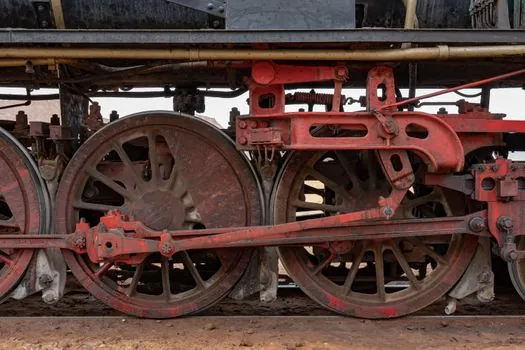
Published program data on Chinese high-speed EMU bogies shows composite replacement of steel components landing 25-40% mass reduction, with downstream operational energy use dropping more than 15%, wheel-rail wear falling over 30%, in-vehicle noise reducing 2-3 dB, and lifecycle cost falling more than 15% across the vehicle program [S2].
Those numbers are why the same spec sheet that demands EN 45545-2 HL2/HL3 also lists a cured laminate density and a specific carbon or glass fibre architecture: the resin system has to cure to a matrix stiff enough to carry bogie and car-beam loads while staying inside the fire budget, and that pushes the shortlist toward epoxy vinyl ester and toughened unsaturated polyester rather than general-purpose ortho [S2][S5]. A wider view of PEEK and POM selections, sometimes used as complementary metal-replacement thermoplastics in rail interior hardware, is also worth scanning for non-fire-critical sub-components.
Processing route and part geometry constraints
Resin selection on rail lines is not separable from the moulding line that will run it. Large interior panels and seat shells go through pre-filled SMC with alumina filler for flame-retardant distribution, complex curved trim goes through RTM or infusion where low-viscosity, controlled-reactivity vinyl ester and iso-polyester systems wet out heavy reinforcement stacks, and flat panels and profiles run through pultrusion with dedicated iso-polyester pultrusion grades [S3][S4].
Processing windows also govern the additive package: intumescent char-formers, ATH (alumina trihydrate) fillers, low-shrink additives, and UV-stabilized top-coat systems all sit on top of the base resin, and each one can shift both the fire and the mechanical rating, so rail programs lock the full formulation rather than the bare backbone [S3][S4].
What this means for a 2026 rail resin spec

A defensible rail-grade synthetic resin specification in 2026 names the EN 45545-2 hazard level (HL1, HL2, or HL3), the secondary standards (DIN 5510, TB/T 3237, TB/T 3138, TVOC), the smoke and toxicity ceilings (Ds,max, CIT), the backbone (ortho, iso, vinyl ester, modified epoxy), the filler and additive package (intumescent, ATH, low-shrink), and the validated process route (SMC, RTM, infusion, pultrusion, hand lay-up), all backed by a single TDS that lists both mechanical and fire data together [S1][S2][S3][S4].
Trackable signals for the next quarter include any update to EN 45545-2 test methods around CIT and Ds,max, the next round of CRRC and metro tender TDS releases, and published front-end structural composite programs for 250 km/h+ EMU and metro stock; these are the documents that will reshape the resin shortlist before the next spec refresh [S1][S2][S5]. A useful side read on resin selection in a different but related toolroom context is Synthetic Resin Selection for Mold and Die Making, which covers backbone choice outside the fire gate.