
Synthetic resin selection in upstream and midstream oil and gas is governed by four non-negotiable gates, with PEEK, PPS, PVDF and PTFE grades routinely quoted for continuous service in the 150-260°C band [S3]. A single NACE MR0175 non-compliant backup ring on a subsea ESD valve can trigger a well intervention costing USD 1-3 million per day, so the spec gates are not academic.
Material datasheets for PEEK 450G and Victrex 450CA30 rate continuous use up to 260°C in the absence of oxidative attack, while PPS 40% glass-filled grades bridge 200-240°C and PVDF (Kynar 740, Solef 1015) caps near 150°C with strong halogen resistance [S3]. The full synthetic resin family covers both amorphous and semi-crystalline grades, and crystallinity is the first discriminator for chemical and creep behaviour at temperature.
Material Family Map: PEEK, PPS, PVDF, PTFE and PAEK Compounds
PEEK (polyetheretherketone) is the workhorse for high-temperature, high-pressure seals, compressor scrolls, and downhole electrical connectors, with a melting point of 343°C and a continuous service ceiling around 260°C in air [S3]. PPS (polyphenylene sulphide, Ryton R-4 or equivalent 40% glass-filled grades) bridges the 200-240°C window where PEEK is over-specified and PA66 fails, with a melting point near 280°C and moisture absorption below 0.05%.
PVDF (polyvinylidene fluoride) is the default for chemical injection tubing and valve linings handling HCl, HF and brine, with a continuous ceiling of about 150°C. PTFE and modified PTFE cover the -200 to +260°C band and remain the go-to for O-ring back-ups, labyrinth seals and low-friction wear pads [S3]. For sealing and oil seal back-up duty, the 30% carbon-filled PEEK grade (Victrex 450CA30) reaches surface resistivity around 10^3-10^5 ohm/sq, which is enough to pass anti-static ATEX requirements.
Semi-crystalline grades (PEEK, PPS, PVDF, PA66) deliver better chemical and creep resistance than amorphous grades (PEI Ultem, PSU, PES) at the cost of higher moulding shrinkage. The reinforcement step matters as much as the base resin: 30% glass-filled PEEK lifts tensile strength from roughly 100 MPa (virgin) to roughly 180 MPa [S3]. For broader context on amorphous versus semi-crystalline behaviour, the engineering plastics reference entry lays out ISO 1043-1 resin codes and the generic property envelope.
Four Spec Gates You Cannot Skip in 2026
Gate 1 is temperature: the operating envelope must sit inside the polymer's continuous service temperature with at least a 15-20% safety margin, and the minimum temperature (typically -40°C or -60°C for Arctic or subsea service) must clear the polymer's glass transition [S3]. PEEK Tg sits near 143°C, PPS Tg near 90°C, and PA66 Tg near 50°C, which is why PA66 is rejected for most upstream duties and reserved for topside cable ties and junction box internals where ambient stays above 0°C.
Gate 2 is chemical compatibility: cross-check the polymer against the full fluid list (hydrocarbon phase, water phase, methanol, MEG, corrosion inhibitor, H2S partial pressure, CO2 partial pressure) using ASTM D543 or ISO 175 immersion data, not marketing brochures [S3]. Gate 3 is NACE MR0175 / ISO 15156 compliance for any component exposed to sour service where H2S partial pressure exceeds 0.0003 MPa (0.05 psi) in produced fluids. Gate 4 is ATEX or IECEx certification for Zone 1 and Zone 2 hazardous areas.
Reinforced grades move the goalposts again. 30% carbon-filled PEEK (Victrex 450CA30) supports long-term service up to 260°C and short-term exposure up to 300°C, making it one of the most suitable high-performance polymers for HPHT conditions [S5]. Rapid gas decompression remains a separate failure mode: when CO2 or H2S permeates a material under pressure, sudden decompression can generate internal stress, microcracking, and brittle failure, so material selection must consider permeation rate, not just nominal mechanical properties [S5].
When Acetal, Polycarbonate and Lower-Cost Resins Are Disqualified
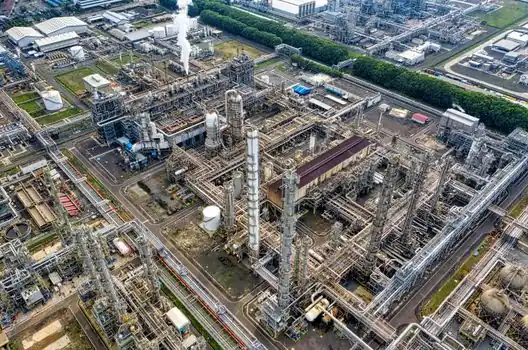
POM-C is more chemically resistant and more stable in hot water and glycol than POM-H, so most oil and gas applications where any thermal margin is critical default to POM-C [S6]. Even so, under NACE MR0175 / ISO 15156, non-metallic materials for sour service are restricted to a small list, and POM is typically excluded from NACE MR0175 sour service, chlorine exposure, and hot hydrocarbon duties, which is why PEEK and PPS replace it on the same seal geometries.
Bisphenol-A polycarbonate carries a notched Izod impact of 600-900 J/m and a heat deflection temperature near 130°C (about 10°C higher on glass-filled grades), yet the same material is hydrolytically unstable and unsuited to repeated high-pressure steam service [S7]. In oil and gas specification work, that tension defines the entire selection problem: PC is a tough, transparent, dimensionally stable amorphous thermoplastic on paper, but it cannot hold up to long-term hot water, amines, or steam injection, so it ends up restricted to instrument covers, junction box windows and similar topside enclosures.
For mold and die tooling that touches composite layups in pipe and tank fabrication, the related synthetic resin selection for mold and die making guide covers the tooling-prepreg side of the same family. Lower-cost resins still have a place, but only on the right side of the gates: HDPE, nylon 6/6, glass-filled nylon, TPU and acetal handle topside pipe fittings, valve bearings, bushings, collars, seals and gaskets where temperature stays moderate and the fluid list is clean [S4].
Composites and Pipeline Linings: Resin Systems Beyond the Bulk Polymer
Composite umbilical and spoolable pipe systems pair a thermoplastic liner with a carbon or glass overwrap. Toray's internal thermoplastic liner and CFRT overwrap are used in land and subsea umbilicals, and fiber-reinforced spoolable thermoplastic composite pipe uses Toray Cetex TC1200 PEEK or TC930 HDPE unitapes for the liner with glass or carbon reinforcement for tensile load [S1]. Typical application parts include bridge plugs, composite pressure cylinders, carbon-fiber reinforced tethers, dielectric inspection enclosures, wrapped pipe and tubing, and molded frac spheres.
For internal pipeline protection, novolac vinyl ester resin systems are the workhorse for subsea CIPP and pull-through linings, with verified metrics including adhesion to steel of at least 15 MPa, Barcol hardness of at least 50, ultra-low permeation rates, and stability up to about 140°C in hot crude service [S2]. The resin elasticity is tuned to release gas without internal ruptures under explosive decompression, and the glass-smooth internal surface reduces frictional loss so pumping energy costs drop on long subsea tiebacks.
VE resins are also highly resistant to carbonic acid formed from CO2 and water, which closes one of the standard sweet-service failure modes. In CIPP and pull-through operations, the in-situ curing capability is what allows trenchless rehabilitation of older lines without shutting the asset down. For further reading on how these composites relate to construction machinery and equipment used in pipe-laying and rehabilitation spreads, the engineering reference entry covers the broader equipment envelope.
Decision Comparison: Which Resin for Which Oil and Gas Duty
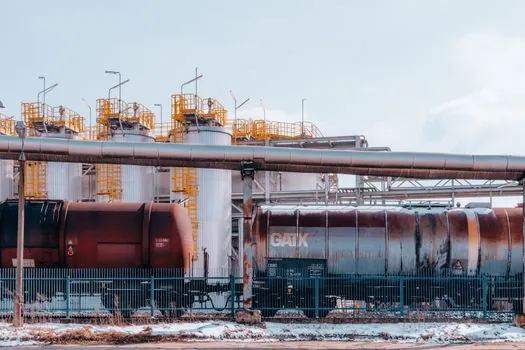
The decision matrix lines up as follows across the four most common duty classes. PEEK and carbon-filled PEEK: 150-260°C continuous service, broad chemical resistance including H2S and CO2, NACE MR0175 capable, best for seals, back-up rings, electrical connectors, compressor scrolls, HPHT bushings [S3][S5]. PPS (40% glass-filled): 200-240°C, very low moisture absorption under 0.05%, good chemical resistance, best for bridge-plug components, valve seats and any part where PEEK is over-specified [S3]. PVDF: ceiling around 150°C, strong HCl/HF/brine resistance, best for chemical injection tubing, valve linings and halogen-service lines [S3]. PTFE and modified PTFE: -200 to +260°C, lowest friction, qualified for O-ring back-ups, labyrinth seals and wear pads in dry or low-load service [S3].
Lower-cost options have narrower windows. HDPE handles topside pipe fittings, elbows, tees and reducers, while nylon 6/6 and glass-filled nylon cover gears, valve bearings, bushings, pump impellers and structural parts where temperature stays moderate and the fluid list excludes strong acids and amines [S4]. TPU and glass-filled TPU cover collars, seals, gaskets, pipe fittings, and electrical cable jackets where flexibility and abrasion resistance matter more than temperature ceiling [S4].
A common failure pattern is to pick POM-C for a hot seal pocket because it machines cleanly, then find out the fluid is sour or contains chlorine, which disqualifies it under NACE MR0175 and forces a re-spec to PEEK [S6]. Specifying the right grade up front, and pairing the resin with the PEEK reference data for thermal and creep limits, is the cheapest way to avoid a USD 1-3 million-per-day intervention later.
Verification and Standards You Must Cite on the Datasheet
Every resin call-out for a sour-service component should reference NACE MR0175 / ISO 15156 qualification, the H2S partial pressure the polymer was tested at, and the test temperature. For hazardous-area components, the call-out should reference ATEX 2014/34/EU or IECEx certification, the zone (1 or 2), and the temperature class. For immersion data, ASTM D543 or ISO 175 results should be quoted with the actual fluid mixture, not a generic "oil and gas" label [S3].
Standards to anchor in the datasheet, where the research supports them, include ISO 1043-1 for resin codes, NACE MR0175 / ISO 15156 for sour-service non-metallics, ASTM D543 and ISO 175 for chemical compatibility, and ATEX 2014/34/EU plus IECEx for Zone 1 and Zone 2 certification [S3]. The reference page for lighting equipment and electric lamps sits outside this topic, but the same ATEX discipline that governs Ex d enclosures on luminaires applies to any plastic component fitted inside a hazardous-area housing.
Trackable signals for the next quarter: any update to NACE MR0175 / ISO 15156 that expands the qualified polymer list for higher-H2S partial pressures, any IECEx or ATEX test data on 30% carbon-filled PEEK for anti-static Zone 1 service, and any new vinyl ester or novolac VE system with published permeation data below the current subsea CIPP benchmark. Each of these will shift the selection map on the next spec revision.