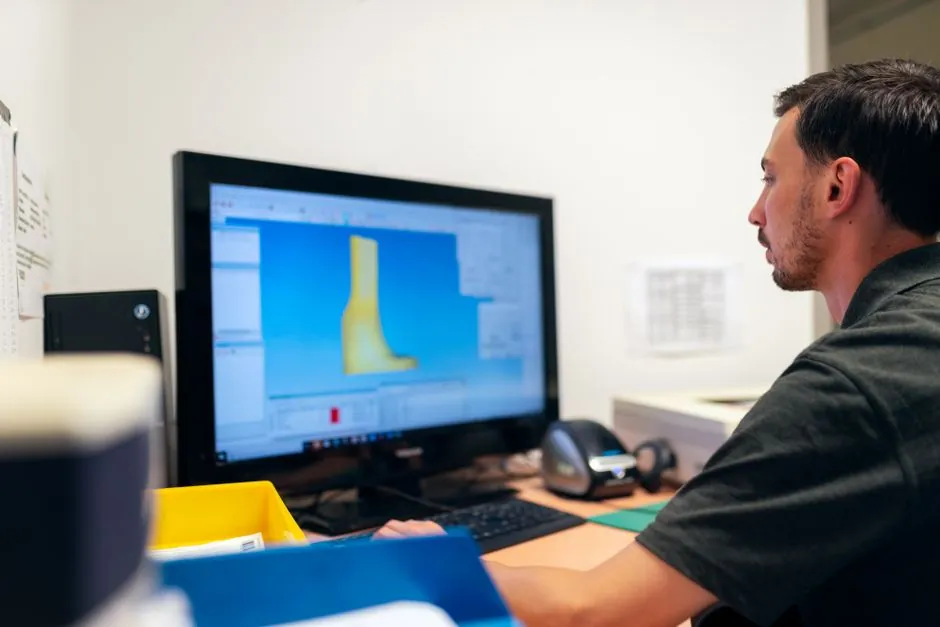
A new mold base can take 16 weeks to source as a finished assembly, while component-level procurement and in-house assembly can remove that supplier delay from the critical path [S2].
The practical approach combines a frozen dimensional package, early design-for-manufacturability review, parallel procurement, and a clearly defined delivery point for first samples or approved production parts [S1][S3].
Separate mold-base procurement from the full project schedule
Mold-base lead time is not the same as tooling lead time, sampling lead time, or production cycle time. Tooling includes mold design, machining, assembly, and initial test shots, while sampling covers T1 or T2 trials, dimensional inspection, functional checks, and customer approval [S1].
A complete project can require 14 to 24 weeks from approved design to first shipment for a new production mold, with DFM taking 1 to 3 weeks, tool construction 4 to 16 weeks or more, each sampling round 1 to 3 weeks, approval 2 to 6 weeks, and the first production shipment another 2 to 4 weeks after approval [S4].
The procurement question should therefore be precise: what event starts the quoted period, and what event ends it? One quotation may cover first samples, while another includes a validated production order [S1]. A finished mold base that arrives after design approval cannot shorten the upstream release date unless it was reserved before the relevant engineering decisions were closed.
Freeze the dimensions before committing a long-lead base
The fastest route is to remove avoidable rework from the schedule. DFM and mold-flow analysis typically take 1 to 3 weeks and can catch undercuts, draft errors, poor gate locations, short-shot risk, uneven cooling, and shrinkage problems while changing the design still costs hours rather than weeks [S3][S4].
DFM and mold flow analysis typically take one to three weeks [S4]. A formal design freeze and one named approval owner give procurement a defensible release point rather than an open-ended sequence of informal reviews [S1].
Freeze the information that controls base selection, including plate thickness, plate dimensions, guide-pin and bushing sizes, fit class, support-pillar arrangement, ejector layout, and locating components. The mold base is a coordinated system of plates, guide pins, bushings, return pins, springs, ejector plates, support pillars, locating rings, and their fit relationships, not merely a drilled plate [S2].
Choose between a finished base and component-level procurement

A finished assembly offers one part number and one shipment, but it also transfers the supplier's machining margin, scheduling buffer, freight, and risk premium into the purchase [S2]. Component-level procurement allows the buyer to stock standard plates, guide sets, return-pin and spring combinations, ejector hardware, supports, and locating parts against actual build demand [S2].
Marlan Tools’ in-house capabilities include precision machining, grinding, wire and CNC ram EDM, and mold maintenance and reconditioning, while purchasing a finished mold base carried a 16-week lead time and supplier-related costs and risks [S2].
Build procurement around the critical path
Long-lead steel, components, hot-runner systems, and externally processed textures should be ordered as soon as their controlling dimensions are stable [S5].
Use a milestone schedule with named dependencies rather than a single unsupported week count. Track design release, DFM approval, component purchase, steel receipt, machining start, assembly, first-shot readiness, correction closure, and customer approval as separate milestones [S5].
Standardize repeat purchases without freezing errors

Standardization reduces the engineering work associated with every new base. Specify common plate thicknesses, guide-pin and bushing size-and-fit combinations, return-pin and spring packages, ejector hardware, support pillars, and locating components [S2]. The value is not simply fewer part numbers: it is a repeatable assembly method whose fit relationships have already been defined.
For repeat projects, maintain controlled revisions for drawings, bills of material, supplier specifications, and inspection criteria. Set a minimum inventory level for components that have historically gated assembly, then replenish using demand rather than approving each purchase at job release. Automated inventory and order workflows can reduce manual processing delay, while performance metrics such as supplier on-time delivery and stockout frequency make schedule risk visible [S7][S8].
Do not standardize dimensions that remain dependent on the part envelope, platen footprint, or clamp force. Validate the selected base against press and crane limits before ordering; the related calculation for mold base weight helps prevent a compressed procurement schedule from creating an installation bottleneck.
Use a bridge route only when the risk is explicit
Prototype and bridge tooling can provide an earlier supply route when production steel cannot meet the launch date. Published planning ranges are 2 to 6 weeks for prototype tools, 4 to 10 weeks for bridge tools, and 8 to 20 weeks or more for production tools [S1]. Evok Polymers places prototype-tool output at roughly 50 to 5,000 parts before replacement and notes that aluminum tooling can shorten lead time by 20 to 40 percent relative to steel, at the cost of a second tooling path and added risk [S3].
Bridge tooling is appropriate for design validation, low-volume supply, or a controlled launch phase. It is not the automatic answer for stable production volume because bridge and production tools can differ in durability, material, finish, and repeatability. The commercial saving must also be compared with the added engineering transfer, duplicated maintenance, and eventual changeover effort [S5].
Fast-cycle production options also require a separate approval path. General engineering parts may run at 15 to 45 seconds per cycle, while thick structural or large automotive and industrial parts may require 60 to 120 seconds or more, but those figures describe one-part production and do not reduce tooling, trial, or approval time [S1].
Control quality while shortening procurement
Speed is not achieved by removing inspection or accepting unspecified assemblies. For an in-house build, verify guide-pin and bushing fit, plate thickness, support-pillar alignment, ejector-system travel, and locating-component position before assembly [S2]. A mold base carries production loads repeatedly, so dimensional error is a lifecycle problem rather than a one-time receiving discrepancy [S2].
Include three measurable commitments in the order plan: the base delivery date, the required inspection evidence, and the consequence for downstream machining if acceptance fails. Do not release cavity or core steel until the DFM review and dimensional package are approved, and do not count first samples as production approval unless the quotation explicitly includes validation and customer sign-off [S1][S4].
The next trackable signals are the supplier's committed component date, the approved design-freeze date, and the date machining can begin. If those three dates do not support the launch schedule, the buyer has identified the actual constraint rather than accepting a generic lead-time estimate [S5].