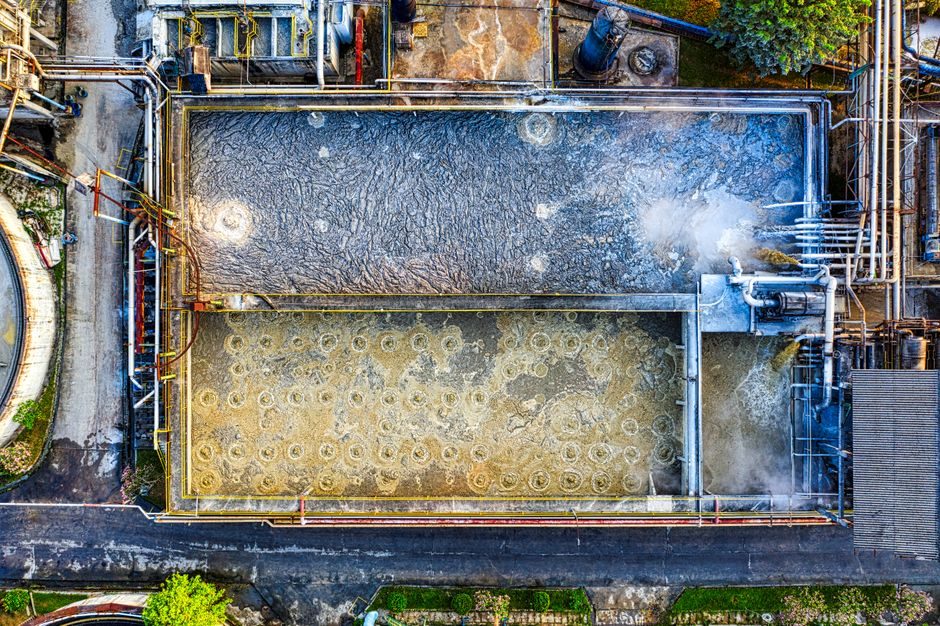
RO membrane market size is projected to climb from USD 3.73 billion in 2024 to USD 5.11 billion by 2029 at a 6.5% CAGR, with thin-film composite membranes capturing the majority of unit share and water & wastewater treatment accounting for the largest end-use slice [S3].
Asia-Pacific is the fastest-growing regional bucket over the forecast window, powered by desalination capacity additions in China and India and by tightening municipal discharge rules; vendors and skid builders are extending localized stocking and service networks to capture that pull [S3].
Where the Volume Is Going in 2026: End-Use and Regional Mix
Water and wastewater treatment retains the largest revenue share of the RO membrane market, driven by municipal drinking-water upgrades, industrial ZLD/recirculation loops, and tightening effluent rules across major manufacturing hubs [S3]. Industrial processing - food & beverage, pharma water-for-injection pre-treatment, and semiconductor ultrapure water - forms the second tier, with brackish-water RO (BWRO) units typically specified at 150-300 psi feed pressure versus 800-1,200 psi for seawater (SWRO) trains, a pressure gap that drives both energy and pump-selection decisions on the skid. Industrial RO skids listed on Asian B2B platforms in mid-2026 show salt-rejection specifications clustering at 99.0% to 99.9% under ISO9001/CE/RoHS compliance, with hourly capacities spanning 4-10 m³/h on packaged units and 50-50,000 gal/day (roughly 0.19-189 m³/h) on larger configurable skids, with feed-water contact parts commonly supplied in 304/316L stainless [S5]. These are realistic ranges to anchor a buyer short-list before custom skid engineering begins.
Technology Split: Thin-Film Composite vs Cellulose-Based Membranes
Two membrane families carry commercial RO volume: thin-film composite (TFC) polyamide membranes, which dominate modern seawater and brackish installations, and cellulose-based (typically cellulose acetate / cellulose triacetate) membranes, which retain niche use in selected low-fouling potable duty where free-chlorine tolerance matters [S3][S4]. The TFC structure layers a thin polyamide rejection skin on a microporous support, typically polysulfone, cast onto a non-woven backing; this asymmetric composite delivers the ~99% nominal salt rejection seen in commercial 8-inch elements and operates at the higher flux densities that shrink skid footprint [S4]. Hydranautics, a Nitto Group company acquired in 1987, continues to be cited as one of the global leaders in membrane technology, offering RO, NF, UF, and MF product lines for industrial and municipal duty [S1]. Cellulose-based membranes tolerate continuous low-level free chlorine better than polyamide but trade away rejection rate and chemical-cleaning pH window, so they remain a deliberate engineering choice rather than a default.
Selection Criteria Buyers Are Using in 2026

A fourth lever is feed-water chemistry compatibility: polyamide TFC tolerates pH roughly 2-11 during cleaning but degrades under continuous free chlorine above ~0.1 ppm, which is why most pretreatment trains dose sodium bisulfite upstream of the high-pressure pumps. Material of construction for the pressure vessel and end-cap (commonly FRP wrap with ABS or stainless end-caps; 316L on hygienic and offshore duty) and element geometry (standard 4-inch and 8-inch diameters, 40-inch length dominating) round out the spec. Linked here for adjacent context: see the RO membrane market sizing reference for the parallel market-data write-up, and the membrane water treatment price-band and FRP-housing reference for skid-level cost structure.
What the Chemistry Side Looks Like: Dispersants and Antiscalants
Reverse osmosis membrane dispersants - a sub-class of antiscalants - are typically polyacrylic, polymaleic, or phosphonate-based formulations dosed in the 1-10 mg/L range to keep calcium carbonate, calcium sulfate, and silica from precipitating on the membrane surface, which would otherwise raise differential pressure and cut flux. Listings on chemical supplier databases in mid-2026 surface USP/BP/EP grade RO dispersants for industrial and research use, reinforcing that the antiscalant supply chain is bifurcating between commodity polyacrylate generics and higher-purity pharmacopoeia-compliant grades for pharma and food duty [S2]. The practical implication for a spec engineer: a ZLD plant running 75-80% recovery on brackish well water will not hit nameplate flux without a matched antiscalant program, and silica-limited feeds (above roughly 150 mg/L SiO₂ at ambient pH) will demand either a higher-pH recovery reduction or a specialty antiscalant rather than a generic polyacrylate.
Failure Modes and Operating Limits to Design Around
The four chronic failure modes on operating RO skids are: (1) fouling and scaling, which raises normalized differential pressure and is the leading cause of premature element replacement; (2) chemical oxidation damage to the polyamide layer, usually from chlorine breakthrough or incompatible cleaning chemicals; (3) mechanical damage from water hammer, permeate back-pressure, or thermal shock during CIP, which delaminates the glue line and the feed-channel spacer; and (4) biofouling, which presents as a slippery biofilm on the tail elements and demands non-oxidizing biocide rotation rather than oxidant shocks that would destroy the membrane [S4]. Recovery ratio is the master operating limit: brackish systems run 75-85% recovery before scaling indices break, seawater systems usually 40-60%, and any push past those numbers trades element life for water - a poor economic trade on a USD-denominated membrane replacement cycle. Energy recovery devices (ERDs) - isobaric PX vs turbocharger types - cut SWRO specific energy from roughly 6-8 kWh/m³ to 2-3 kWh/m³, which is why they are now standard on any new SWRO skid above 5,000 m³/d.
Patent and Process-Equipment Backdrop
Legacy Hydranautics process patents, including dynamically formed tubular RO membranes cast hydrodynamically inside a porous support and operated with saline feed supplied to the tube interior while permeate discharges externally, remain part of the cited prior art in current membrane-manufacturing literature, with the solvent-flush replacement step for spent elements still referenced in current tubular-system service procedures [S6]. The takeaway for a 2026 buyer: tubular RO is not a legacy curiosity - it retains a real slot in high-solids, high-TSS, and high-pH industrial duty where spiral-wound elements would foul too fast, and stainless tubular housings tolerate pH and chlorine excursions that would destroy a polyamide spiral.
Standards and Test Basis Buyers Should Anchor On
Element performance is normalized to standard test conditions published by the element manufacturer (typically 2,000 mg/L NaCl at 225 psi / 15% recovery / 25 °C for BWRO, 32,000 mg/L NaCl at 800 psi / 8% recovery / 25 °C for SWRO); real-plant performance derates from those numbers via flux and temperature correction factors. System-level acceptance typically references NSF/ANSI 61 for drinking-water contact, plus ISO 9001 quality programs at the skid integrator and CE/RoHS where the unit ships into the EU, all of which are visible on 2026 vendor listings [S5]. Cross-reference for the membrane element category: waterproof membrane is unrelated architecturally but useful as a term-disambiguation bookmark; the more analogous entry for RO-style spiral elements is modified bitumen membrane only as a layered-composite analogue, not as a functional substitute. For buyers engineering the chemical-feed side that pairs with the RO train, dosing pumps and pressure instrumentation are typically covered under the pressure transmitter and pressure sensor categories on skid IO lists.
Trackable indicators for the rest of 2026: (a) the next round of municipal SWRO tender awards in the Gulf and North Africa, where EPC announcements typically set the year-on-yardstick for global SWRO element pricing; (b) any movement in polyamide top-skin patent expirations, which historically opens the brackish element market to additional suppliers and pressures incumbent pricing; (c) reported flux-rate changes on next-generation TFC elements, which directly determine the number of pressure vessels per unit of permeate and therefore the steel, ERD, and high-pressure pump bill on every new skid.