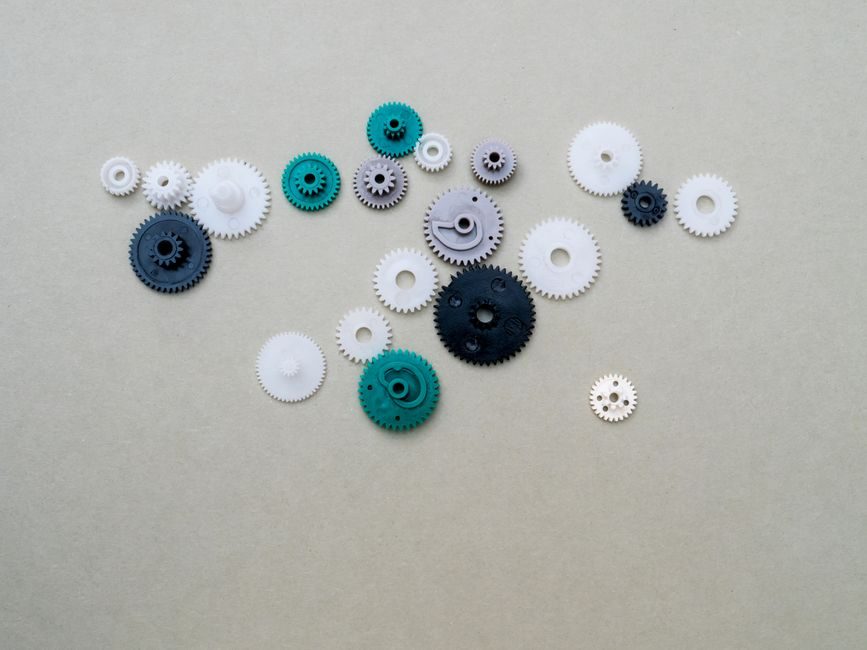
For a 1-piece minimum order, simple compression-molded rubber gaskets and O-rings are commonly listed on B2B portals in the $0.10–$5.00 per-piece band, with the lower end dominated by NBR and natural rubber commodity shapes and the upper end by FKM/Viton or silicone [S1].
Industrial buyers sourcing through OEM and contract-mold shops in Thailand, China, and India see the same materials priced differently: tool amortization, cavity count, and post-cure operations account for the majority of unit-cost spread between a $0.30 commodity gasket and a $40 vibration mount, and that gap holds whether the part is classed as a molded rubber part or a finished industrial rubber assembly [S1][S3][S4].
What the unit price actually contains
A molded rubber part price is the sum of four cost stacks: raw polymer, compounding and pre-form, mold-tool amortization per part, and molding/curing machine time plus secondary deflashing or post-cure [S2][S4].
Raw polymer typically represents 25–45% of factory cost for commodity NBR, EPDM, and natural rubber compounds, but jumps to 50–65% for FKM, HNBR, and VMQ silicone, which is the single largest reason FKM/Viton parts command 3–8× the NBR price at equivalent geometry [S2].
Tool amortization is the most misunderstood line item. A single-cavity steel compression mold for a 50–150 mm part commonly costs $2,500–$8,000 in China and $4,000–$15,000 in Thailand and India; at 10,000 pieces annual volume that adds $0.25–$1.50 per part before any rubber is cured [S1][S3][S4]. Multi-cavity molds — 4, 8, 16, or 32 cavities — collapse this to a few cents per part but require a higher volume commitment, a trade-off described in most custom-mold supplier RFQs [S4].
Material cost matrix across common compounds
Approximate landed raw-polymer pricing, drawn from supplier catalogs and B2B listings active through mid-2026, places nitrile rubber (NBR) at $2.50–$4.50/kg, EPDM rubber at $2.80–$5.00/kg, natural rubber at $2.00–$3.50/kg, neoprene at $4.00–$6.50/kg, silicone (VMQ) at $8.00–$14.00/kg, and FKM/Viton at $18.00–$32.00/kg in 100–1,000 kg lot sizes [S2][S4].
A 20 g NBR gasket at $3.50/kg polymer carries $0.07 of raw-material cost; the same geometry in FKM at $25/kg carries $0.50 — a 7× jump on the material line alone, before the longer cure cycle and tighter flash tolerance are added [S2].
Bio-diesel and transformer-oil Nitrile grades, NSF/ANSI/CAN 61 certified compounds, and AASHTO bearing-pad neoprene are specialty sub-grades listed by U.S. and Asian molders at 20–60% premiums over general-purpose versions of the same base polymer [S2].
Process and mold-cost comparison

Compression, transfer, and injection molding each carry a different cost profile, and the right pick depends on part geometry, tolerance, and annual volume [S4][S6].
Compression molding on a hydraulic press is the lowest tool cost (steel mold $2,500–$8,000 for a single cavity, machined in China or India) and the lowest machine hourly rate, but it produces the widest flash and the longest cycle, and suits simpler gaskets, pads, and mounts [S1][S3][S4]. Transfer molding adds a transfer pot and runner system ($1,000–$3,000 extra) and is the standard for bonded rubber-to-metal parts and small precision seals because flash is contained at the plunger [S6]. Injection molding carries the highest mold cost ($15,000–$80,000+ for steel, $5,000–$25,000 for aluminum prototype tools) but the shortest cycle and the tightest tolerance, and it scales to 16, 32, or 64 cavities for high-volume runs above 50,000 parts/year [S2][S4].
For a 30 g part with 0.3 mm flash tolerance, injection typically wins above 20,000 parts/year on unit cost even after the higher tool spend; below that volume, compression or transfer gives a lower amortized total cost of ownership [S4][S6].
Volume breaks and MOQ economics
Chinese and Indian export molders list MOQs from 1 piece (for sample or trial orders) up to 1,000–5,000 pieces for production runs, with price breaks commonly kicking in at 1k, 5k, 10k, 50k, and 100k pieces per drawing [S3][S4][S5][S6].
Typical volume discounts observed in mid-2026 supplier RFQs: at 1k pieces the unit price is roughly 100% of the 100-piece sample quote, at 5k it drops to 70–80%, at 10k to 55–70%, at 50k to 40–55%, and at 100k to 35–50%, after which the curve flattens because material cost dominates and tool amortization is fully recovered [S3][S4][S6].
One Indian exporter, Krishna Industries (Noida), publishes 1 crore pieces (10 million) annual capacity from a 5,000 sq ft facility — a useful benchmark for sizing a mid-tier molder's throughput, though actual part-mix capacity is geometry-dependent [S3].
What pushes cost above the base matrix

Beyond polymer and volume, four line items move a rubber part from "commodity" to "engineered" pricing [S1][S2][S4][S6].
First, bonded rubber-to-metal or rubber-to-plastic inserts: a single brass or steel insert adds $0.05–$0.40 per part in hardware plus an additional $0.02–$0.10 in insert-loading cycle time; a part with 4 inserts can carry $0.30–$1.50 of insert cost alone [S4]. Second, post-cure: silicone and some FKM compounds require a 4-hour @ 200°C post-cure oven cycle to drive off peroxide by-products and reach spec compression set, adding $0.05–$0.30 per part at contract batch sizes [S2]. Third, tight tolerance: ±0.05 mm on a molded rubber dimension typically requires flash-trimming, cryogenic deflashing, or a transfer/injection process, adding $0.02–$0.15 per part [S4][S6]. Certifications such as NSF/ANSI/CAN 61 for potable water products, Mil-R-6855 / MIL-PRF-6855 for neoprene cable jacket tubing, and AASHTO bridge-bearing-pad grades are offered as certified product lines by manufacturers like WARCO [S2].
Sourcing-region price spread
For an equivalent drawing — 50 mm NBR gasket, 70 Shore A, ±0.2 mm tolerance, 10k annual volume — mid-2026 indicative factory-gate pricing is $0.18–$0.35 from Chinese export molders in Qingdao, Guangzhou, and the Yangtze delta; $0.22–$0.45 from Indian manufacturers in Noida and Vadodara; and $0.40–$0.80 from Thai and other ASEAN molders, before freight, duty, and inspection [S1][S3][S4][S5][S6].
The gap is driven by labor, overhead, and energy cost rather than material, since polymer is largely a globally traded commodity; freight from Asia to U.S. or EU ports typically adds $0.02–$0.08 per part on a 20 g gasket and erodes some, but not all, of the sourcing discount [S4].
Use cases and what each price band buys
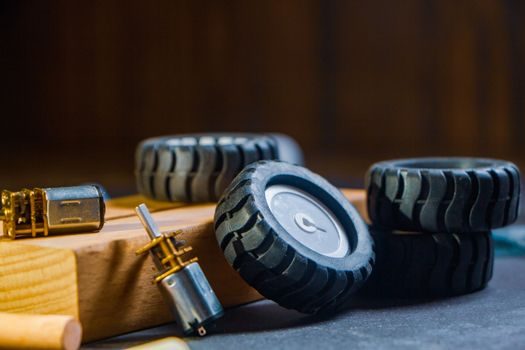
Under $1 per piece covers the bulk of industrial gaskets, O-rings, washers, grommets, and simple pads in NBR, EPDM, natural rubber, or neoprene — these are stocked by global distributors and ship from catalog [S2][S3][S6]. The $1–$10 band buys FKM/Viton chemical-service gaskets, silicone food-grade seals, and small bonded rubber-to-metal anti-vibration mounts where compound and insert cost stack up [S2][S4]. The $10–$50 band is the territory of larger bonded mounts, multi-cavity FKM seal kits, and custom sponge profiles for HVAC and mass-transit interiors [S1][S2]. Above $50, you are buying either very large structural bearings (AASHTO bridge pads, marine fenders) or low-volume aerospace and oilfield FKM parts with full traceability [S2].
For readers comparing molded parts to extruded rubber profiles (gaskets, tubing, edge trim), the cost logic inverts above ~5,000 m of profile: extrusion tool cost is a fraction of a mold, and the per-meter price for a simple rubber extrusion profile runs well below the per-piece molded equivalent at low volumes.
Two trackable signals for the back half of 2026: FKM raw-polymer spot pricing, which has been the single largest variable in engineered seal quotes through 2024–2026, and the spread between Chinese and Indian factory-gate quotes for transfer-molded NBR parts, which has narrowed within roughly $0.05 per part for standard 70-Shore-A gaskets as Indian capacity scaled [S1][S3][S4][S6].