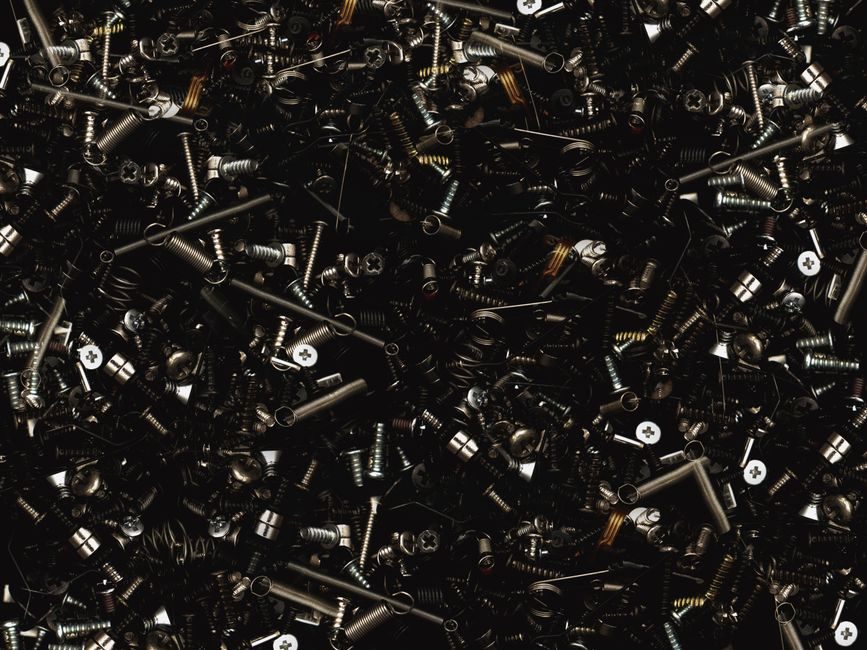
Screw machine work covers a defined envelope: bar-fed rotary machining of cylindrical components in volumes typically starting at 1,000 pieces and running to several million per year, with diameters commonly between 1.5 mm and 65 mm and tolerances routinely held at ±0.025 mm on Swiss-type equipment [S3][S6].
The category splits into three process families — single-spindle automatic lathes (Brown & Sharpe style), multi-spindle automatics (4- to 8-spindle), and CNC Swiss-type sliding-head machines — and selection is driven by part diameter, length-to-diameter ratio, lot size, and required tolerance rather than by supplier location [S3][S6]. Buyers specifying custom turned parts in 2026 should treat the process choice as a hard gate before discussing material or finish.
Process Selection: Swiss-Type vs Multi-Spindle vs CNC Turning
Swiss-type (sliding-head) machines are specified when bar stock diameter is below roughly 10 mm and length-to-diameter ratio exceeds 3:1, with typical positional tolerances of ±0.01–0.025 mm on Ø1.5–6 mm work [S3]. Oregon Screw Machine Products operates over 25 such machines plus CNC mills in Portland to serve this envelope, and Colorado Screw Machine builds its capability around sliding-head stock automatics for the same reason [S3].
Multi-spindle automatics dominate the Ø10–65 mm range at runs above 50,000 pieces, where four or more tools cutting simultaneously cut cycle time by 60–80% versus single-spindle [S6]. Spartan Manufacturing in Garden Grove has run high-volume screw-machined parts since 1957, with CNC Swiss-style and standard screw machines both in its fleet [S6]. For prototypes and runs under 1,000 pieces, CNC turning centers are usually the economic pick: M&M Automatic Products runs a turning centre for short-run complex parts and emphasises close operator supervision on every part.
Material and Stock Form Constraints
Screw machines are fed bar stock, so machinability rating, cold-drawn tolerance, and bar straightness directly drive spindle speed, tool life and achievable surface finish. Common specifiable materials include 12L14 leaded steel (machinability rating ≈170% vs 1212 baseline), C36000 free-cutting brass, 303 and 316 stainless, 6061-T6 aluminum, and engineering plastics such as Delrin and HDPE [S1][S2][S6].
Taiyuanfeng (Guangdong, 13,000 m² factory, 100+ automatic production lines) and S&H Glenco in Ontario CA both publish portfolios that span steel couplers, brass shoulder screws, aluminum regulator cones, and stainless solenoid seats, demonstrating that the same screw machine cell can be re-tooled across these material families without re-specifying the process [S1][S2]. The cost driver is the bar stock price per kilogram plus the cycle-time multiplier for that material, not the machine-hour alone.
Tolerance, Surface Finish and Secondary Operations
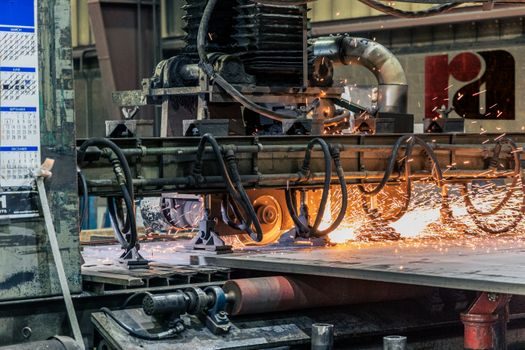
Standard screw machine tolerance on diameters is ±0.05 mm without special effort, ±0.025 mm on Swiss-type with ground tooling, and ±0.01 mm only when thread rolling or secondary grinding is added [S3]. Surface finish on cold-drawn bar typically comes off the machine at Ra 0.8–1.6 µm; finishing to Ra 0.4 µm or below requires secondary grinding, which Colorado Screw Machine lists under its "one-stop shopping" outside-processing menu alongside heat treating and plating [S3].
Thread rolling is preferred over cut threading for any volume above 5,000 pieces because it cold-works the grain flow and delivers tensile strength gains of roughly 30% in the threaded section — a key reason R&D Screw Products in Howell, MI has supplied automotive sub-tier and hydraulic customers for over 55 years with that process in its standard cell [S5].
Volume, Lead Time and Sourcing Logic
Volume bands map cleanly to process: 1–1,000 pieces → CNC turning or prototyping on a single-spindle; 1,000–50,000 → single-spindle automatic or Swiss-type; 50,000+ → multi-spindle, at which point tooling amortisation and material yield dominate unit cost [S6]. Parts4World quotes from single prototypes to 100,000-piece runs under one roof, with DFM review and 98% on-time delivery claimed on its 2026 service page.
Buyers should also gate on ISO 9001:2015 registration when the destination is automotive, hydraulic, medical or aerospace — both R&D Screw Products and Colorado Screw Machine hold the certification, and Karma Metal Products (Mansfield, OH) brings 125 combined years of staff experience to the same audit regime [S3][S4][S5]. For deeper cost-driver detail, the Screw Machine Part Price 2026: Cost Drivers, Sourcing Logic and Vendor Map guide lines up per-piece price against tolerance, material and lot size. A broader cross-reference on adjacent commodity sourcing sits in the Industrial Magnet Price & Cost Guide: NdFeB Grade, MOQ and Tolerance Levers walkthrough.
Standards, Inspection and What Buyers Should Demand
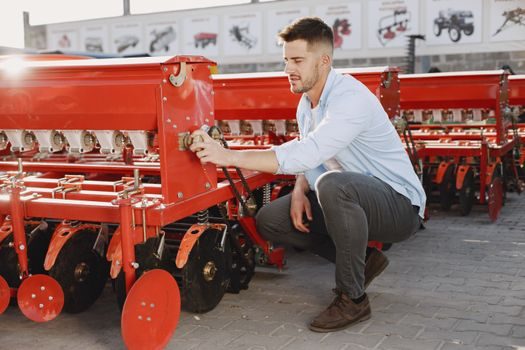
The screw machine sector is governed less by a single product standard than by customer-flow-down specs: ISO 9001:2015 for the quality system, ASME Y14.5 for drawing interpretation, and material certifications to ASTM A108 (12L14), ASTM B16 (C36000), or ASTM A276 (303/316) [S3][S5]. For threaded inserts that mate with ball-screw assemblies or feed nuts in linear motion hardware, thread profile per ASME B1.1 (Unified) or ISO 261 is the typical call-out [S3].
Inspection capability should include optical comparators, surface roughness testers, and CMM on the shop floor — Taiyuanfeng lists 10+ precision testing devices and 10+ automatic optical screening machines supporting its 100+ production lines, a ratio that translates roughly to one inspection station per ten production units [S1]. Buyers specifying safety-relevant parts (hydraulic valve bodies, solenoid seats) should also require 100% in-process optical screening rather than AQL sampling, which S&H Glenco demonstrates in its sprinkler-industry stainless solenoid seat work [S2].
Common Failure Modes and Selection Traps
Three failure modes dominate returns: (1) specifying tolerances tighter than the process can hold economically — ±0.01 mm on a 6-spindle multi-slide at 200,000 pieces/month will burn tooling faster than the tolerance is worth; (2) choosing cold-drawn 1018 when 12L14 would cut cycle time 50%+ at a small material premium; (3) requesting cut threads on high-volume runs where ball-screw mating hardware or feed nuts are being made, instead of thread rolling [S1][S2][S5].
Buyers should also avoid assuming a screw machine shop can hold linear-motion bearing tolerances without secondary grinding — for shafting that rides in linear-guide carriages or crossed-roller-guide blocks, specify a grinding pass and a Ra limit explicitly, because as-machined surfaces from rotary bar work will not meet the 0.2–0.4 µm typical of those motion systems [S3].
2026 Sourcing Signals and What to Track Next
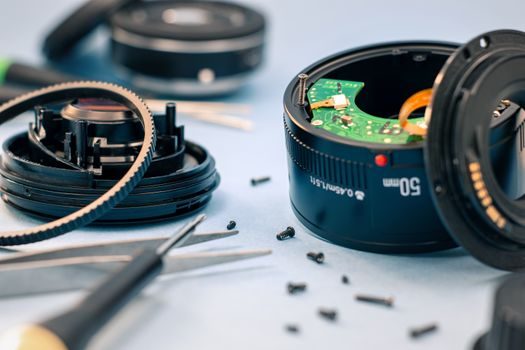
Three signals are worth tracking through the second half of 2026: (a) DFM review becoming a standard pre-quote step at Chinese and US shops alike, with Parts4World advertising free DFM and "pay only after inspection" terms on its 2026 service page; (b) ISO 9001:2015 transitioning toward ISO 9001:2026 revision pressure — R&D Screw Products and Colorado Screw Machine are already on the 2015 cert, and a re-audit wave is the predictable next 12-month event [S3][S5]; (c) continued reshoring of sub-Ø10 mm Swiss-type work to North American shops as freight risk on Asian bar stock remains elevated, evidenced by M&M Automatic Products, Spartan Manufacturing and Oregon Screw Machine Products all highlighting domestic lead time as a 2026 sales point [S6].