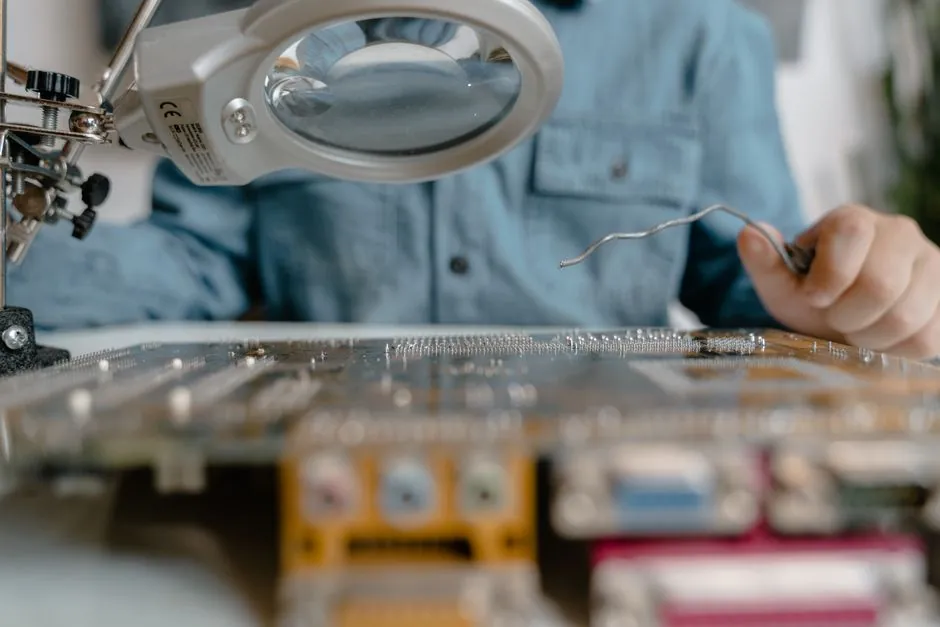
Run lifecycle, supply, and source-count checks at every design release, then route every EOL, NRND, single-source, or unverified line for engineering review before procurement commits funds [S1][S2][S5].
The method applies to electronic BOMs containing hundreds or thousands of lines, with automated checks covering manufacturer part numbers, approved alternates, product change notices, product discontinuance notices, compliance, availability, and supplier risk [S1][S3][S5].
Define the BOM health scope at MPN level
Start the review at the manufacturer part number, or MPN, rather than the assembly description, and include approved-vendor-list alternates because an NRND alternate does not remove lifecycle risk [S1].
Normalize provider-specific lifecycle labels into a workflow that distinguishes active parts from NRND, end-of-life, obsolete, and last-time-buy parts. No universal lifecycle-label taxonomy exists, so the organization must define the mapping before scores can trigger actions [S1][S5].
Attach four core data fields to every retained line: lifecycle status, qualified source count, lead time, and manufacturer identity. PartGenie supports CSV and XLSX files up to 25 MB and provides per-line lifecycle, sourcing, and risk flags.
Filter to lines that can disrupt production
Prioritize sole-manufacturer and single-source lines, then reduce low-risk commodity passives that have multiple qualified sources. A 60-line board can be reviewed manually, but a server-product board with more than 1,000 components becomes stale after each engineering change [S1].
Do not equate “available” with “safe.” An active component can still be short, while an obsolete component may have substantial distributor stock. Lead time must therefore be checked against the production schedule, and allocation status must be reviewed through confirmed quantities and expected delivery dates [S1][S5].
The practical test is broader than whether procurement can buy the part on one day: the component must remain reliably sourceable for the product’s expected production life [S5]. For deeper treatment of that scoring logic, see Scoring electronics BOM risk by lifecycle stage and source count in 2026.
Compare the main BOM control methods
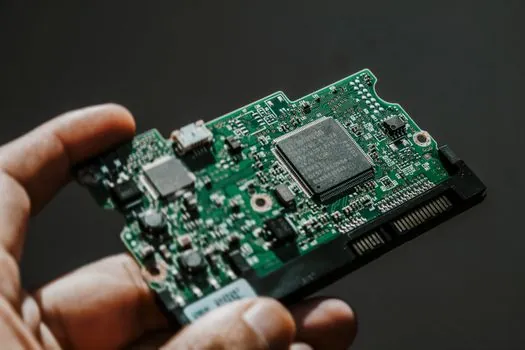
A spreadsheet-and-email process is suitable for a small, stable BOM, but it produces a one-time snapshot that loses validity as designs, stock, and lifecycle states change. A PLM or ERP system stores controlled BOM data but does not inherently provide lifecycle intelligence, alternate ranking, or continuous supply monitoring [S1][S2].
Compare the three methods across four operating criteria:
Spreadsheet and email provide a low-complexity starting point, but manual matching does not scale beyond routine reviews. PLM and ERP provide design and transaction control, yet lifecycle status and EOL forecasting still require external data or integration. Dedicated BOM intelligence provides automated lifecycle scoring, PCN and PDN alerts, multi-factor risk assessment, cross-reference alternatives, compliance checks, and ongoing monitoring, with API or PLM and ERP export required to preserve operational workflow [S2][S3].
For high-volume programs, the decisive difference is repeatability. Supplier discontinuance notices should be ingested, matched to every active BOM including AVL alternates, and converted into affected-project issues rather than manually reviewed one MPN at a time [S1].
Monitor PCN, PDN, and silent lifecycle changes
PCN and PDN monitoring is the earliest practical end-of-life signal for many programs. Schedule the ingestion of notices through distributors or parts-data APIs, match each notice against all active MPNs, and route matched parts to an engineer for last-time-buy, alternate, or redesign analysis [S1].
Subscribe to supplier discontinuance notices, match each one against every active BOM, and route flagged lines to an engineer for a last-time-buy, alternate, or redesign decision.
Z2 scores every part in an uploaded BOM for obsolescence, compliance, and supply-chain risk, provides lifecycle and end-of-life forecasts with projected EOL dates, monitors for PCN/PDN alerts and status changes, and performs compliance checks across more than 1 billion parts.
Qualify alternates instead of accepting pin matches
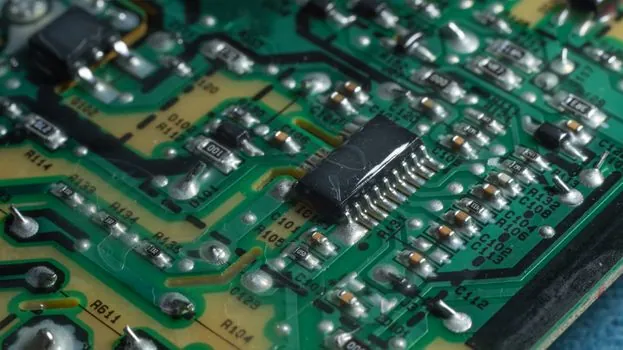
Cross-reference results are candidates, not approved replacements. An alternate must be checked for electrical compatibility, reference voltage, package, termination, tolerance, temperature rating, lifecycle state, and regulatory documentation before engineering approval [S1][S4][S5].
PartGenie is powered by more than 56 million parts from more than 12,700 manufacturers and proposes cross-reference alternatives for users to approve.
Single-source exposure requires more than adding a second manufacturer name. The alternative must be technically qualified, commercially available, compliant with the applicable material restrictions, and supported by a documented engineering approval. The manufacturing program should not rely on an unapproved second source during a supply disruption [S1][S4].
Score compliance and supplier exposure by line
Compliance belongs in the same health map because an otherwise available part can block shipment or use. Z2 checks RoHS, REACH SVHC, PFAS, and TSCA status per part and supports material declarations and certificates of conformance, while Accuris covers component and compliance intelligence across more than 1.3 billion parts [S2][S3].
Add supplier exposure to the score. Z2 provides manufacturer profiles covering factory locations, financial health, ESG, and cybersecurity, while inventory views include distributor stock, lead times, licensed and broker pricing, and shortage deviations [S2].
Do not collapse every metric into one opaque number. PartGenie produces a 0–100 BOM health score, but the underlying lifecycle, sourcing, availability, and risk flags still require engineering and procurement review. Route the score to the assembly and subassembly levels so the team can identify where risk concentrates instead of treating the entire BOM as equally defective [S2][S4].
Automate checks without outsourcing engineering judgment

Automate the repeatable work: retrieve lifecycle status for every MPN, calculate source count, compare notices, check compliance, enrich availability data, and attach results to the controlled design revision [S1][S2][S3].
Keep the decision with accountable engineers. A flagged line can lead to a last-time buy, an approved alternate, a redesign, or planned depletion through the end of product life. Those choices depend on remaining production demand, qualification cost, and technical compatibility [S1].
Run the health check at every design review and release, not only before a purchase order. Export the review into the PLM or ERP, preserve an audit trail for approved substitutions, and require confirmation before changes reach the controlled BOM [S1][S2][S4].
The first operational output should be a dated exception list containing MPN, assembly, design revision, lifecycle state, qualified source count, lead time, notice status, compliance state, recommended owner, and next action. Track two signals thereafter: the number of EOL or NRND lines unresolved per release and the share of critical lines with only one qualified source.