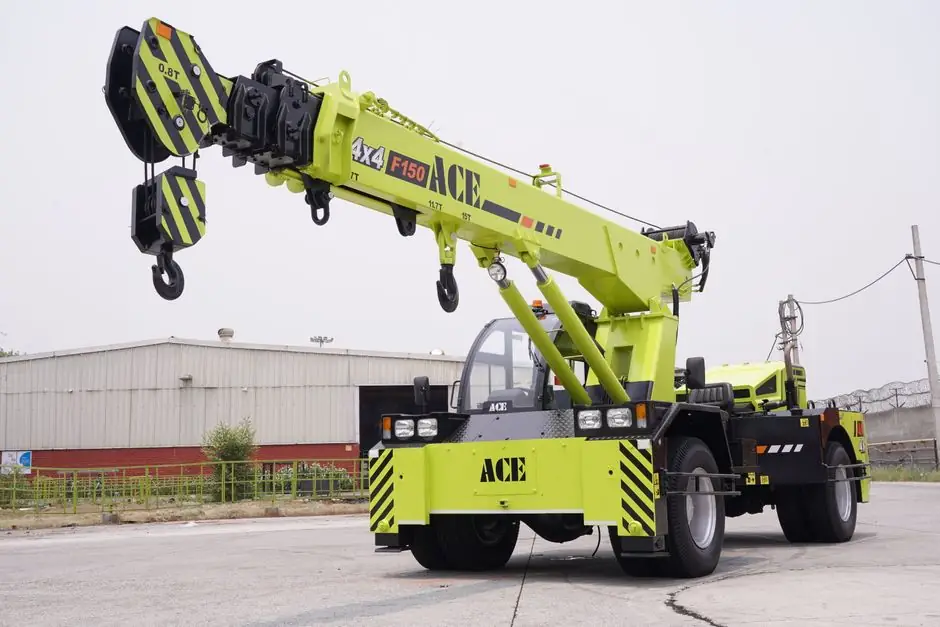
A load cell rated for 150% safe overload may be loaded repeatedly to 150% of rated capacity without a permanent performance shift, while 300% ultimate overload marks a load at which structural failure may occur [S2][S3].
For a 1000 kg cell, these limits correspond to 1500 kg safe overload and 3000 kg ultimate overload; specified accuracy remains tied to the 1000 kg rated capacity [S3].
Overload Ratings and Measurement Limits
Safe overload is commonly 120% to 150% of rated capacity, whereas ultimate overload is commonly 200% to 400% [S1]. A 150% safe-overload rating identifies a load that the cell can take repeatedly without changing.
Ultimate overload is the load the cell can survive once. The interval between 150% and 300% is a damage zone: the cell can continue to indicate a force while zero, sensitivity, or linearity has changed.
The rating is tied to full scale, abbreviated FS. For example, a 100 lbf cell with 150% safe overload reaches 150 lbf, while a 300% ultimate rating reaches 300 lbf [S6]. Rated capacity remains the basis for the guaranteed accuracy specification; overload figures describe survival behavior outside that measurement range [S3].
Decision Matrix for Load Cell Selection
Choose the cell by comparing four criteria rather than by treating the largest printed number as usable capacity: normal-load resolution, safe-overload exposure, ultimate survival, and the consequences of an overload event. [S2]
These ratings support a direct engineering decision: use the 150% figure to establish accidental-overload headroom, use the 300% figure only to assess structural survival after a rare event, and use rated capacity to establish measurement accuracy [S1][S2].
Capacity Sizing by Maximum Load
The governing equation is rated capacity greater than or equal to maximum expected load multiplied by a safety factor. Maximum expected load includes product weight, platform or vessel tare, attached equipment, and dynamic effects such as impact, vibration, and swirling [S3][S5].
These are selection practices, not overload ratings, but they preserve resolution while leaving margin above the normal load.
For a tank carrying 800 kg of product with a 200 kg empty-vessel weight, total static load is 1000 kg. Applying a 1.5 factor gives a minimum 1500 kg rated cell, and a 2000 kg cell provides additional margin [S3]. For a platform with a 500 kg maximum product load and negligible tare, a 750 kg minimum follows, making 1000 kg the natural standard capacity [S3].
Multi-Cell, Shock, and Eccentric Loading
In a multi-cell installation, divide the maximum load by the number of load paths only after checking load distribution, alignment, and the possibility that one cell can carry more than its calculated share. A nominal equal-load calculation does not remove the need to verify eccentric and side-load limits from the cell datasheet [S2][S5].
Impact can create a peak force well above the static reading. Forklift contact, a hard truck braking event, material striking a hopper, and snatch loading can all exceed a 150% safe-overload limit even when the visible static load appears acceptable [S1][S3].
For lifting paths, the ultimate rating is a survival figure rather than a performance criterion, so crane and lifting cells normally need substantially more headroom than static floor-scale cells [S2]. Geotechnical cells carry different consequences, including long-term monitoring of dams, foundations, and ground movement, which makes permanent zero shift a measurement-integrity problem rather than an acceptable excursion [S4].
Damage Modes Hidden by a Plausible Reading
An overloaded cell can remain physically intact while losing measurement integrity. The first detectable effect may be a zero offset caused by strain-gauge creep, followed by a small permanent set in the spring element that changes sensitivity [S1].
Ultimate overload is not permission to continue operating a cell that has already survived the event.
Mechanical Protection and Verification
Protection must address the complete load path, not only the cell. Check the rated capacity against 50% to 75% of maximum expected load, verify that the safe-overload level covers foreseeable accidental loading, and confirm that side and eccentric loads remain within the manufacturer's limits [S2][S3][S5].
After a severe overload, perform a documented zero check, a near-capacity test with a traceable check weight, and a review of both zero and span. Inspect overload stops and mounting hardware before re-zeroing [S1]. A scale that passes one calibration point after impact can still under-read at intermediate loads because recalibration at the check weight does not restore a damaged span [S1].
Who Should Use Each Overload Limit

Use safe overload for capacity selection where a repeatable but accidental event must leave the cell unchanged, such as an overfilled vessel, a platform bump, or a snatched lift [S2]. Use ultimate overload for structural and safety assessment of rare severe events, not for calibration, normal load limits, or repeated operation [S2][S3].
The 150% safe-overload value is suitable for the first line of accidental-overload defense, while the 300% ultimate value is useful for understanding what may happen before physical failure [S5]. However, a cell with 200% safe overload and 300% ultimate overload may offer less repeatable-event margin than a cell with 150% safe and 300% ultimate ratings [S6]. Always use the exact model datasheet rather than assuming all 300% cells share the same safe-overload rating.
For permanent weighing, material handling, geotechnical monitoring, and lifting, the specification should state rated capacity, safe overload, ultimate overload, operating range, side and eccentric-load limits, and the required verification after overload [S2][S4]. The next actionable checks are the cell model datasheet, the maximum static and dynamic load per cell, and the documented overload inspection procedure.