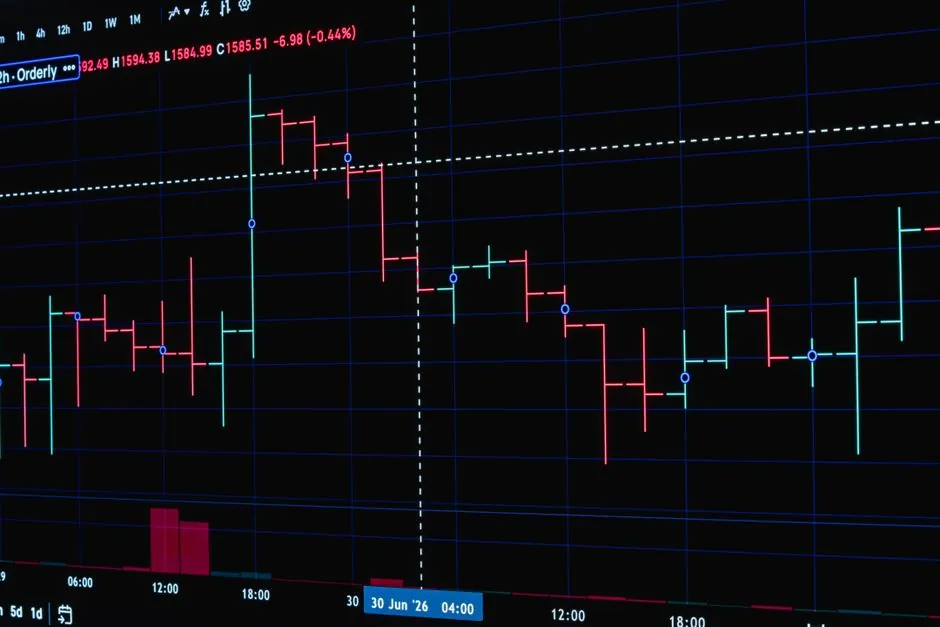
Secondary ADC12 averaged 24,082 yuan/mt in the first half of 2026, up 3,296 yuan/mt, or 15.8%, from the 2025 average [S2].
ADC12 consolidated at 23,550–23,650 yuan/mt around the Chinese New Year before surging to an H1 high of 25,200 yuan/mt in mid-March [S2].
Secondary Alloy Price Spread Over Primary Aluminum
The H1 2026 ADC12 average was 24,082 yuan/mt, while A00 primary aluminum moved above 24,000 yuan/mt at the beginning of the year [S2].
ADC12 rose from 23,100 yuan/mt at the beginning of January to 24,550 yuan/mt by the end of January and reached an H1 high of 25,200 yuan/mt in mid-March [S2].
After reaching an H1 high of 25,200 yuan/mt in mid-March, ADC12 prices weakened in late March as demand deteriorated [S2]. The directional evidence is clear, secondary alloy prices tracked primary metal upward, but the research does not publish a complete time-matched A00 series for calculating a daily primary-to-secondary spread.
For specification work, the spread should therefore be treated as a variable premium rather than a fixed discount. Aluminum alloy buyers should request simultaneous quotations for the selected alloy, primary metal reference grade, scrap assumptions, conversion charge, and freight.
Scrap Cost Sets the Secondary Alloy Price Floor
The January-to-mid-March price rise was supported by cost and macro factors, including A00 aluminum prices breaking through 24,000 yuan/mt and high aluminum scrap costs [S2].
At the start of 2026, A00 aluminum prices strongly broke through 24,000 yuan/mt, and ADC12 quickly followed [S2]. Demand weakened and prices declined in the late-March-to-May stage [S2].
Premium scrap prices rose 28% in 2026 as the primary aluminum supply crunch increased demand for scrap [S6]. A separate assessment also linked expected scrap-price increases to limited physical availability and higher replacement costs for primary metal [S4].
This structure means a lower primary aluminum quotation does not necessarily produce an equal secondary-alloy reduction. Scrap quality, replacement demand, compliant feedstock availability, and tax documentation can keep the secondary cost center elevated even while primary prices consolidate.
Cost Drivers and Margin Compression in ADC12

That margin leaves limited room for contamination, remelting loss, rejected material, freight, inventory financing, and customer quality claims.
During the January-to-mid-March advance, cost and macro factors supported the market, while demand weakened and prices declined in the late-March-to-May stage [S2].
The price drivers can be ranked as follows: first, scrap purchase cost and replacement demand; second, primary A00 aluminum as the benchmark and blending input; third, remelting, alloying, energy, labor, and tax-invoice compliance; fourth, inventory and end-use demand; and fifth, freight and regional premiums. Higher scrap availability should widen producer margins if ADC12 prices hold, while a primary-metal decline without scrap relief mainly benefits buyers.
Primary Shortage Risks and Regional Cost Exposure
A possible 2026 global primary aluminum deficit was estimated at close to 2 million tonnes against 74 million tonnes of global primary production in 2025, with Gulf disruptions affecting European supply [S4].
USGS reported that the estimated average annual U.S. aluminum market price increased by 39% from 2024 to 2025, while the estimated value of primary aluminum production was $2.6 billion, 35% more than in 2024 [S1].
US domestic smelter capacity was 1.31 million tons per year in 2025. Three companies operated six primary smelters in five states, and primary production was estimated at 660,000 tonnes, down from 676,000 tonnes in 2024 [S1].
A US Midwest aluminum premium reached a record $2,182 per tonne in early 2026, crossing $1 per pound for the first time [S8]. This premium is a separate logistics and regional-delivery cost from the metal exchange reference price, so it can widen the delivered cost gap even when secondary alloy quotes appear close to primary quotations.
For imported aluminum buyers, the broader market context is covered in Imported Aluminum Extrusion Prices and Duties in 2026, which is more relevant to landed-cost comparison than the rare-earth and magnet articles in the same category.
Recycling Capacity Is Expanding, but Scrap Quality Still Limits Supply
The secondary smelting and alloying of aluminium market was estimated at $46.83 billion in 2025 and expected to reach $51.38 billion in 2026 [S7]. Primary aluminum accounted for 64% of the broader aluminum market by source in 2025 [S5].
Recycling does not guarantee a low secondary price because scrap is divided by contamination and consistency. The 2025 global supply breakdown was 17.2 million tonnes of post-consumer scrap at 40–45%, 10.4 million tonnes of post-industrial scrap at 25–30%, and 8.1 million tonnes of old or obsolete scrap at 20–25% [S3].
Post-industrial scrap generally has a known alloy identity, while post-consumer and obsolete streams are mixed or variable. The practical result is that high-quality production scrap can support stable casting, but mixed scrap requires sorting, chemistry correction, more processing, and tighter control of iron, silicon, copper, and other impurities.
Secondary aluminum offers energy savings exceeding 90% per tonne produced [S3]. These lifecycle benefits support procurement acceptance, but they do not eliminate melting, alloying, sorting, yield loss, or energy costs.
Procurement Comparison by Feedstock and Application
Primary A00 metal offers tighter chemistry and simpler conversion control, while secondary ADC12 depends on scrap availability and melt correction for its specified silicon and copper content. [S3]
For cast components, A00-based production is preferable where alloy chemistry, gas porosity, inclusion control, and customer traceability require consistent virgin metal. ADC12 is more appropriate for die-castings where its specified composition and cost fit the casting process, provided the producer can control incoming scrap and finished-part integrity.
Compared on four procurement criteria, primary metal ranks strongest for chemistry consistency, secondary alloy ranks strongest for embodied-energy savings, and both depend on regional premiums and freight. For price risk, A00 contracts respond mainly to primary supply and power costs, whereas ADC12 contracts respond to the scrap-to-primary replacement relationship. For logistics, both can face the same delivery premium, but secondary producers may have less ability to substitute scrap when approved feedstock is scarce [S1][S2][S3].
Buyers should compare delivered cost, not headline quotations. The calculation should include primary or scrap feedstock, alloying and remelting loss, energy, tax compliance, freight, inventory days, rejection allowance, and the cost of qualifying a second supplier. For alloy steel, nickel alloy, and other steel purchasing decisions, the relevant comparison remains the delivered metal cost adjusted for yield and quality performance rather than a direct substitute for aluminum pricing.
Standards, Specifications, and Supplier Qualification

USGS listed unwrought aluminum alloy billet under tariff code 7601.20.9045, while unwrought aluminum between 99.8% and 99.9% purity fell under code 7601.10.6045 in the tariff schedule presented for 2025 [S1].
For commercial material, alloy designation, chemical composition, melt-treatment route, casting method, sample preparation, and acceptance criteria should be written into the purchase specification. The supplier should state whether the alloy is produced from primary metal, selected production scrap, mixed scrap, or a blended charge, because “secondary aluminum” alone does not define impurity control or lot consistency.
USGS estimated that 3.6 million tonnes of aluminum were recovered from purchased scrap in the US in 2025. About 56% came from new manufacturing scrap and 44% from old scrap, while old-scrap recovery was equivalent to roughly 28% of apparent US consumption [S1].
For recurring die-casting supply, qualification should include chemistry capability, traceability, scrap-control procedure, melt-loss history, tax-invoice compliance, and response time when scrap spreads move. The trackable procurement signals for the remainder of 2026 are the A00-to-ADC12 spread, scrap purchase cost, and the share of compliant feedstock available to each secondary producer.