IIoT network segmentation isolates sensors, controllers, gateways, and workstations into controlled zones so that a compromised endpoint cannot freely reach production assets.
The design applies to industrial networks connecting sensors, PLCs, SCADA, DCS, maintenance systems, and enterprise platforms, with required traffic mapped by device, protocol, and function before policies are enforced.
Segmentation Scope for Connected Plant Assets
Industrial Internet of Things connects sensors, actuators, intelligent devices, and physical assets to collect, transmit, and analyze real-time operational data. Common equipment includes vibration monitors, smart meters, furnace temperature sensors, compressor condition sensors, production-line cycle counters, tank-level instruments, and flowmeters [S4].
Network segmentation divides that industrial network into smaller zones with specific security requirements. In IIoT, the purpose is not merely address organization: it is to restrict communication paths so a compromised workstation, sensor, gateway, or service cannot move laterally into unrelated control assets [S3].
A practical design distinguishes at least three functional layers: enterprise IT, supervisory OT, and lower-level control. Level 3 segmentation divides an OT network into distinct subnetworks to enhance security by isolating different parts of the network [S6]. Within those layers, individual devices can be grouped by production area, safety function, asset class, protocol, or maintenance responsibility [S7].
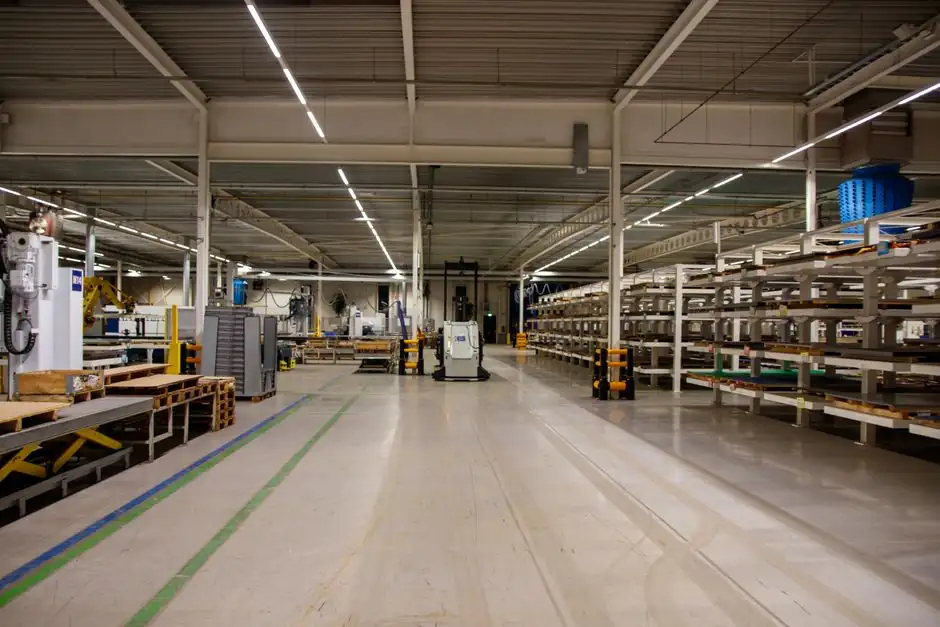
For floor machinery, segmentation should follow the process structure. A painting line, assembly line, utilities zone, and hazardous-area device group should not share unrestricted communication merely because all devices use Ethernet. That approach limits blast radius while preserving the traffic each machine genuinely requires [S5].
Choose the Enforcement Layer by Traffic Need
VLANs, firewalls, and access control lists form the basic segmentation toolkit, while role-based access policies, device authentication, and explicit inter-zone rules provide the necessary control for industrial networks [S2]. Each mechanism solves a different part of the policy problem.
The comparison points to a practical rule: use broad zones to establish the perimeter, firewalls to define sanctioned conduits, and identity or micro-segmentation where individual endpoints need tighter separation. Federation of identities, micro-segmentation, firewalls, and NAC are complementary controls rather than interchangeable labels [S3].
Build Policies from a Communication Matrix

A NAT-capable switch or router can use a one-to-one mapping between internal addresses and translated addresses to support controlled address translation on the factory floor [S1]. Translation alone does not define security zones, but it shows why address handling and traffic control must be considered together when engineering a segmented floor network.
Start with an inventory of source, destination, protocol, port, direction, business purpose, and operational owner. IIoT traffic commonly includes sensor telemetry, controller commands, historian transfers, remote-access sessions, firmware updates, and time synchronization. Each flow should be classified as required, denied, or conditional rather than allowing broad address ranges by default [S2][S4].
A temperature sensor may be permitted to reach only its local gateway or monitoring service, while a PLC may need historian traffic but not general enterprise file sharing. Production historian access should be limited to authorized clients, and remote maintenance should terminate through a controlled access path rather than creating a direct route from the internet to a controller.
For brownfield networks, discovery should precede enforcement. A Cisco and Booz Allen demonstration at S4x26 in February 2026 used Siemens and Rockwell Automation PLCs, an Ignition SCADA layer, and segments representing paint and assembly lines. Asset discovery mapped devices and communication flows before virtual zones and identity-based access policies were applied [S5].
Segment by Asset, Function, and Conduit
OT network segmentation divides an industrial network into smaller, more manageable segments with specific security requirements. The S4x26 work progressed from visibility to segmentation aligned with those zones and conduits, avoiding a rip-and-replace deployment [S5].
For plant-floor devices, classify each asset before assigning a zone. A low-value environmental sensor, a safety instrumented function, a PLC, an engineering workstation, a historian, and a cloud gateway have different consequences if compromised. They should not be treated as equivalent endpoints merely because they share a common subnet [S6].
Industrial networks have commonly grown across decades for uptime and safety rather than cybersecurity. This produces flat architectures in which a paint booth controller can communicate freely with an assembly robot or an unintended workstation [S5]. The first segmentation phase should therefore map those communication paths, not impose a theoretical model on undocumented traffic.
Device-level distinctions are also operational. IIoT equipment is designed for industrial conditions including extreme temperature, vibration, dust, and electromagnetic interference, with continuous data collection required over multi-year service periods [S4]. The same resilience expectations apply to gateways, switches, policy enforcement points, and power systems that support connectivity.
A plant containing networked concrete-production equipment can connect condition sensors without exposing the full production cell. Examples include monitoring vibration on rotating pumps or motors and temperature on ovens, with each measurement path constrained to its intended gateway or analytics service [S4].
Use Visibility and Authentication with Segmentation

Asset discovery must show what is communicating, what protocol is in use, and how flows differ from policy. In the S4x26 demonstration, embedded sensing on Cisco IE3500 and IE9300 rugged switches, and on Rockwell Stratix 5800 switches, supported asset and flow discovery without SPAN ports or separate monitoring appliances [S5].
Visibility alone does not enforce isolation, while segmentation without accurate discovery can interrupt essential services. The defensible sequence is discover assets, map flows, define zones and conduits, test proposed policies, and enforce them in stages. This also supports the phased model associated with IEC 62443, which requires communication paths between assets to be explicitly defined and controlled [S5].
Device authentication and role-based policies should accompany network boundaries where supported. Strong identity management, monitoring, and segmentation form part of the layered approach described in NIST SP 1800-32 for securing IIoT environments [S2]. Identity evidence can then translate asset context into access rules, reducing reliance on manually maintained ACLs across every switch [S5].
Vendor and contractor access needs separate treatment. A remote support session may require temporary access to one HMI or PLC programming service, not the whole supervisory network. Temporary authorization should be tied to named users, approved roles, defined destinations, and a documented expiration path.
Control Failure Modes and Operational Constraints
A flat network permits lateral movement after one endpoint is compromised. Segmentation limits that path, but incorrect rules can stop telemetry, prevent a controller from reaching its historian, or delay safety-related communication [S2]. Segmentation also increases operational overhead and cost because policies must be maintained as devices and processes change [S3].
Three failure modes dominate implementation. First, undocumented flows can break when a hidden dependency is blocked, such as a scanner reaching an authentication service. Second, flat rule sets can re-create broad connectivity inside a nominally segmented zone. Third, stale identity records or inactive addresses can leave obsolete access paths in service.
Legacy PLCs, HMIs, and SCADA systems may lack built-in security controls, while connected endpoints create potential entry points [S2]. Segmentation therefore needs a documented baseline of expected traffic, ownership, review frequency, and fallback behavior for denied or failed connections.
Wireless IIoT and remote gateways require separate scrutiny because wireless identity, radio coverage, and gateway uplinks can bypass assumptions made about wired Ethernet segmentation. For physical installations, the concrete vibrator and other construction equipment illustrate why asset identity and connectivity should be documented at device level rather than inferred from a production-cell label.
Validation Criteria for a Production Design

A segmentation design is ready for production when every required flow has an owner and policy, every prohibited flow has been tested, and every enforcement point has a monitored failure mode. Test evidence should include controller-to-historian traffic, sensor-to-gateway traffic, enterprise-to-supervisory access, vendor maintenance access, and emergency operations [S2][S5].
Acceptance testing should record the source and destination zones, protocol, port, action, and business justification for each rule. A rule set containing broad source ranges, wildcard ports, or temporary exceptions without expiration dates should not be accepted as production-ready policy.
The operational target is not the largest possible number of VLANs or microsegments. It is controlled communication with a defensible boundary around each production function.
IIoT segmentation also supports asset-level maintenance decisions. IIoT links physical assets to digital platforms, enabling connected sensors, actuators, and intelligent devices to collect and transmit real-time operational data for equipment monitoring, production optimization, and maintenance automation.