
A 25-tooth SDS-Max bushing bit measuring 40 x 300 mm is specified for concrete surface roughening and coating removal with a compatible rotary hammer [S2].
The tool combines three purchase-critical variables: an exact shank interface, a working-head diameter that controls contact area, and a tooth count that changes the aggressiveness of surface removal.
What a Bushing Bit Does to Concrete
A concrete bushing bit removes material from concrete and stone by impact, producing a roughened surface rather than a drilled hole [S3][S4]. The available tool families include bushing hammers, chisels, shank-mounted bits, and manually struck heads, allowing the same surface-preparation function to be delivered through different machine interfaces [S4].
Typical work includes removing excess concrete, evening out projections, preparing repair patches, removing coatings, and roughening smooth concrete before a subsequent finishing operation [S4][S5][S6]. A 16-tooth ACTINTOOL configuration is marketed for patch preparation and coating removal, while a 25-tip version is offered for concrete roughness and coating removal [S1].
For a controlled demolition-hammer setup, the 25-tooth, 40 x 300 mm SDS-Max format gives the operator a defined alternative for aggressive surface texturing [S2]. This is a material-removal tool, not a substitute for a concrete vibrator, which consolidates fresh concrete rather than dressing a hardened surface.
Match the Shank Before Comparing Heads
SDS-Max and SDS-Plus are separate shank systems, and a bit must match the hammer's specified tool holder before diameter, tooth count, or material is considered [S1][S2]. ACTINTOOL examples include an SDS-Max square-head bit and an SDS-Plus 16-tip configuration, demonstrating that the words bushing bit alone do not establish machine compatibility [S1].
Published examples span an 8 1/4-inch ACTINTOOL SDS-Max head with a 1 1/4-inch square working face and a Milwaukee 9 1/4-inch SDS-Max tool with a 1 3/4-inch width [S1][S5]. The Milwaukee reference also specifies 9 1/4 inches overall length, while the broader product family includes separate shank, head, and overall-length dimensions [S1][S5].
The 25-tooth, 40 x 300 mm product is explicitly assigned to SDS-Max rotary hammers [S2]. Operators who own an SDS-Plus machine should not infer fit from the 40 x 300 mm dimensions, because shank geometry is the compatibility boundary, not head size.
Compare Head Diameter, Length and Tooth Count

On the four main decision criteria, the 25-tooth 40 x 300 mm SDS-Max bit offers a defined working diameter and long shank for demolition-hammer work [S2]. The 1 3/4-inch Milwaukee SDS-Max model emphasizes surface cutting and exterior finish, while ACTINTOOL's 1 1/4-inch square-head options are listed for concrete roughness, patch preparation, and coating removal [S1][S5].
The larger working head presents more material-contact area than a narrower head, but the research does not establish a universal removal-rate figure for either format. The safer comparison is functional: wider heads are suited to broader surface working, while compact heads support more localized patch and edge preparation [S1][S5].
Tooth count affects the operating character of the head. The 16-tip ACTINTOOL bits and 25-tip ACTINTOOL and SDS-Max alternatives all provide discrete cutting points, but the published listings do not give a universal tooth-count-to-removal-rate rule [S1][S2]. Select by the intended finish and the machine model, then trial the head on a representative patch.
Overall length is a handling and clearance dimension. The cited 300 mm tool is 40 mm wider than it is long in the stated designation, while the Milwaukee example is 9 1/4 inches long overall [S2][S5]. These figures should not be mixed: one is a product-format description, and the other is an overall tool length.
Material and Head Construction Choices
Bushing tools are offered with steel or carbide heads, while one-piece chipping-hammer tools can use round or hex shanks and oval or round collars [S3]. The ACTINTOOL listings identify chrome steel as the material and specify a 5-inch cutting diameter for one configuration [S1].
Carbide teeth provide a harder cutting point than a plain steel head, while the 25-tooth SDS-Max product explicitly identifies carbide teeth [S2]. Chisel-head bushing tools are also used to cut, shape, and carve stone, concrete, and other masonry [S4].
The key distinction is that carbide describes the tooth or head material, while SDS-Max or SDS-Plus describes the shank. A user needing a specific operating platform cannot trade one specification for the other, regardless of whether the head is steel or carbide [S1][S2].
Choose the Tool for the Work Area
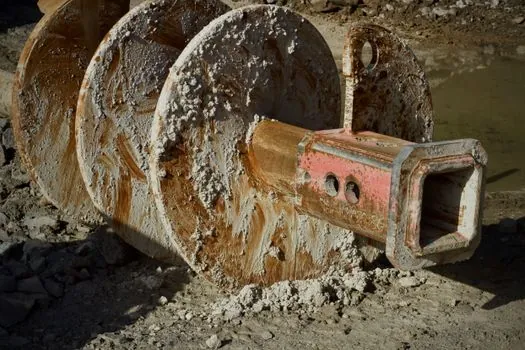
Demolition-hammer bushing bits suit accessible repair zones, patch preparation, and surface dressing where the operator can control a power tool against concrete or stone [S5][S6]. The Milwaukee application includes removing excess concrete, producing an exterior finish, and roughening a surface before surface cutting [S5].
Manual bushing hammers are better suited to controlled hand work on masonry, including localized texturing and leveling, while shank-mounted versions serve powered demolition-hammer and rotary-hammer applications [S4][S6]. Chisel heads suit cutting and shaping, whereas a multi-tooth bush head is intended for distributed roughening [S4].
This tool is not the normal choice for primary concrete breakup, deep slab demolition, or bulk removal of thick concrete. Those jobs require purpose-built chisels, breakers, or scalers. It is also unsuitable where a smooth finish is required immediately, because its primary purpose is to remove or texture material [S4].
Limitations, Failure Modes and Work Controls
Shank mismatch is the first avoidable failure: forcing an SDS-Plus or SDS-Max bit into an incompatible holder can damage the shank, the retaining mechanism, or both [S1][S2]. A second failure mode is using the head beyond its intended material or task, such as treating a coarse bush head as a general-purpose breaking chisel [S3][S4].
Coating removal also requires control because excessive material removal can damage sound concrete below the coating. The available listings support coating removal as an application, but they do not provide a universal operating angle, impact-energy setting, or removal rate for every hammer class [S1][S2][S5].
For safe, repeatable work, verify the holder designation, inspect the shank and retaining surfaces, confirm that the head is appropriate for concrete or stone, and test the pattern on a small area. Wear the required eye and hearing protection, isolate the work area from bystanders, and stop if the bit binds rather than continuing to apply impact load. The demolition hammer should also be selected for the work mass and operator control, not only for shank fit.
Procurement Checklist and Verifiable Acceptance Points
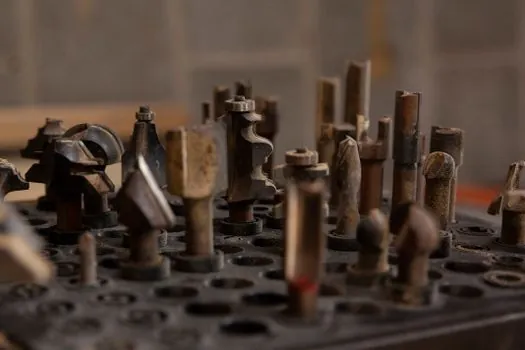
For the cited 25-tooth SDS-Max option, the procurement record is straightforward: 40 x 300 mm dimensions, 25 carbide teeth, concrete roughening and coating removal, and compatibility with rotary hammers [S2]. For other purchases, capture the shank type, head diameter, tooth count, overall length, material, and compatible hammer models in the purchase record [S1][S3][S5].
Two practical distinctions prevent common specification errors. First, a square head, chisel head, and toothed bush head are different working geometries even when all are called bushing tools [S1][S4]. Second, a thread-mounted plate for an angle grinder is not interchangeable with an SDS-Max demolition-hammer bit, although both can be described as bush hammers for concrete [S1].
Track three acceptance signals after delivery: the bit must seat without force in the specified holder, the first pass should produce the intended roughening or coating-removal pattern, and the head should show even wear rather than immediate tooth loss. A 25-tooth 40 x 300 mm SDS-Max bit is the clearest match for a powered demolition-hammer purchase when the machine accepts SDS-Max and the target work is concrete roughening or coating removal [S2].
