
An 8–14 µm long-wave infrared imager detects emitted thermal radiation without visible illumination, with uncooled microbolometers commonly used for ambient-temperature targets.
The technology serves industrial inspection, perimeter surveillance, defense, automotive, and OEM integration, where target temperature, atmospheric conditions, detector sensitivity, optics, and interface requirements determine camera selection.
8–14 µm Defines the Thermal Imaging Window
Long-wave infrared imaging covers wavelengths from 8 to 14 µm, equivalent to 8,000 to 14,000 nm [S1][S4]. Long-wave infrared imaging captures thermal radiation in the 8–14 µm range, making it ideal for detecting objects at everyday temperatures.
The camera detects radiation emitted by the target rather than reflected visible light, allowing operation in complete darkness without an external illuminator [S1]. A thermal image is produced by measuring the detector response associated with incoming infrared energy and converting that response into pixel intensity.
Infrared wavelength is commonly expressed in micrometres, or millionths of a metre, with LWIR sensors designed around wavelengths near 10 µm [S3]. The 5–8 µm interval presents an atmospheric-absorption constraint that reduces its practical usability in several applications [S3].
Uncooled Microbolometers Suit General Thermal Work
LWIR systems typically use uncooled microbolometer detectors, which reduces complexity, cost, and maintenance compared with cooled alternatives.
Compared with cooled systems, uncooled LWIR designs generally require fewer complex components and less ongoing maintenance, which supports lower-cost deployment in surveillance, security, and industrial monitoring [S1][S4]. One documented OEM camera-core family provides 8–14 µm spectral coverage with a noise-equivalent temperature difference below 60 mK [S7].
NETD expresses the detector's thermal noise in temperature units, so a lower value represents greater sensitivity to small temperature differences [S7]. This specification should be evaluated together with spatial resolution, frame rate, operating-temperature limits, and optics rather than treated as a complete measure of image quality.
LWIR, MWIR, and SWIR Serve Different Missions
LWIR spans 8–14 µm and targets heat signatures from objects at everyday temperatures [S3].
The comparison below organizes the principal options by spectral range, detector complexity, and practical fit. It does not treat spectral band alone as a sufficient specification for a thermal camera.
For camera integration, interface choice also changes the design balance. A practical comparison of USB, MIPI and GigE thermal core integration is useful when the detector core must feed an embedded host, industrial controller, or networked imaging system.
Industrial and Security Applications Rely on Thermal Contrast
LWIR cameras are used for industrial inspections, surveillance, and night vision because their 8–14 µm response suits thermal-signature detection [S6]. These systems detect emitted radiation in darkness and can operate in environments where visible-light imaging is impaired by smoke, fog, or dust [S1][S8].
Industrial monitoring can use thermal imagery to identify temperature differences around equipment, electrical components, process areas, or building envelopes. Security and perimeter applications can detect people, vehicles, and other ambient-temperature objects without requiring illumination across the monitored area [S1].
OEM camera cores marketed under the Boson, Hadron, Lepton, and Tura product families target defense, automotive, and industrial integrations [S5]. Such cores are relevant when the designer needs a compact detector package rather than a complete camera, but the final system still requires a suitable lens, image processing, calibration, communications, and environmental protection.
Optical and Environmental Limits Define Actual Performance
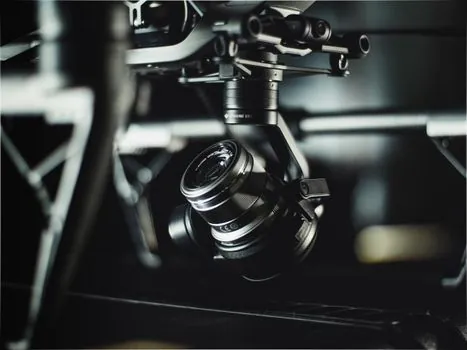
Aperture, focal length, and detector array size therefore affect both collected energy and spatial coverage.
LWIR imaging can see through smoke, fog, and dust, but it does not eliminate the influence of the atmosphere [S1]. LWIR systems work in complete darkness and can see through smoke, fog, and dust, offering reliable performance in challenging conditions. The claim that an imager performs through obscurants must be evaluated against the specific path length and environmental conditions, not treated as a universal performance guarantee.
For fixed-point temperature measurement, a thermal imaging camera and a spot infrared thermometer serve different functions. A thermal imager maps a scene, while an infrared thermometer measures a targeted surface temperature, making emissivity and spot-size controls central to any comparative specification.
Choose by Target, Sensitivity, Optics, and Interface
Target temperature and temperature contrast are the first selection gates because the 8–14 µm band is strongest for terrestrial objects that are not intensely hot [S1]. Detection of small temperature changes requires adequate NETD, pixel pitch, lens performance, and scene coverage, while integration planning must confirm frame rate, output interface, power, lens mounting, and environmental limits.
For typical industrial and surveillance duties, an uncooled 8–14 µm camera is the practical default because it removes cryogenic cooling and the associated cost and maintenance burden [S1][S4]. A cooled MWIR instrument becomes more defensible when the mission requires a 3–5 µm response, greater long-range contrast, or performance not achievable with the selected LWIR detector and optics [S3].
Uncooled technology is not suitable for every thermal-instrument requirement. A system designed around a thermal imager should document the detector band, NETD, array resolution, frame rate, lens, calibration method, and operating-temperature range rather than relying on the LWIR label alone.
A defensible procurement record should therefore name the 8–14 µm spectral response, minimum NETD, detector format, lens focal length and aperture, frame rate, interface, enclosure rating, and operating-temperature range. Trackable validation signals are measured thermal contrast across the intended target temperature range and stable operation under the specified optical path, weather conditions, and power-supply limits.