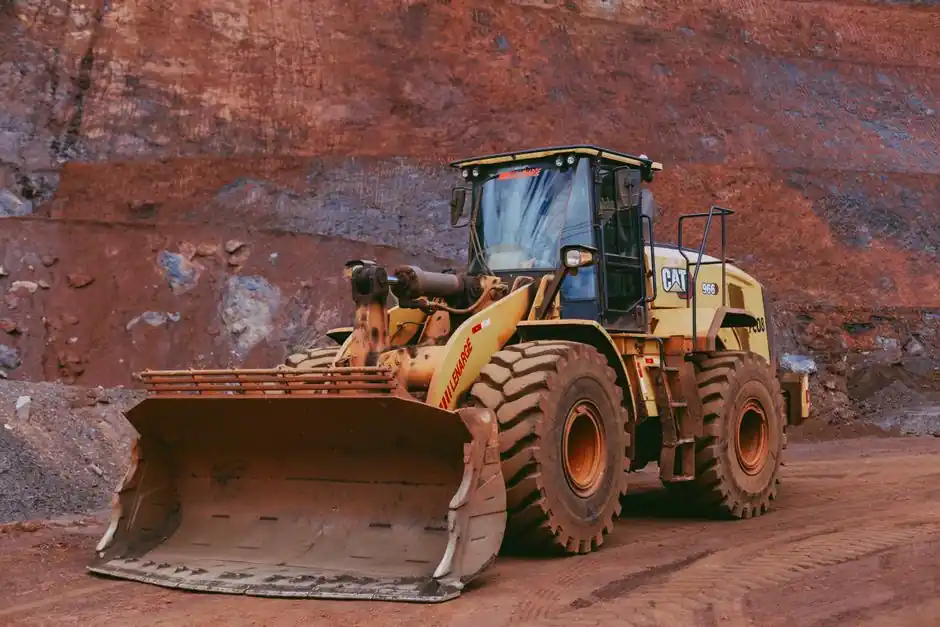
A mining knife gate valve should be selected from the actual slurry duty: solids concentration and size, pressure, corrosion, temperature, flow direction and required isolation performance.
The preferred construction combines a wear-resistant body and gate, corrosion-resistant wetted materials, a seat that excludes solids, an actuator sized for the calculated operating force and instrumentation that proves valve position.
Define the slurry service before choosing a valve
Knife gate valves are on-off isolation devices for demanding services including mining, tailings, concentrate pipelines, grinding circuits, thickeners, cyclones, paste plants, acid leaching and neutralization [S3][S5]. Unlike a conventional gate valve with a seated closure member, the knife gate uses a sharp-edged gate that moves into the flow stream and can cut through solids and scale [S5].
Obtain the full slurry envelope before shortlisting equipment: nominal bore, flow direction, normal and peak pressure, temperature, solids mass fraction, particle-size distribution, maximum lump size, corrosive constituents, cycling frequency and required leak-tightness. A nominal size alone does not define the duty. A pump discharge, cyclone inlet, thickener discharge and tailings pipeline can each require a different gate, seat and trim arrangement even when their pipe diameters match.
The operating envelope must also distinguish normal service from start-up, shutdown, flushing and emergency conditions. Heavy-solids or high-concentration service increases gate loading and seat contamination risk, while chemical attack changes the acceptable alloy and coating selection. DSS lists a severe-service knife gate valve among its products for mining applications [S5].
Compare the main valve architectures
Knife gate valves are suited to slurry isolation where solids must be cut or displaced, bidirectional shutoff is required and quick isolation matters. A mining-slurry comparison identifies isolation valves and knife gate valves as the two predominant technologies for controlling slurry flow [S4].
Bray groups its knife gate valve products into bidirectional, unidirectional and slurry categories [S3]. The knife gate valve product family is therefore broader than one mining configuration, and the order specification must identify flow direction and body configuration rather than simply “knife gate valve.”
Match wetted materials to corrosion and abrasion
Body, gate, stem, seat and stem-nut materials must be selected as a compatible set because a corrosion-resistant body does not protect a carbon-steel gate or an incompatible seat. These are product-specific options, not universal requirements for every mine.
For abrasive tailings and concentrate service, specify the intended wearing surfaces rather than relying on a generic carbon-steel body. The gate is the primary cutting and flow-contact member, while the body and seat also face erosive flow. The supplier should identify the base material, grade, coating or lining, gate hardfacing arrangement and whether hardfacing is applied to the seating face, gate face, or both.
Seat selection has equal importance. A seat exposed to settled solids can lose sealing contact or become mechanically damaged, increasing leakage and actuation force. For high-concentration tailings, severe-service designs emphasize improved shutoff and longer service life, with designs intended to achieve zero product leakage [S2]. Treat that claim as a procurement requirement to be demonstrated through the specified seat and test regime, not as a reason to omit pressure testing.
Size the actuator from gate force, pressure and operating cycle
Actuator selection requires more than the valve’s nominal torque rating. The operating force depends on gate geometry, slurry consistency, pressure, friction from deposits and scale, stem condition, seat compression and the selected actuator or drive arrangement. The valve supplier must issue a project-specific torque calculation using the specified pressure, valve size, material pairing and operating medium. [S3]
Pneumatic, electric, hydraulic and manual operators should be compared against three criteria: required closing force, safe positioning under degraded conditions and maintenance exposure. Mining systems may require local position indication, limit switches, or a fail action. Pneumatic operation can simplify remote actuation, but it introduces an air-quality and instrument-air dependency that must be included in the failure analysis.
Replacement time is an important life-cycle criterion. Use those figures as comparative maintenance-planning inputs, not as guaranteed site labor durations, because access conditions, isolation, draining and reinstallation can extend the task.
Specify isolation performance and testing clearly
The procurement specification should state whether isolation is unidirectional or bidirectional, whether zero visible leakage is required, the acceptable external leakage criterion, the pressure and medium used for the seat-leak test, and whether full-bore shutoff or restricted body bore is acceptable. General isolation valves are associated with full-bore, bubble-tight shutoff and low pressure drop, while knife gates provide a different balance suited to solids [S4].
Do not substitute the requirements for a conventional gate valve. A knife gate is justified where a sharp gate can move through slurry solids and provide the required shutoff function without the same obstruction geometry as a seated gate. In a clean service, either arrangement may be adequate; in abrasive slurry, the trim and wear strategy become more important than the generic product name.
For severe-service mining valves, DSS specifies bidirectional zero-leakage isolation from full vacuum to ASME Class 1500/PN 250, or 3,750 psig/250 barg [S5]. Class 1500/PN 250 is a pressure-class designation, not a substitute for a project-specific seat-leak acceptance criterion. Require the manufacturer to state the test pressure, test medium and applicable test standard in the purchase specification.
Use the correct type for the installation
For severe tailings duty, choose a severe-service knife gate with bidirectional sealing, wear-resistant gate and body materials, a solids-resistant seat and an actuator verified for the calculated force [S2][S5]. For a known one-way line, a unidirectional knife gate can reduce unnecessary complexity, but reverse-flow testing must confirm that the selected configuration cannot be installed or operated against its design direction [S3].
Do not choose the mainstream knife gate option where throttling or proportional control is required. A knife gate is an on-off isolation product, not a control valve. For continuously varying slurry flow, use a control device designed for the required solids duty; related selection guidance for control valves for abrasive mining service addresses that different function.
Also avoid a knife gate where bubble-tight isolation, bubble-free discharge, hygienic cleaning or very low operating force has priority over the ability to cut through solids. A pinch valve may suit controlled isolation in some abrasive slurry duties, while a specialized isolation valve may be preferable where full-bore flow and resilient sealing dominate [S4][S7].
Plan installation and maintenance before purchase

Installation position must respect pipeline alignment, flow direction and access for gate removal. Preparation of the work area, cleaning and alignment are identified as part of the mining-slurry installation sequence in a reliability case study [S8]. Allow enough straight pipe and valve-layout space for the actuator, stem travel, repair access and safe dismantling without loading the gate assembly.
A maintenance plan should cover seat inspection, stem and stem-nut condition, gate-edge and hardfacing damage, deposits inside the body, actuator-air or electrical condition, and calibration of limit switches or position feedback. The plan should also define isolation and draining procedures so maintenance personnel do not work on a line that can flow or move under gravity.
Document the operating baseline: valve cycles per week, peak pressure, normal temperature, solids percentage, particle-size distribution, corrosion chemistry, leakage observations and actuator stroke time. Changes in any of these six inputs can invalidate actuator sizing, seat selection and wear expectations. The procurement file should include the valve size, pressure class, flow direction, materials, seat type, actuator type, torque basis, test requirements and required accessories in one traceable data sheet.
The shortlist logic is straightforward: specify a general-service knife gate for moderate solids, a unidirectional design for a proven one-way line, a bidirectional severe-service valve for abrasive or corrosive tailings duty, and a different isolation technology when throttling or bubble-tight clean shutoff is the controlling requirement. Obtain project-specific torque calculations and seat-test definitions before releasing an order.