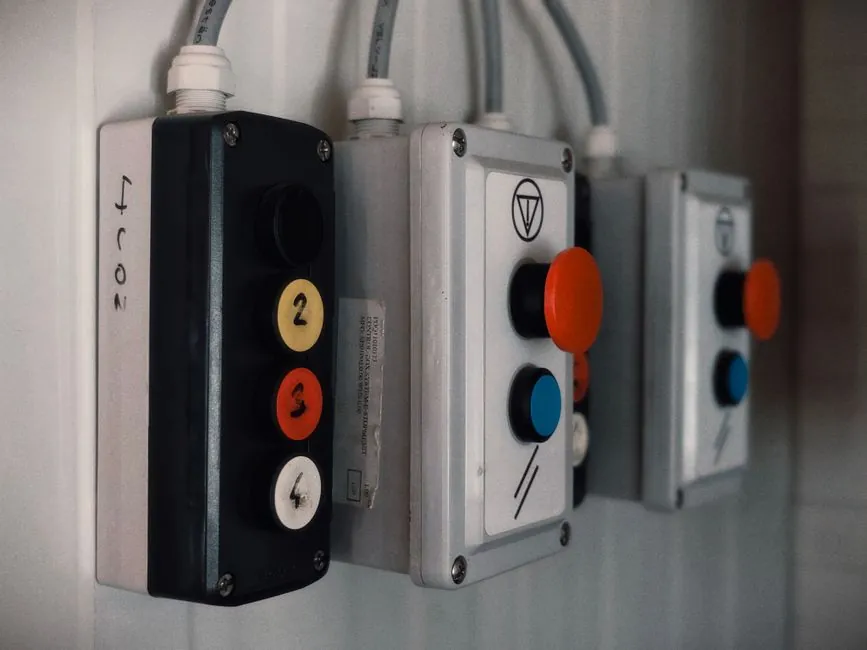
A valve limit switch box for food and beverage service should provide discrete open and closed confirmation, use a washdown-compatible enclosure, and match the actuator mounting interface, electrical output, and site approval requirements.
Typical duties include product-routing valves, CIP supply and return valves, steam, water, compressed-air utilities, and tank inlet or outlet valves, where verified valve state supports sequencing and prevents production from restarting before the cleaning circuit is proved [S1].
Define the valve feedback duty before selecting the box
A limit switch box is mounted on an actuator and converts mechanical rotation into discrete electrical signals for a DCS, PLC, or local panel [S5]. A limit switch box is mounted on the actuator shaft and converts mechanical rotation into discrete electrical signals that a DCS, PLC, or local panel can read [S5].
A limit switch box provides discrete position feedback, whereas a position transmitter provides continuous stem-position feedback [S4][S5]. Limit switch boxes provide position feedback of pneumatic rotary actuators for ball and butterfly valves [S6], and food-and-beverage installations require enclosures, seals, and cable entries suited to the cleaning regime [S1].
A valve that moves correctly but produces no feedback remains unverified to the control system. That limitation matters most in CIP sequences, tank routing, and product interlocks, where a command signal alone cannot prove that the valve reached its commanded end position [S5].
Compare sensing options by cycle demand and contamination risk
The practical shortlist is mechanical for inexpensive, lower-duty positions, inductive for frequent cycles where DC infrastructure is acceptable, and sealed magnetic or reed devices where washdown exposure outweighs the need for higher contact capacity [S5].
Match enclosure material to the cleaning regime
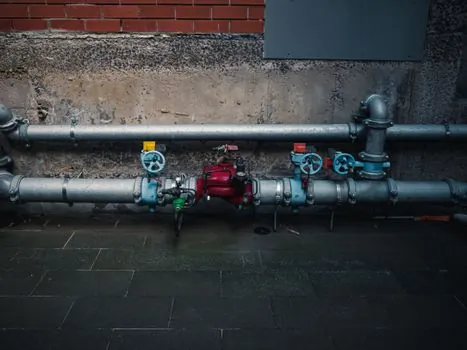
Stainless steel is widely specified in food and beverage production areas because frequent washdown with water and cleaning chemicals requires a well-sealed, corrosion-resistant enclosure [S1]. TopWorx identifies its TVH family as 316 stainless steel for highly corrosive and heavy-washdown applications, while the TXS family is a compact direct-mount option for washdown duty [S1].
Compact resin enclosures can suit utility and plant-room applications where the enclosure is not exposed to the full production-area washdown regime [S1]. The material decision must therefore follow the location: a product zone, a CIP skid, a utility room, or an outdoor installation are not equivalent environments.
TopWorx lists the DVR family for confined, non-hazardous areas and the DXS family as a 316 stainless steel D-Series option for locations requiring hazardous-area approval, including alcohol or dust areas [S1]. A weather-resistant enclosure alone does not establish hazardous-area suitability; the selected part number must carry the approval marking required for the installation [S1].
The enclosure, seals, and cable entries must be selected as one sealing system. A stainless housing does not compensate for an unsuitable gland, cable entry, or seal under the plant's actual cleaning chemicals and water exposure [S1].
Verify mechanical and electrical interface details
When specifying a limit switch box, check that its enclosure, seals, and cable entries suit the cleaning regime [S1] and confirm its mounting and internal configuration [S4]. NAMUR mounting is common on pneumatic quarter-turn actuators and permits direct mounting across actuator brands, but the specific shaft, coupling, and mounting dimensions still need confirmation [S4].
A typical limit switch box contains cams, switches, and a terminal strip [S4]. A typical limit switch box contains a terminal strip [S4]. Local indication improves operator diagnostics, but it does not replace the electrical feedback used in interlocks.
Contact and signal requirements must match the receiving device. For food-and-beverage applications, select a limit switch box whose enclosure, seals, and cable entries suit the cleaning regime [S1]. A 4–20 mA output is continuous measurement, while a switch box is intended for discrete state confirmation, so the control architecture must not be selected by assumption.
Separate hygienic process zones from utilities and hazardous areas

A limit switch box is suitable for automated actuators when the required information is open or closed confirmation, not continuous stem position [S4]. It is therefore appropriate for product-routing, CIP supply and return, steam, water, compressed-air, and tank inlet or outlet valves [S1]. It is not the correct selection for a modulating control valve that requires an analog position signal [S5].
Stainless steel is the stronger process-zone choice where equipment receives repeated washdown and chemical exposure, while compact resin can be justified for utility and plant-room duty [S1]. For locations containing alcohol or combustible dust, the enclosure must have the required hazardous-area approval; TopWorx identifies DXS, with a 316 stainless steel D-Series enclosure, for that duty [S1].
The same hardware cannot cover every space. A confined, non-hazardous location may suit DVR, heavy corrosive washdown may justify TVH, and direct-mount washdown service may suit TXS [S1]. These family distinctions are starting points for evaluation, not substitutes for checking the exact part number and certification marking [S1].
For related selection criteria in a different utility environment, see Valve Limit Switch Box Selection for Water Treatment. Water-treatment service can provide useful actuator and feedback context, but food and beverage specifications still require the cleaning-regime review described here.
Build the datasheet and acceptance checklist
A complete food and beverage datasheet should identify the valve type, actuator make and model, mounting pattern, shaft dimensions, open and closed switching action, required number of signals, output technology, supply voltage, contact rating, enclosure material, protection rating, cable-entry type, ambient conditions, cleaning chemicals, and area classification [S1][S5].
For hygienic qualification, record the cleaning regime, washdown frequency, chemicals used, and whether the unit is located in a product zone, utility area, or confined non-hazardous space [S1]. For hazardous locations, state the required approval marking rather than describing the enclosure only as weatherproof or explosion-proof [S1][S5].
Commissioning should prove both states independently. Field testing should confirm that each switch operates at the intended cam position, the beacon agrees with the electrical state, the PLC receives the correct open or closed input, and repeated travel does not produce drift, chatter, or seal damage [S4][S5]. Travel-time comparison between command and limit confirmation provides a practical baseline for detecting later deterioration in valve or actuator performance [S5].
A shortlist is justified only when the enclosure survives the specified cleaning exposure, the actuator interface is dimensionally confirmed, the switch technology matches the control input, and the approval scope covers the installed location. Those four checks remove the common failure modes of washdown ingress, incompatible shafts, unsuitable contacts, and mismatched certification [S1][S5].