
Pharmaceutical valve limit switch boxes should provide IP67 ingress protection, NAMUR-compatible mounting, and discrete open and closed signals for PLC or DCS confirmation.
The enclosure material, switch technology, calibration method, and hazardous-area status determine suitability across sterile production, utilities, and chemical-cleaning areas.
Core Functions and Application Scope
A valve limit switch box couples to an actuator drive shaft, translates mechanical travel into open and closed electrical states, and normally provides local visual position indication plus discrete inputs for a PLC, DCS, or safety system [S3][S5]. For pharmaceutical service, it is a proof-of-position device rather than a continuous-position measurement.
The box is suitable for quarter-turn pneumatic or electric actuators, including double-acting and spring-return arrangements, when actuator travel must be confirmed to a PLC or DCS [S2][S4]. It can also be paired with a pneumatic valve actuator or an integrated solenoid mounting pad, which reduces pneumatic tubing runs and associated leak points [S3].
Three signal categories have different engineering uses. A mechanical SPDT switch provides simple open and closed contacts; NAMUR or PNP proximity devices suit more cycle-intensive installations; a 4–20 mA transmitter supplies continuous position feedback for modulating service [S3][S5]. A conventional limit switch is appropriate when only two discrete end positions are required.
Enclosure Selection for Washdown and Cleaning
Limit switch boxes are available in robust aluminium or stainless-steel housings, with documented standard and stainless-steel product families.
Product construction does not establish the final ingress rating by itself. Cable entries, terminal plugs, seals, and unused openings must be correctly specified, because plugging an entry instead of installing a rated gland can undermine the enclosure system [S3]. Visual indicators, cams, switches, and the enclosure assembly should be ordered as one documented instrument package.
Comparison of Common Housing and Switch Options
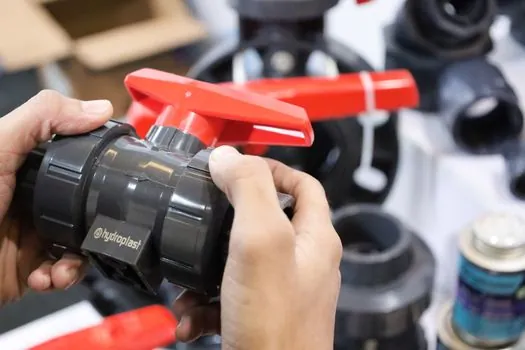
The comparison turns on four criteria: enclosure corrosion resistance, ingress protection, switch technology, and hazardous-area certification. Aluminium is economical and adequate for benign interiors; SS316 carries a material premium but is the defensible choice for repeated chemical cleaning. Limit switch boxes may use mechanical or proximity switches to confirm valve status.
Machinery, Signals, and Control-System Compatibility
Limit switch boxes provide NAMUR mounting compatibility and accurate valve position feedback. Limit switch boxes should provide universal compatibility with pneumatic actuators.
For PLC and DCS interfaces, specify whether the enclosure provides discrete electrical feedback or a continuous-position transmitter. HART is not a substitute for a digital bus, and a 4–20 mA position signal should be selected only when continuous feedback is required.
Modulating applications may justify a valve positioner, but an on/off pharmaceutical isolation valve normally requires two reliable discrete limits. This avoids paying for continuous signal capability that the control function does not use.
Actuator Fit and Calibration Discipline
Calibration must be completed with the valve connected and the actuator stroked under normal operating load, because bench settings can shift after installation and line pressure is applied [S3][S8]. The procedure should include actuator travel verification, cam adjustment at both endpoints, electrical switching-point checks, local indication alignment, and a final PLC or DCS loop check [S8].
Position switches prove valve travel, while a local indicator proves the mechanical state visible to an operator. Both should agree after calibration; a lit beacon or dome must not substitute for a correctly adjusted electrical switch. For pneumatic actuators, verify actual travel before declaring the feedback reliable.
Installation instructions also identify the required tools and cover different actuator types [S8]. Those instructions do not replace the actuator manufacturer’s interface requirements. Record the actuator model, mounting arrangement, supply pressure, stroke, switch type, contact rating, and calibration values in the final valve datasheet or installation record.
Who Should Not Use a Basic Limit Switch Box
A commodity switch box should not be used where the enclosure must withstand direct washdown, chemical exposure, or a certified hazardous area. The product family must provide IP67 or IP68 evidence and the appropriate hazardous-area certification for the complete installation, not merely certification for an internal switch element [S2][S3].
A basic two-switch enclosure is also the wrong choice for a modulating control valve that requires continuous position, diagnostic data, or bus communication. In that case, select a dedicated 4–20 mA transmitter or smart valve positioner, while retaining limit switches only if independent open and closed confirmation is also required.
Pharmaceutical applications can also demand hygienic design details beyond basic environmental protection. Material selection, exposed fasteners, dead-leg potential, cable orientation, and cleanability must be reviewed against the applicable area classification and site cleaning regime; the supplied research establishes the enclosure and switching options but does not define a universal hygienic certification rule [S1][S2].
Hazardous Areas, Standards, and Procurement Evidence
For hazardous installations, require documentation covering the complete enclosure assembly, including its protection concept, installation restrictions, certificate marking, ambient conditions, and the certified switch arrangement [S3]. Documented families include flameproof, weatherproof, micro, stainless-steel, and standard boxes, with ATEX and IECEx options identified for hazardous-area use [S2].
The certification route remains jurisdiction-specific. ATEX covers the European framework, IECEx supports international conformity assessment, and national or local approvals may also apply [S2][S3]. Do not assume that one approval authorizes installation in every country, and do not apply a standard or certificate beyond the equipment, model, and installation conditions stated in its documentation.
For procurement, request at least 4 technical items: enclosure material and IP rating, hazardous-area certificate and marking, actuator mounting interface, and switch or transmitter type [S2][S3]. Also require electrical contact data, visual-indicator arrangement, operating-temperature limits, and calibration instructions. Model codes such as APL-210N and HVM-100 appear among documented pneumatic monitoring products, but their suitability depends on the applicable datasheet rather than model name alone [S4].
Shortlist Logic for Pharmaceutical Valve Packages
Use an SS316, IP67 enclosure with NAMUR-compatible mounting for routine wet, washable pharmaceutical areas. Specify flameproof or other certified protection only when the area classification requires it, and choose a compact weatherproof micro box where installation envelope, rather than corrosion, governs the design [S2].
For electric quarter-turn packages, confirm that the chosen feedback device supports the actuator interface before ordering. The related electric actuator selection guide provides a useful mechanical and control-interface check before the limit switch box specification is frozen.
The final shortlist should contain the actuator model, valve type, enclosure material, IP rating, hazardous-area approval, signal type, mounting interface, and commissioning procedure. Before installation acceptance, verify switch state at both endpoints, agreement with local indication, stable PLC or DCS inputs, and acceptable operation after the actuator has been stroked under load.