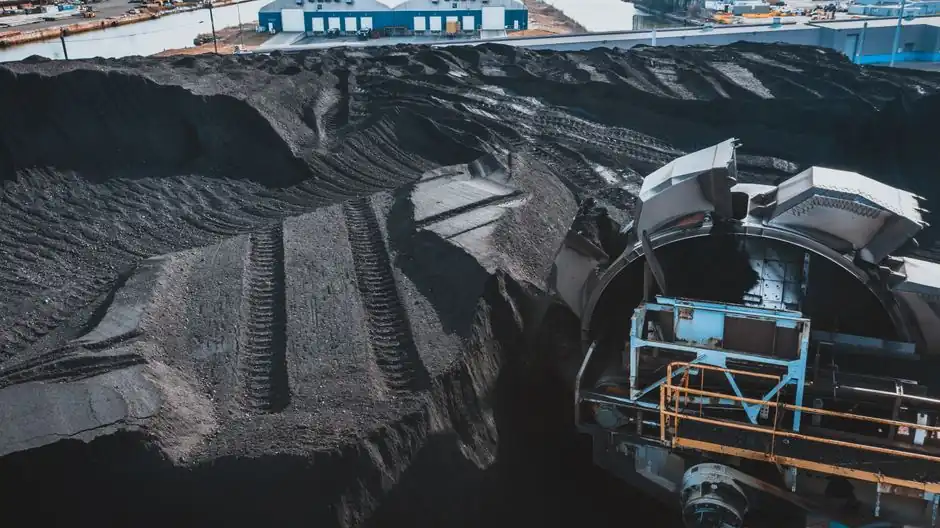
Mining valve positioners should combine accurate stem positioning with resistance to vibration, dust, moisture, temperature variation, and corrosive service.
The decision depends on actuator type, available instrument air, pressure-drop severity, hazardous-area certification, diagnostics, and maintenance capability.
Define the valve and actuator duty
A positioner compares the commanded valve position with measured stem travel and changes actuator pressure until the error is corrected, compensating for packing friction, stiction, hysteresis, and changing differential pressure [S1][S3]. It is therefore more than a signal converter: it is a local positioning controller.
Positioning is justified where accurate travel is required, response must be accelerated, split-range control is used, or the valve produces a pressure drop greater than 5 bar for a single-seated design and greater than 10 bar for a double-seated design [S3][S10]. It is also useful for springless double-acting actuators, which require controlled pressure in both directions [S3].
Record the valve type, fail action, stroke, actuator direction, travel time, allowable air pressure, minimum instrument-air pressure, and the air capacity required at maximum differential pressure. The actuator interface must also match the positioner linkage and mounting arrangement. An incompatible mechanical interface can prevent correct travel measurement even when the electrical and pneumatic specifications are correct.
Compare pneumatic, electro-pneumatic, and smart positioners
Pneumatic, electro-pneumatic, and smart positioners trade installation simplicity, control performance, diagnostics, and communications against one another, making actuator type, instrument-air availability, and required control accuracy the decisive criteria. [S3]
Digital positioners can reduce deadband to 0.5% or less and support automatic calibration and predictive health diagnostics over HART or Fieldbus [S3]. A smart valve positioner is justified where a mining loop must remain observable through a control network, but it adds configuration, electrical, and commissioning requirements. For a new surface plant with qualified technicians and centralized diagnostics, that trade is usually acceptable. For isolated pumps with minimal maintenance support, a simpler pneumatic valve actuator arrangement may be more robust.
Use positioners where mining conditions demand them
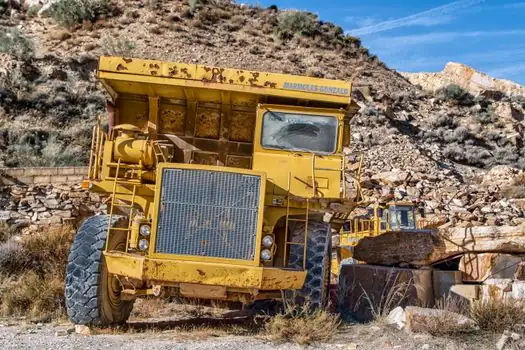
Mining applications include pump stations, process-water duties, grinding circuits, hydrocyclones, and mineral-processing equipment, where valves face abrasive slurry, vibration, dust, moisture, and continuous operating loads [S8].
The strongest positioner cases are modulating control valves with high differential pressure, throttling elements exposed to friction, and actuators that must move consistently during pressure changes. A positioner provides the air-flow capacity to overcome changing valve forces, accelerates travel, and stabilizes the loop [S3]. It also reduces the mismatch between the controller set point and actual stem position, which is particularly important where inaccurate valve travel affects flow, pressure, flotation, or reagent dosing.
Positioners are less valuable on isolation valves that either fully open or fully close, except where partial opening is used for throttling or where rapid emergency movement dominates the duty. They are also a poor substitute for correct actuator sizing, packing selection, or a mechanically sound valve trim.
Set environmental and hazardous-area requirements
ABB specifies epoxy-coated aluminum or stainless-steel positioner housings, an operating temperature range of -40°C to +85°C, and shock resistance of up to 2 g for its demanding-application positioners [S1]. These figures are model-specific and should be confirmed against the proposed manufacturer datasheet rather than generalized to every positioner.
Do not infer underground suitability from ingress protection alone. Verify the certification, marked temperature range, vibration exposure, actuator pressure limits, and compatibility with the mine safety plan. For slurry and abrasive services, also confirm stem material, trim geometry, packing arrangement, and allowable particulate size. A positioner cannot prevent wear or plugging of the plug, seat, stem, or packing.
Require diagnostics that support maintenance
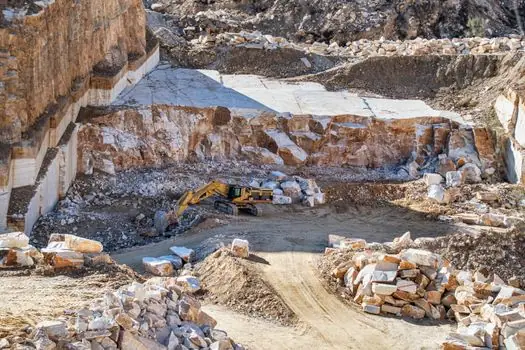
Critical mining loops benefit from leakage detection, zero-shift and positioning-timeout alarms, online trending, step-response testing, and friction or stiction analysis, functions identified as useful for predictive maintenance [S1].
These features reduce field configuration effort, but the commissioning procedure still needs to verify travel endpoints, signal mapping, direction of action, fail position, split range, and the valve's response at minimum and maximum operating differential pressure.
For a valve positioner, define the maintenance outputs before selecting the model. Useful evidence includes valve travel deviation, air-consumption trends, supply-pressure variation, alarm history, and diagnostic events that can be read locally or transferred to a host system through Field Device Integration [S1]. Diagnostics are valuable only if operators receive the alarms, understand their significance, and schedule corrective action before the loop departs from its control objective.
Apply fail-safe, installation, and commissioning checks
A mining positioner specification should include the valve fail action, actuator spring arrangement, electrical supply, instrument-air quality, output configuration, electrical and pneumatic classification, ambient temperature, enclosure rating, shock resistance, mounting method, and communication protocol [S1][S7].
Confirm whether compressed air is available at every location. If the actuator is hydraulic, do not specify a pneumatic positioner merely because it is common on process valves; the hydraulic power unit, working fluid, operating pressure, and control interface must support the selected positioner arrangement. An electric actuator can avoid local air infrastructure but requires its own motor, gearbox, power, and fail-mode review.
Commissioning should record at least the commanded travel, measured travel, supply pressure, output pressure, zero and span adjustment, and achieved movement time at low, normal, and high differential pressure. A positioner that reaches its target slowly or consumes excessive air is not a successful installation merely because the stem reaches the commanded position during a static check.
Match the positioner to the mining service class
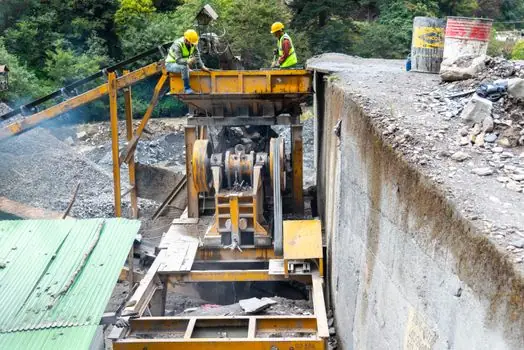
Positioner selection by service class prevents over-specification in simple duties and under-specification in demanding mining loops. [S1]
Use a pneumatic positioner for simple, non-networked modulating service where instrument air is dependable and the required response is modest. Use an electro-pneumatic unit when electronic input, better repeatability, or configurable response is required. Specify a smart positioner for loops where diagnostics, auto-calibration, remote trending, or host-system integration justify the added configuration burden.
Do not use the mainstream smart positioner by default on every remote pump. It is a poor fit where electrical power or communications are unreliable, field technicians cannot configure it, or the valve is normally used only for full-open and full-close service. In those cases, a simpler positioner, or no positioner where the duty does not justify one, can reduce lifecycle cost.
For abrasive slurry, tailings, and grinding duties, pair the positioner selection with a valve-selection review; control valve selection for abrasive mining service addresses the mechanical service risks that feedback electronics cannot solve. Track three signals during ownership: achieved positioning error, actuator air consumption, and diagnostic alarm frequency. These measures provide a defensible basis for renewals, model changes, and maintenance planning.