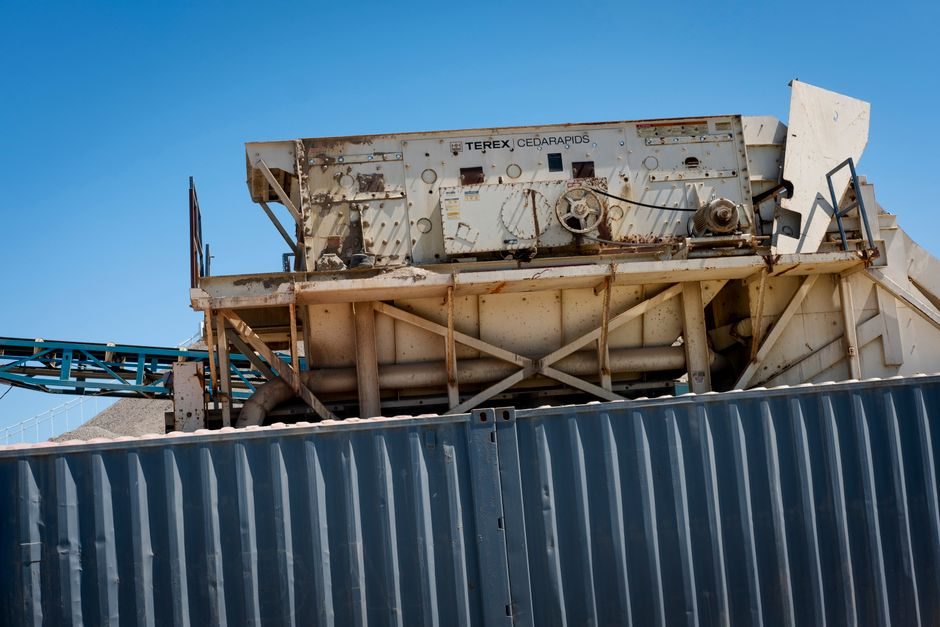
Specifying a wheel-blast machine in mid-2026 is a geometry-and-throughput problem first, an abrasive problem second, and a price problem last; the 22 industrial manufacturers catalogued on DirectIndustry list 90 continuous-machine variants alone, with hook, satellite, manual and roller-conveyor architectures competing for the same procurement budget [S1].
Reference FOB pricing for Chinese-built continuous and roller-conveyor shot blasters sits in a US $10,000-40,000 band per set, with special-purpose inner-wall peening units (e.g. LPG cylinder machines) reaching the same ceiling, while containerised blast rooms cluster at US $10,000-32,000 [S6]. Buyers should expect that envelope to widen once blast-wheel power, abrasive recovery, and dust-collection sizing are scaled to actual workpiece mass.
Workpiece Geometry and Machine Type
Hook-type (suspended load) machines such as SciTeeX RATIOJET are sized for batch treatment of discrete metal workpieces, and are recommended by their OEM specifically for parts that can be hung singly and rotated, with the unit's signature value proposition being a small installation footprint and short transport distances [S2]. LS Industries' LSTB8460 satellite table blaster takes a different approach: dual satellites rotate workpieces into the blast zone, so the open front station can be loaded/unloaded while the second table is being blasted, and the variable-speed table drive lets the operator tune exposure time per part [S3].
For long, hollow parts, the manual LS ID Pipe Blaster 1.25-3 cleans the inside surface of pipe from 1.25" to 3" (≈32-76 mm) in diameter via a mechanically driven lance, and the unit carries the patent-pending TrueTrack technology the OEM uses to keep the lance concentric through the bore [S4]. The 1.25-3 designation is itself a useful spec gate: any pipe outside that range immediately disqualifies this machine family and forces a re-spec to a different ID series or an OD/conveyor machine. Foundries and forging shops that handle bulk material instead of piece parts generally find satellite or tumblast designs a better fit than hook designs, and this is reflected in the model names — compare a shot blasting machine specification sheet across these three architectures before locking the line layout.
Batch vs Continuous Flow Decision
DirectIndustry's continuous-machine index lists 22 manufacturers and 90 products in a single category, while individual specialty lines (hook, satellite, ID pipe) are typically filtered as sub-attributes of wheel-blast machines [S1]. That asymmetry is itself a signal: continuous roller-conveyor and wire-coil designs dominate the catalogue because they integrate with pretreatment lines (e.g. the QXY steel plate pretreatment line referenced by Shandong Kaitai) where blasting is one in-line stage before painting [S9].
Batch systems — single-hook (Q37 series), tumble-blast, and satellite — are the right answer when lot sizes are small, mix is high, or workpiece geometry prevents in-line orientation. A plant producing 200 different casting SKUs in runs of 20-50 pieces will burn ROI on a continuous line through changeover loss; the same plant, running 50,000 identical plates per shift, will lose ROI on a batch machine through non-productive loading time. The Q37 single/double hook cleaner is the default Chinese-built batch solution for cast and forged parts that can be hung on a rotating hook, while roller-conveyor machines (JXB- or QXY-series) win when parts are flat, plate-like, or already palletised. Buyers who need a primer on the broader equipment family should review the sand blasting machine reference page for the wet/air-driven alternative before committing.
Abrasive Media and Consumption
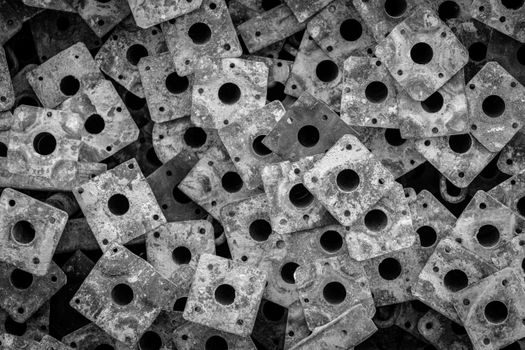
Steel-shot consumption is the second-largest operating cost after electricity, and a 2026 industry reference frames "normal" consumption around the Sa2.5 cleanliness standard on structural steel, with the exact figure dependent on the wheel-blaster power, target profile, and abrasive hardness [S5]. The same Chinese-industry write-up is direct that there is no absolute superiority between pickling and shot blasting — the choice is set by workpiece material, environmental regulation, and downstream coating requirements rather than by a generic preference [S5].
For foundries running a shot sleeve-fed wheel assembly, the practical selection levers are: (1) shot hardness on the Rockwell C scale matched to the substrate to avoid embedding, (2) shot diameter as a function of nozzle/wheel hardware and target profile depth, and (3) shot shape (cut wire vs cast shot vs conditioned shot) for fatigue-life peening applications. The wear part that drives the most downtime is the blast wheel itself; replacement intervals are usually expressed in cumulative operating hours, and a properly trued wheel is the single largest variable in keeping consumption inside the normal band. Procurement specs that fail to pin a wheel OEM, a blade-part number, and a control-arm supplier will bleed money in year two no matter how aggressive the upfront FOB price looks.
Surface Finish Target and Drive Power
The Sa2.5 (ISO 8501-1 visual cleanliness — "commercial blast cleaning") reference above is the most common contract spec for structural steel, with Sa3 ("near-white metal") and Sa2 ("thorough commercial") bracketing it; peening specs add an intensity requirement expressed in Almen strip "A" deflection, which is a separate gate from cleanliness and must be specified in parallel [S5]. A spec that calls only for "shot blasted" without naming the surface grade and the Almen intensity should be sent back to the drawing board — it is a purchase order for rework, not a machine.
Drive power scales roughly with abrasive mass flow and wheel tip speed: small table-style or ID-pipe machines (LS ID 1.25-3 class) run single-digit-kW blast motors, mid-size hook machines (Q37 series) typically sit in the 7-15 kW per wheel range, and large roller-conveyor or plate-pretreament lines stack multiple wheels at 15-30 kW each. Buyers who have not yet fixed a target throughput in kg/h or m²/h will find that drive power, abrasive consumption, and dust collector size all move together, and the cheapest spec is the one that ties these three numbers to a measured sample at the OEM's facility before PO release. Similar geometry-to-throughput logic governs adjacent processes; the coding machine reference and the cutting machine reference use the same spec-by-pieces-per-hour discipline.
Dust Collection, Filtration and Compliance
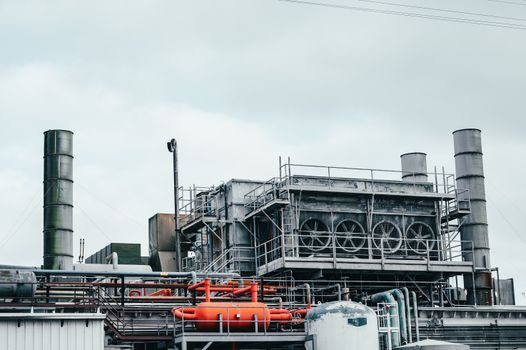
A wheel-blast machine generates a continuous high-volume dust stream, and the dust collector is therefore not an accessory — it is part of the machine. Cartridge-style filters with automatic pulse-jet cleaning are the de-facto standard on Chinese-built continuous and roller-conveyor units; sizing is typically set at 8-15 m³/min per blast wheel, with the higher figure used for abrasive containing fines or for steel-shot cut wire. Plants bound by EU Industrial Emissions Directive (IED) thresholds or by US National Emission Standards for Hazardous Air Pollutants (NESHAP) for surface coating pretreatment need to confirm the filter's declared emission (mg/Nm³) and the fan's kW before signing, not after. [S1]
Noise is the second environmental gate: wheel-blast cabins typically run 85-95 dB(A) at the operator station, and hearing-protection zones need to be designed into the cell from the layout stage. Safety interlocks on the blast door, the abrasive shut-off on door open, and the wheel-arm guard are baseline OSHA/EN ISO 13849 expectations; specifiers should request the OEM's CE declaration and the relevant EN 953 / EN ISO 13849 reference list, not just a verbal assurance.
Supplier Landscape and Sourcing Levers
The 2026 supplier map for continuous shot blasting machines is concentrated in two clusters: a Western-European OEM group (RUMP STRAHLANLAGEN, Gostol TST, ITF, CMV, C.M. Surface Treatment, SciTeeX) and a Shandong-based Chinese cluster (Qingdao Binhai Jincheng, Qingdao Ted, MAYFLAY, JX Blasting, Shandong Kaitai, Kunyuan Machinery) [S1][S6][S7][S8][S9]. Western machines typically carry higher FOB prices and longer lead times but arrive with CE/ATEX documentation and integrated abrasive-recovery systems already on the bill of materials; Chinese machines are typically 30-60% cheaper at the same nominal wheel-power rating and ship in 30-60 days ex-Shandong, but commonly require buyer-side integration of dust collection, electrical cabinet CE-marking, and on-site commissioning.
The Kunyuan Machinery 2007-established, 38-employee profile is representative of the mid-tier Qingdao supplier: product range spans LPG-cylinder inner-wall peening (US $16,000-40,000/set) and containerised blast rooms (US $10,000-32,000/set), with a 1-set MOQ on most lines [S6]. JX Blasting, by contrast, packages itself as a surface-preparation one-stop shop combining equipment, abrasives, and "expert technical guidance" — a useful signal for buyers who do not want to qualify abrasives separately [S7]. For plants that are also evaluating adjacent process cells, the core machine reference and the shell core machine selection guide follow the same make-vs-buy and spec-gate logic that applies to a wheel-blast cell, and are worth reading in parallel before locking a foundry's 2026 capex plan.
Wheelabrator, Pangborn, Rosler, and domestic Chinese makers) on control-arm and blade life, which is the single best leading indicator of abrasive-cost trends in the second half of 2026.