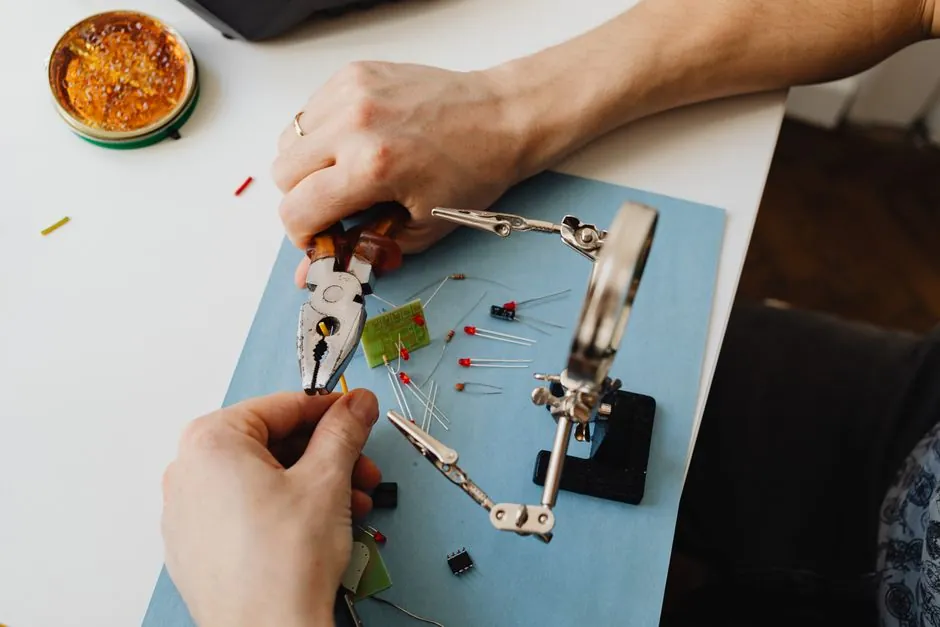
A signal calibrator is a portable or bench instrument that sources and measures current, voltage, frequency, or charge to verify or trim process transmitters, indicators, and recorders in the field [S1][S3]. In 2026 the market still segments cleanly into three cost bands, and the gap between handheld and reference units has widened, not narrowed.
Handheld sourcing of 4–20 mA and 0–10 V starts near $300 for Asian OEM units and runs to about $900 for branded entries. Multifunction process calibrators with HART communication sit in the $1,500–$4,500 band. Reference-grade charge simulators, such as the 1000 pF precision capacitor class used to calibrate charge amplifiers, list from $5,000 to above $12,000, and full bench calibrators with documented traceability can clear $20,000 [S1][S2].
What a signal calibrator actually does on the bench
The instrument either supplies a known electrical signal into a transmitter input, or measures the response of a loop output, depending on which side of the loop the technician is standing [S1]. Universal models such as the COMADAN MS 4201 source and monitor current and voltage, use analogue adjustment with a digital display, and run on battery or line adaptor, making them suited to both field loops and panel shops [S1].
At the precision end, the Endevco 2947C is a 1000 pF shielded reference capacitor that converts a voltage from a signal generator into a defined charge (Q = E × C, simplifying to Q pC = E mV at exactly 1000 pF), used specifically for charge-amplifier calibration in vibration and acoustic test stands [S2]. The functional split between process-electrical and piezoelectric-charge calibrators is the first thing that drives price.
Cost drivers ranked by what moves the invoice
Accuracy class is the dominant cost driver: 0.05% of reading versus 0.025% of reading often adds 40–80% to the unit price on the same model line, because the reference DACs, precision resistors, and ovenized references are different BOM lines [S1][S2]. Channel count is the second driver, since a dual-channel calibrator sourcing mA and measuring pressure simultaneously roughly doubles sourcing hardware versus a single-function unit.
Communication protocols add cost in distinct steps: HART modem hardware typically adds $200–$500 over a base mA/V unit, Foundation Fieldbus/PROFIBUS PA adds another tier because of the digital stack, and the recently common Ethernet-APL interface sits at the top because of the dual-power-and-data physical layer [S1]. Intrinsic safety certification (ATEX/IECEx Zone 1, or Class I Div 1) adds another 20–40% and lengthens lead time by 6–12 weeks, and hazardous-area documentation is rarely optional in oil and gas, pharmaceutical solvent areas, and grain handling.
Tier comparison: handheld, multifunction, reference
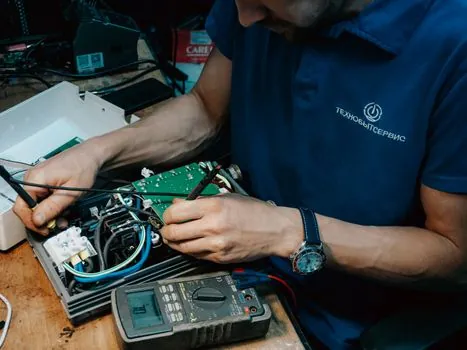
Handheld mA/V calibrators (sub-$1,000) cover loop checks on 4–20 mA, 0–10 V, and basic thermocouples; they are technician tools, not laboratory standards. The MS 4201 sits in the universal mid-tier, sourcing and monitoring current/voltage with analogue trim and digital read [S1]. Multifunction units ($1,500–$4,500) add RTD/thermocouple simulation, pressure-module inputs, and HART, and they are the workhorses for instrument shops that maintain 200–2,000 loops.
Reference calibrators above $5,000 serve a different user: a vibration-test lab using a piezoelectric transducer, or a national metrology institute. The 2947C is specified to convert voltage to charge at exactly 1000 pF, rated 0–50 °C operating, which is a different procurement problem from buying a loop calibrator [S2]. The wrong tier is a common failure mode: a plant buys a $500 handheld for charge-amplifier work, or a $10,000 reference for a simple 4–20 mA loop check. For pressure-loop work in chemical and refinery service, see also the pressure calibrator tier breakdown, and for vibration/piezo labs, the signal calibrator reference class is the same category. For calibration of mA loops with simultaneous temperature simulation, the loop calibrator tier overlaps with the multifunction band.
Who should buy what, and who should not
Maintenance technicians in a 200–2,000 I/O plant should standardize on multifunction process calibrators with HART, in the $1,500–$3,500 band, because the protocol coverage and pressure modules pay back inside one outage. Panel builders and OEMs sourcing 50–500 units a year should evaluate Asian OEM handheld units at $300–$600, but require a sample with documented 0.05% accuracy before signing a frame agreement, and budget for factory calibration certificates per shipment. [S1]
Do not buy reference-grade charge calibrators for routine process loops: the 2947C class is built for piezoelectric transducer simulation, not 4–20 mA, and the form factor and accessories are wrong for plant rounds [S2]. Do not buy unbranded $150 handhelds for SIS-related loops either; the documentation chain to IEC 61511 proof testing breaks without traceable accuracy, and the audit finding outweighs the savings. For lighting and electrical-distribution calibration work, the lighting equipment and electric lamps reference covers adjacent photometric instrument tiers, not signal calibrators.
Total cost of ownership, not just sticker price
A $2,500 multifunction calibrator typically carries $300–$600/year in recalibration cost at an accredited lab, plus $80–$150 in lead and accessory replacement, plus battery replacement every 18–24 months. Over a 7-year life that adds roughly 25–35% to the purchase price. Hazardous-area units lose another 5–10% in annual recertification paperwork and the periodic rebuild of IS barriers. [S1]
Reference-class units like the 2947C class command $800–$1,500 annual recalibration at a national lab because of the capacitance-bridge traceability, and that single line item is often larger than the entire lifecycle cost of a handheld [S2]. Hidden costs also include operator training ($500–$2,000 per technician for a 2-day HART or Fieldbus course), software/driver updates for documentation packages, and lost-time risk when a unit goes out of cal mid-outage. Procurement teams that model only the purchase price consistently undersize the budget for a multi-year fleet.
Sourcing tiers and lead time by region
Asian OEM direct (Shenzhen, Suzhou, Tianjin) delivers handhelds in 2–4 weeks at $300–$700, but minimum order quantities of 20–50 units are common, and lead times stretch in Q4. European distributors (Denmark, Germany, Italy) stock the COMADAN MS 4201 class universal calibrators, and Danish vendor direct quote response is under 12 hours, with typical 3–6 week delivery for in-stock units [S1]. US distributors carry the Endevco line for vibration labs with 4–8 week lead time for reference units [S2].
For buyers comparing 2026 sourcing strategies, the TDR level meter price 2026: cost drivers, sourcing tiers, and TCO breakdown uses a similar tier framework that applies to process-instrument procurement, and the ultrasonic level meter price 2026 piece shows how hazardous-area certification markup stacks across instrument families.