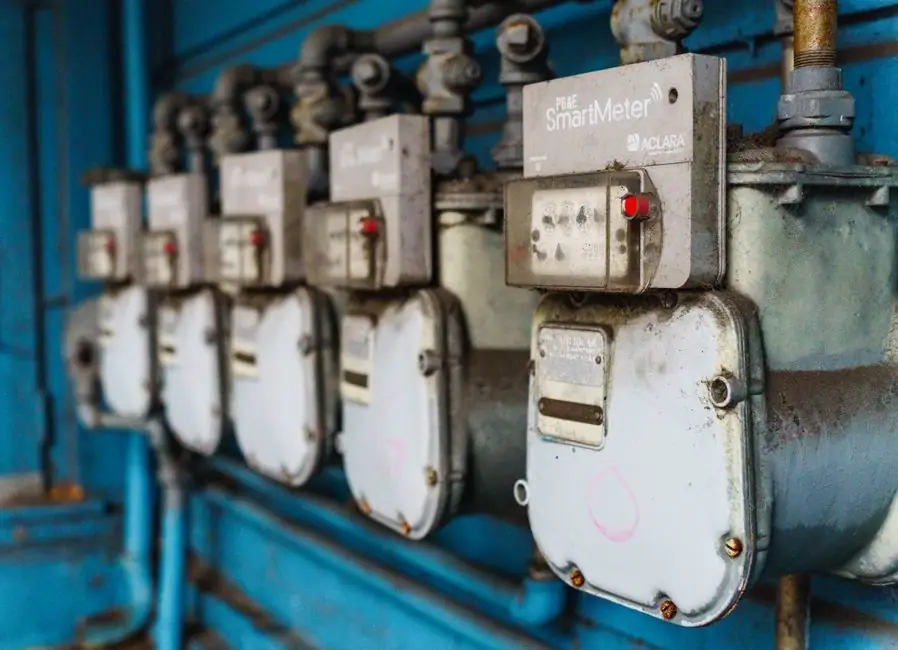
A split-type remote ultrasonic level meter from Dalian Beifang lists at US$100.00–300.00 per piece FOB on a 1-piece MOQ, with selectable 0–3/6/10/15/20 m ranges, 0.25% or 0.5% accuracy, IP65 protection, and 24 VDC or 220 VAC power, 4-20 mA output [S1]. At the top end, Jiangsu Hongguang's HGUL ultrasonic level meter covers 0–30 m at ±3 mm / 0.2% accuracy in the US$100.00–2,000.00 per piece band on a 1-piece MOQ with 6,000 pcs/year capacity out of Shanghai [S5].
What separates a US$100 entry-level unit from a US$2,000 industrial unit is rarely the transducer: it is range, accuracy class, wetted material, and the protocol/HART stack on the 4-20 mA loop. Procurement should anchor decisions on application fit, not on listed price alone, because the same vendor can list both bands depending on configuration [S1][S5].
What an ultrasonic level meter actually costs in 2026 listings
Across nine Made-in-China and ECVV listings reviewed for this guide, the FOB spread runs from roughly US$100 for a 5 m/0.5% split-type economy unit to US$2,000 for a 30 m/±3 mm integrated transmitter with 0.2% accuracy [S1][S5][S9]. The KOBOLD NUS-4, an EU-engineered ultrasonic level meter, extends measurement to 25 m on liquids and 10 m on solids with ±0.2% of reading plus ±0.05% of full scale accuracy, PP or PVDF wetted connections, 3 bar abs and 90°C limits, and a 12-36 VDC 2-wire 4-20 mA output with relay and optional pluggable LCD [S3].
Price depends on four hardware levers you can verify on the data sheet: range (3 m vs 30 m roughly triples cost), accuracy (0.5% vs 0.2% adds another step), wetted material (PP vs PVDF or stainless flange DN80/ANSI 3"), and integration (compact probe vs split sensor + remote electronics with cable). A 10–99 piece break at US$399 dropping to US$299 at 100+ pieces, shown on a Xi'an supplier listing, is the typical volume curve and roughly tracks the Made-in-China aggregator behaviour [S6].
Selection criteria that actually move the price
Range is the single largest cost driver: Beifang offers 0–3/6/10/15/20 m in one housing, while Hongguang's HGUL adds 0–25 m and 0–30 m at the top of the same product family [S1][S5]. Accuracy class is the second lever, with 0.5% standard on economy units and 0.25% or 0.2% (±3 mm at 30 m) on industrial units, and the precision step is usually 20–40% of the list [S1][S5].
Wetted material and process connection form the third lever: PP and PVDF threaded G 1½, G2, 1½" NPT or 2" NPT cover most chemical service, and DN80/125/150 or ANSI 3"/5"/6" flanges handle larger tank nozzles [S3]. Output and protocol are the fourth: a passive 4-20 mA loop is the baseline, while HART, relay, and LCD programming modules add a discrete bill of materials. Power (24 VDC vs 220 VAC) and integrated vs split construction shift the price less than the previous three, but they change installation cost and are worth pricing separately [S1][S3][S5].
Integrated vs split vs compact probe: a cost-trade comparison
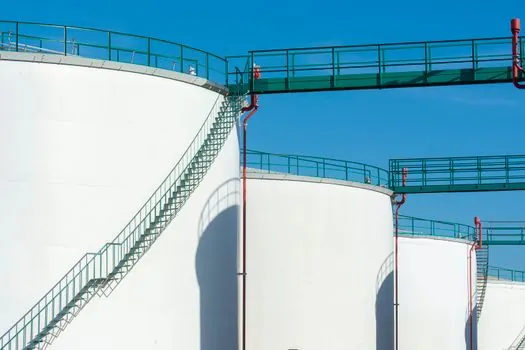
Compact integrated units (sensor + head-mounted electronics in one IP65 housing) are the lowest-cost path for tanks under 6 m where you can mount the meter directly on the roof nozzle. Split-type remote units, where the sensor sits over the tank and electronics are mounted up to 30 m away, cost slightly more but survive foam, vapour, and condensing atmospheres that would damage a head-mounted unit, a design pattern documented in the Beifang remote offering [S1].
Beam angle is the underrated spec: the NUS-4 publishes a 5°–7° total beam at -3 dB, which is what allows reliable echo return in narrow silos with uneven walls, and it is a function of transducer diameter, not raw cost [S3]. Against this, radar level meters handle higher temperature, pressure, and foam better, but list at a premium over ultrasonic for the same nozzle size, and that delta is the most common reason a specifier upgrades. The 4-20 mA + HART path is also shared with most ultrasonic flowmeters, so plant-wide spares and HART communicator software (HARTCOM 287 KB driver per KOBOLD) can be consolidated across two measurement types [S3].
Volume tiers, MOQ, and how suppliers actually discount
Made-in-China listings consistently show a 1-piece MOQ at the high list price and step-downs at 10/100/1000 pieces. A Xi'an supplier posts US$399 at 10–99 pieces and US$299 at 100+ pieces, a 25% break on a single tier change [S6]. Dalian Teren offers 1 Set MOQ with 1,000 sets/month capacity on its OEM/teren-branded ultrasonic level meter, useful for buyers who need steady monthly volume rather than spot shipment [S8].
Shenzhen JUNTRY lists as a dedicated ultrasonic-fuel and liquid-level manufacturer founded in 2012, and Yantai (Shandong) level-gauge makers post US$180–215 per piece on 1-piece MOQs, indicating that low-MOQ domestic supply is broad, and freight cost (not unit price) often decides the supplier [S2][S9]. For reference, comparable variable area flowmeters and ultrasonic flowmeters follow the same Made-in-China tiering, so procurement can apply one negotiation playbook across the level and flow instrument categories.
Total cost of ownership: installation, calibration, and lifetime
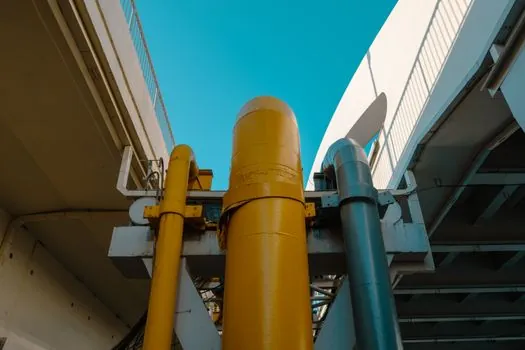
Installation is the silent cost driver. A compact integrated unit on a 2" NPT nozzle needs one cable run, one 24 VDC tap, and one HART pre-loop; a split-type remote unit adds shielded transducer cable, a remote electronics bracket, and usually a longer commissioning time. KOBOLD's NUS-4 ships with HARTCOM modem drivers (FTDI VCP) and NUS-NTB-NRM-SW configuration software (28.3 MB), so the asset owner is paying for a documented configuration toolchain, not just a sensor [S3].
Maintenance on an ultrasonic level meter is dominated by transducer surface fouling, foam events, and condensation, all of which the narrow-beam 5°–7° design mitigates but does not eliminate [S3]. Energy draw is small: 2-wire 12-36 VDC at <1 W for the head, so electricity is a non-factor compared to purchase and install. Calibration is typically a 2-point wet calibration at commissioning, and most vendors include that in the unit price. The economics of a US$300 economy unit vs a US$1,500 industrial unit therefore turn on application risk: open-channel wastewater with rags and foam will eat a 0.5% unit in months, while a clean water-storage tank will run a 0.5% unit for 10+ years without issue.
Where ultrasonic level meters should NOT be specified
Ultrasonic level meters are the wrong tool when the process is high-pressure, high-temperature, or has heavy foam, dust, or vapour above the measured surface, because sound attenuation at distance and through foam is the binding physics limit [S3]. A 3 bar / 90°C ceiling is typical for PP/PVDF wetted ultrasonic units like the NUS-4, and any service above that should be redirected to radar level meters or guided-wave radar [S3].
Vacuum service, agitator tanks with strong vortex, and bulk solids with very high dust loading also break ultrasonic echo return, regardless of beam angle, and the specifier should default to non-contact radar or capacitance in those cases. The sensor-to-surface measurement principle described for the NUS-4 (ultrasonic pulse round-trip time) is the same family as clamp-on ultrasonic flowmeters, but the two products solve different problems and should not be cross-substituted in a bill of materials [S3].
Trade, customs, and import-cost line items

Most ultrasonic level meters are exported under HS code 8515809090 (other machines and apparatus), with a 13% VAT, an 8% MFN tariff, a 30% additional U.S. import tariff line, and a 13% export tax rebate on the China side [S4]. Parts and accessories for ultrasonic diagnostic equipment (e.g. medical-ultrasound sub-categories) sit on 9018129190 with a 0% MFN and 15% U.S. additional tariff, a different line that importers sometimes mistakenly apply [S4]. Plastic instrument housings under 3926901000 carry a 10% MFN, which matters for spares and replacement enclosures, not for the assembled meter itself [S4].
For buyers who also purchase flow and pressure instruments, the same HS framework covers variable area flowmeters and electromagnetic flowmeters, which is why a customs broker should be looped in at the RFQ stage, not at the shipping stage. The combination of 8% MFN on the import side and 13% export rebate on the China side means a US$1,000 FOB meter lands at roughly US$1,080 CIF before U.S. additional tariffs, a number worth pre-calculating in any 2026 budget.
Who ultrasonic level meters are for, and who should look elsewhere
They are for water and wastewater plants, chemical storage tanks with PP/PVDF compatibility, open-channel flow measurement in weirs and flumes, and bulk solids in silos up to 10 m where the medium is dry and dust is moderate [S3]. They are also a strong fit for fuel and IoT telemetry tanks, the segment Shenzhen JUNTRY targets, because 4-20 mA + HART or RS-485 links cleanly to remote telemetry units [S2].
They are NOT for hydrocarbon service above 90°C, high-pressure reactors, vacuum vessels, slurry with rags, or sanitary/clean-in-place processes, all of which should default to radar, capacitance, or hydrostatic technologies, and the specifier should consult the level transmitter buying guide for that decision tree. For plants that already run ultrasonic flowmeters and pressure sensors on HART, adding ultrasonic level on the same protocol and the same HARTCOM toolchain is the lowest-friction expansion.
Track these signals over the next quarter: any update to the 8515809090 MFN line in the China customs schedule [S4], new EU ATEX/IECEx certification postings for compact ultrasonic units (currently absent from the NUS-4 spec sheet, which only lists PP/PVDF general-purpose ratings) [S3], and any shift in the U.S. additional tariff band that currently sits at 30% on this HS code [S4]. A buyer who pins a 2026 budget now should hold a 10% contingency against tariff and FX moves, since the 30% U.S. additional line is the largest single variable in landed cost.
Component reference pages worth checking: ultrasonic level meter.