
China-origin silicone rubber listings passed 73,473 SKUs from 2,370 suppliers as of 2026-07-18, with HTV solid, LSR liquid, and RTV-2 grades dominating the catalog split [S2].
The global silicone market was valued at USD 24.3B in 2025 and is projected at USD 25.8B in 2026, growing to USD 37.3B by 2033 at a 5.4% CAGR — elastomers remain one of the four product pillars alongside fluids, gels, and resins [S3].
Grade architecture: HTV, LSR, and RTV-2 split
Three cure-system families carry the bulk of 2026 industrial procurement: High Consistency Solid Silicone Rubber (HTV) shaped by compression or transfer molding, Liquid Silicone Rubber (LSR) injection-graded at 20-90 Shore A with platinum-cure options, and room-temperature RTV-2 used in mold-making and potting [S2].
Platinum-cured LSR carries a price premium over peroxide-cured HTV and is specified where FDA, medical, or baby-care contact is required; the same supplier listings show platinum RTV-2 LSR for artificial-breast and food-grade applications shipped in sample-size MOQs [S2]. For background on the base elastomer family, the silicone rubber encyclopedia entry covers polymer backbone and additive ranges. The industrial rubber page contrasts silicone against NBR, EPDM, and FKM on temperature and chemical envelopes.
Shore A, temperature envelope, and cure-system selection
Posted product sheets show a working 20-90 Shore A range across custom-molded silicone, with hard durometer pads (75-85 Shore A) reserved for static gaskets and soft grades (20-40 Shore A) for keypads and seals [S2].
Silicone's published operating window stays inside roughly -60°C to +230°C for standard compounds, with fluorosilicone (FVMQ) variants pushing fuel and oil resistance when NBR's envelope fails — a relevant comparison for any spec-first buyer weighing nitrile rubber versus silicone for engine sealing.
Selection rule of thumb from the listing data: platinum-cure LSR for medical/FDA contact, peroxide-cure HTV for general industrial molded parts, addition-cure RTV-2 for casting and prototype tooling [S2][S4].
China supply density and FOB price bands observed 2026-07

Vacuum kneader mixing machines for silicone and elastomer blending were posted at USD 10,000 FOB on Made-in-China.com in June 2026, anchoring capital-equipment pricing for compounders [S1].
Finished-component bands were broader: silicone rubber composite insulators for rural power grids listed at USD 2.00-10.00 per piece (MOQ 100 pcs, IEC-certified, Zhejiang Fuerte) [S6]; silicone-rubber ink for textile screen printing at USD 9.50-10.00/kg (MOQ 100 kg, Dongguan Tianhui) [S7]; O-ring and custom molded seals from USD 0.0001-0.001/piece in NBR/FKM/EPDM/silicone compounds [S8]; flexible silicone rubber heaters in 200x200mm to 300x300mm sizes at USD 1-30/piece with RoHS, CE, UL, and ISO9001 stacks [S9].
The 2,370-supplier count and 73,473-SKU depth mean buyers should filter on certification stack and Shore A before price — a 10x price spread on insulators alone (USD 2 vs USD 10) tracks almost entirely to voltage class and IEC status, not raw silicone cost [S2][S6]. For buyers cross-referencing polymer alternatives, the EPDM rubber entry explains weathering and steam envelopes that compete with silicone in outdoor sealing.
Standards, certifications, and end-use fit
Posted certifications across the 2026 listings cluster around IEC for composite insulators (Zhejiang Fuerte insulators hold IEC certification valid since 2017-06-25) [S6], FDA for food-contact molded parts and LSR [S2], and UL/CE/CB/CCC/RoHS for flexible heaters [S9].
End-use mapping from a 2026 industry presentation surfaces automotive, chemical/petrochemical, marine, appliance, and food processing as the five heaviest silicone-rubber consumers, with electrical transmission (composite insulators) and medical disposables as the fastest-growing pockets [S5].
Zhejiang Hoshine Silicone Industry — among the dimethyldichlorosilane (DDS) base-material producers listed in 2026 — anchors the upstream methylchlorosilane supply that feeds both silicone oil and silicone rubber output, a critical supply-chain node for any spec-first buyer [S4].
Criteria-based comparison: HTV vs LSR vs RTV-2
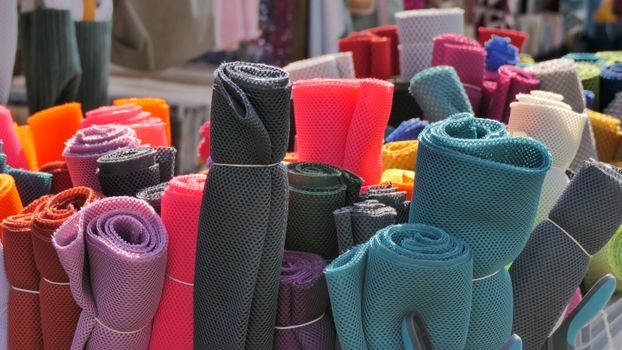
HTV solid silicone rubber fits compression molding, lower tooling cost, and Shore A 40-80 typical; it is the workhorse for O-rings, gaskets, and molded stoppers with 10-15 day lead times [S2].
LSR liquid silicone rubber fits injection molding, tight tolerance, and Shore A 20-70 typical; it is the only practical choice for medical, baby-care, and food-contact parts requiring platinum cure and low extractables, with single-cavity or multi-cavity molds and 12-15 day lead times [S2].
RTV-2 suits casting, mold-making, and prototype tooling; 25 Shore A translucent platinum-cured grades are listed for gypsum/concrete/resin crafts, while thicker RTV-2 grades are used for gel positioning pads and potting [S2].
Limitations and failure modes to spec against
Silicone is not a drop-in for hydrocarbon-exposure seals: standard dimethyl silicone swells in non-polar solvents, and high-pressure dynamic seals at >10 m/s surface speed belong in nitrile rubber or FKM territory unless the spec is fluorosilicone [S2][S8].
Mechanical strength stays low compared with NBR or EPDM — tear strength for general-purpose HTV typically sits in the 9-15 kN/m range, so silicone should not be specced for high-pressure reciprocating rod seals under sustained load [S2].
Posted supply also shows hard-quantity MOQs (100-1,000 pieces) and 10-15 day lead times for custom molded parts, which becomes a real constraint for low-volume R&D runs versus stock O-rings [S2].
Trackable signals for 2026 buyers

Monitor Grand View Research's quarterly silicone-market revisions against the USD 25.8B (2026) and USD 37.3B (2033) anchors for early warning on elastomer pricing [S3].
Watch IEC certification renewal dates on the Zhejiang Fuerte insulator line (currently valid since 2017-06-25) and any FDA or UL listing changes from the 2,370 active China suppliers — those two data points tend to move before spot FOB prices do [S6].
For buyers cross-mapping polymer markets, the polypropylene resin market 2026 capacity and pricing map offers a useful contrast on how a commodity-polymer supply curve behaves versus silicone's narrower, application-driven curve.