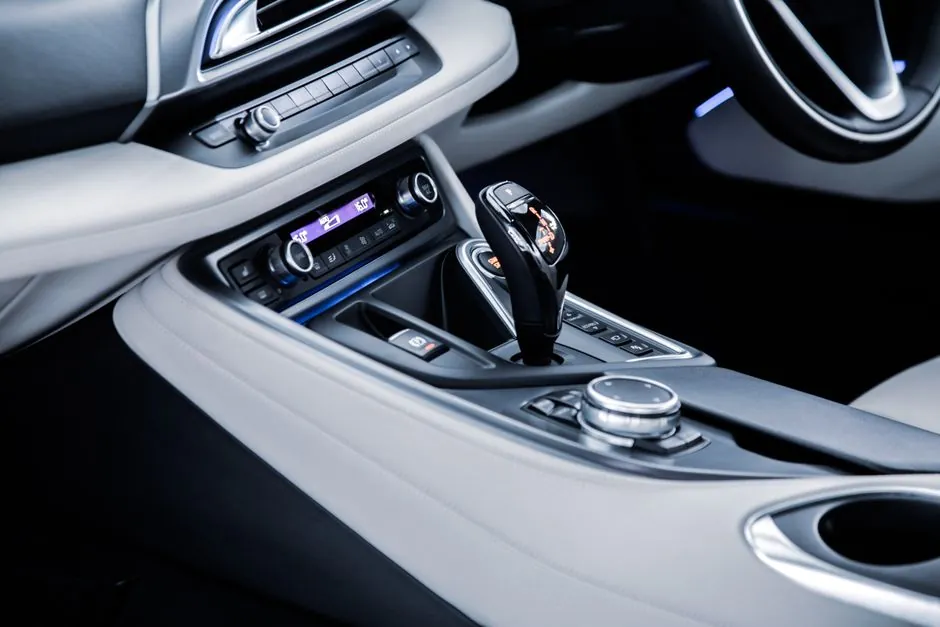
Automotive silicone rubber service span runs from -60 to 250 degrees Celsius across HTV, LSR and RTV grades, and selection is driven by continuous peak temperature, fluid contact, cure route, and piece count rather than by Shore A alone [S1][S4].
The same family covers engine gaskets, coolant hoses, O-rings, turbocharger charge-air tubes, spark-plug boots, battery thermal pads, and headlamps, which is why procurement teams now treat silicone as a structured material portfolio instead of a single commodity SKU [S1][S2].
Automotive Service Environment: Temperature, Fluids, and Aging Loads
Engine bay hot zones reach sustained 180 to 220 degrees Celsius around exhaust manifolds and turbochargers, while underbody and battery enclosures cycle between -40 and 150 degrees Celsius, and silicone rubber tolerates both bands without permanent compression set when the grade is correctly post-cured [S1][S4].
Coolant hoses now see extended-life organic-acid (OAT) coolant, which rates silicone as acceptable for short-term exposure but marginal for long-term immersion, and EPDM is the dominant choice for radiator and heater hose bodies while silicone dominates upper charge-air and turbo oil lines [S7]. The siloxane backbone (Si-O-Si) gives silicone its wide thermal envelope and dielectric strength, which is also why it is the default for cable insulation and EV high-voltage harnesses rated to 600 V and above [S2][S3].
Resistance to fuels, engine oils, brake fluid (DOT 3/4/5.1) and transmission fluid is qualified grade by grade, so any silicone that sees fuel or ATF immersion should be cross-checked against ASTM D2000 line call-outs (VMQ, FVMQ for fluorosilicone) rather than assumed compatible from generic data sheets [S1][S4].
Grade Map: HTV, LSR, RTV and Fluorosilicone
High Temperature Vulcanizing (HTV, also called HCR) is supplied as a firm, gum-like compound and is processed by extrusion, compression molding or transfer molding, which is the right route for long extruded profiles, large gaskets and cable insulation [S2][S4].
Liquid Silicone Rubber (LSR) is a two-component pumpable liquid with very low viscosity, processed by Liquid Injection Molding (LIM) in a fully sealed tool, and is the economic choice above roughly 5,000 to 10,000 parts when wall sections are under 3 mm and tolerances are tight [S3][S4]. RTV-1 is a one-part moisture-curing paste used as a formed-in-place gasket (FIPG) on gearboxes, oil pans and timing covers, while RTV-2 is a two-part casting system used for potting, encapsulation and prototyping flexible parts [S2][S4]. Fluorosilicone (FVMQ) extends chemical resistance to fuels and aromatic fluids at higher cost, and is typically specified only for fuel-system O-rings and turbocharger oil-return seals where standard VMQ swells beyond 20 percent [S4][S5].
For most under-bonnet sealing and EV thermal-management pads, the comparison boils down to:
Criterion | HTV/HCR | LSR | RTV-1 (FIPG) | FVMQ (fluorosilicone)
Continuous upper temperature | 200 to 250 degrees Celsius | 180 to 220 degrees Celsius | 200 to 230 degrees Celsius | 200 to 230 degrees Celsius
Low-temperature limit (DSC, brittle point) | around -50 to -60 degrees Celsius | around -50 to -55 degrees Celsius | around -50 to -60 degrees Celsius | around -55 to -60 degrees Celsius
Tensile / tear strength | moderate, high tear grades exist | high, but lower tear than HTV | low to moderate (sealant-grade) | moderate, similar to VMQ
Typical processing | extrusion, compression, transfer | liquid injection molding | dispense, room-temp cure | compression, transfer, O-ring
Best-fit automotive example | coolant hose, gasket, cable jacket | connector seals, diaphragm, micro-seal | oil pan FIPG, gearbox gasket | fuel injector O-ring, fuel rail seal
Cost band relative to HTV | baseline (1.0x) | 1.2x to 1.6x at low volume, narrows at high volume | 1.0x to 1.2x (paste vs. cured) | 5x to 10x
[S2][S4][S5]
Specifying Compound Properties: Hardness, Compression Set, Tear, and Modulus
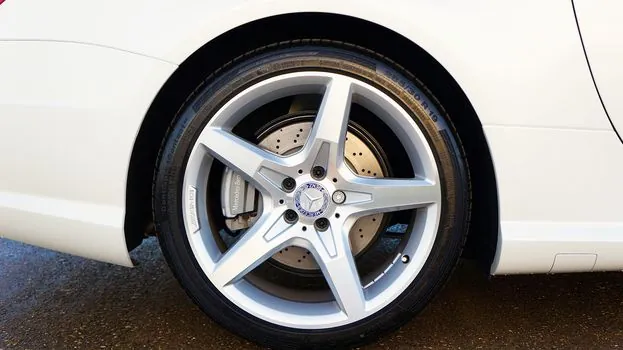
Shore A hardness is a starting point only: a 50 Shore A silicone for a gasket and a 50 Shore A silicone for a vibration mount have different filler, plasticizer and post-cure packages, and the relevant specification values are compression set (typically ASTM D395, target under 25 percent after 22 hours at 175 degrees Celsius), tensile strength (ASTM D412, target 7 to 10 MPa for general-purpose VMQ), tear strength (ASTM D624, Die B, target above 20 kN/m for dynamic seals), and elongation at break (ASTM D412, 200 to 700 percent depending on grade) [S3][S4].
Compression molding is still the default for low- to medium-volume HTV parts, while transfer molding is preferred when flash control is critical and inserts are involved, and the choice of cure system (peroxide, e.g. 2,4-dichlorobenzoyl peroxide, vs. addition-cure platinum) drives both processing temperature and the absence of peroxide by-products, which matters for medical and sensor-adjacent automotive electronics [S3][S4].
Validation, Standards, and Cure Cycle Discipline
Automotive-grade silicone rubber is typically validated against ISO 3302-1 for dimensional tolerances on molded rubber parts and ASTM D2000 line call-outs for material classification, and many Tier-1 suppliers additionally require IMDS (International Material Data System) entry, REACH/ROHS compliance, and post-cure schedules such as 4 hours at 200 degrees Celsius to drive off peroxide residues and stabilise compression set [S1][S3][S4].
For EV battery applications, silicone thermal interface materials (TIMs) are usually specified on thermal conductivity (1.0 to 3.0 W/m-K), dielectric breakdown (above 10 kV/mm), and UL 94 V-0 flame rating, with a post-cure to prevent outgassing that could contaminate battery cells [S1][S4]. Specification writers should also flag the silicon vs. silicone distinction early: silicon is the element (Si, atomic number 14) and silicone is the polysiloxane elastomer, and a typo in a purchase requisition can ship the wrong raw material class entirely [S5].
Selection Workflow and Common Failure Modes
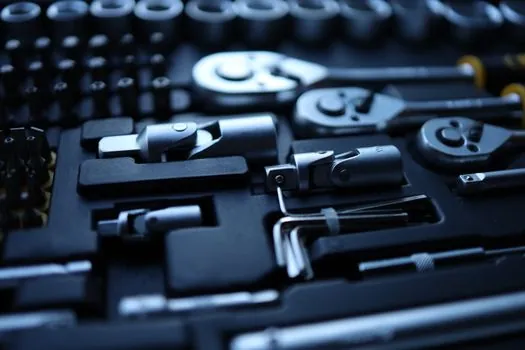
The defensible selection flow in 2026 runs: define the joint function (static seal, dynamic seal, vibration pad, thermal pad, electrical insulation) silicone rubber; map continuous and peak temperatures against grade data; list all fluid contacts including coolant, oil, fuel, brake fluid and cleaning agents; pick the cure route from industrial rubber processing options (extrusion, compression, LIM, FIPG); fix hardness, tensile, tear and compression set targets; then run a 1,000-hour bench ageing test at the real service peak before tooling release [S1][S4].
Typical field failures, such as EPDM radiator hose versus silicone coolant hose swelling in modern OAT coolants, peroxide-bleed odor in under-hood cabins, and tear propagation at sharp gasket corners, almost always trace back to a grade mismatch, missing post-cure, or a Shore A assumed to be the full material spec; for high-temperature air-management lines where EPDM rubber hits its ceiling, silicone HTV or, in the most aggressive case, FVMQ remains the engineered answer [S1][S4][S7]. For EV battery packs, the move from foam-based gap fillers to silicone TIMs above 1.5 W/m-K is a trackable signal worth monitoring, and for fuel-system service the gradual substitution of FKM by FVMQ where low-temperature flexibility below -30 degrees Celsius is required is another [S1][S4].
Related analysis: Laser Screed Selection for Masonry: 2026 Spec Map.