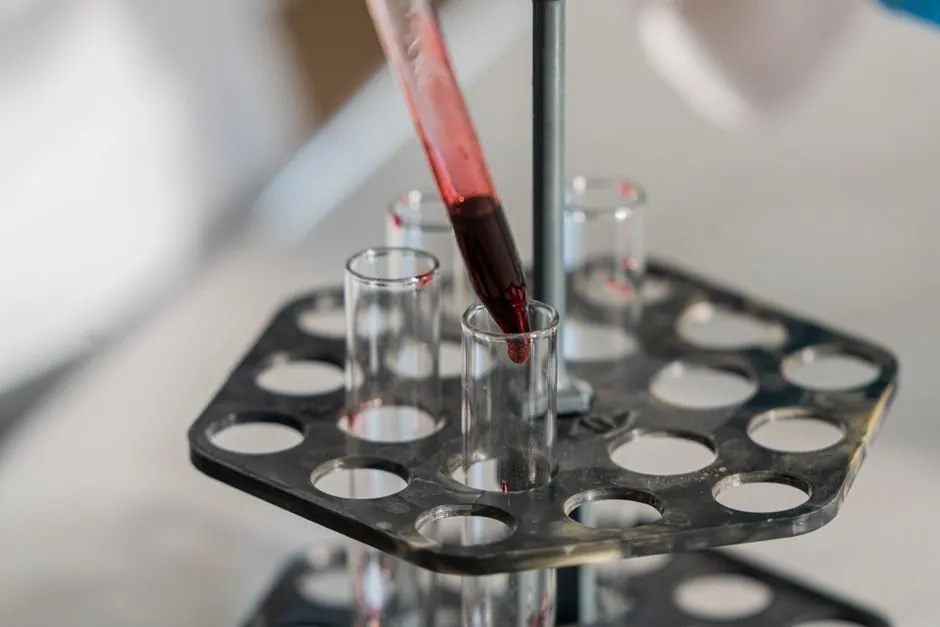
A spear-tip pH electrode penetrates cheese, meat, fruit, and dough for direct measurement without preparing a slurry [S1][S3].
The probe combines a pointed sensing tip with a liquid junction designed to tolerate viscous, protein-rich food samples [S1][S3].
Why Spear Tips Fit Semi-Solid Food Samples
Standard bulb-tip electrodes are intended primarily for liquid samples, while spear-tip designs place a narrow glass membrane at the end of a pointed probe for insertion into solids and semi-solids [S1][S4]. Thermo Scientific offers ROSS and Triode pH electrodes across a range of industries and applications [S3].
Direct penetration also avoids blending the product with distilled water. That preparation step takes time and can dilute or alter the sample before the pH is measured [S5]. Spear-tip instruments are therefore suited to food production and quality-control work involving cheese, meat, fruit, dough, sauces, yogurt, and other soft or viscous products [S5].
The pH meter still performs the measurement, but the spear electrode determines whether the sensing surface can make proper contact with the sample. Stable contact, repeatable insertion depth, adequate rinsing and blotting, and consistent calibration are therefore more important than treating a solid-sample result like an unrestricted bulk-liquid measurement.
Comparing Spear, Flat, and Open-Junction Electrodes
Spear tips are the appropriate choice when the probe must penetrate the product. Flat-surface electrodes are intended to measure the exposed surface of a solid or gel, while open-junction electrodes address contamination and clogging risks in viscous or contaminated liquids and slurries [S1][S3].
Open-junction construction and spear penetration solve different problems. The pointed tip creates the physical path into the sample, while the junction must continue passing ionic current without blockage from fat, solids, or protein [S1][S3]. A spear probe therefore should not be selected solely by tip geometry.
Selection Criteria for Food Quality Control

Sample condition determines tip style. A spear glass membrane can be inserted into solid or semi-solid samples, including fruits, meats, cheese, and dough, for direct pH measurement [S6]. A spear glass membrane for direct pH measurement in solid or semi-solid samples is priced at $176.00 [S6].
Body material affects both handling and operating limits. Most epoxy-body electrodes have a maximum temperature of approximately 80°C, while glass-body electrodes can withstand roughly 100–110°C depending on the model [S4]. Epoxy is more economical and impact-resistant, whereas glass provides stronger chemical resistance and is easier to clean [S4].
Reference design affects maintenance and contamination resistance. Gel-filled electrodes require little routine service but must be replaced when the fill level falls or dries out; refillable electrodes accept replacement electrolyte and can extend service life [S4]. Double-junction references reduce interference from contaminating samples, and Sure-Flow junction technology is intended for dirty or viscous samples that could clog conventional liquid-to-liquid junctions [S3].
Accuracy, Temperature, and Meter Compatibility
The Apera Instruments Premium Series PH60S is a professional pocket pH meter with a Swiss-made spear-tip pH electrode for direct measurement in solid, semi-solid, and viscous samples [S5]. These figures apply to that instrument, not automatically to every spear-tip electrode.
Automatic temperature compensation does not eliminate sample-handling controls. For repeatable cheese and meat results, operators still need consistent penetration location, force, dwell time, surface cleaning, and blotting. Slurry dilution can change the measured value, whereas direct insertion still introduces a local-sample and contact-area dependency [S5].
An electrode consists of a sensing half-cell and a reference half-cell that must be used together to complete the pH circuit [S4].
Food-Factory Use and Hygiene Constraints

Food factories should match the probe to the product rather than standardize every location on one tip style. A spear tip is appropriate where direct penetration is required; a flat tip is appropriate for a surface measurement; and an open junction is appropriate where the liquid phase is dirty or viscous [S1][S3]. Using a liquid bulb probe for meat or cheese adds slurry preparation and exposes the probe to fibrous material [S5].
Washdown exposure further separates portable and installed designs. IP67 addresses ingress under specified test conditions, but it does not remove the need to rinse and sanitize the probe, store it correctly, and replace damaged glass tips.
Glass remains chemically capable but mechanically vulnerable. Even a small fracture in the bulb or body can produce erroneous readings [S4]. Food quality-control procedures should therefore include controlled insertion rather than forcing the tip through hardened cheese, connective tissue, or other high-resistance regions.
Application Limits and Failure Modes
The most obvious failure mode is tip damage. Spear electrodes are more mechanically vulnerable than flat or epoxy-bodied probes because the pointed glass sensing element is exposed to lateral loads [S1]. Another failure mode is junction blockage, particularly in viscous, protein-rich, or contaminated material [S1][S3].
Direct penetration also changes the meaning of the result. The probe measures the material and moisture encountered at the sensing surface, not necessarily the average pH of the entire cheese block or meat sample. Abrasive particles can scratch the glass membrane, while fat and solids can lodge around the junction. These effects make repeatable sampling geometry and probe maintenance more important than for a well-mixed aqueous buffer.
Open junctions address clogging but can slow response, while double-junction references add protection at the cost of a higher-priced construction [S1]. Refillable electrodes extend service life but introduce a maintenance routine; sealed electrodes simplify operation but have a shorter service life once their electrolyte is depleted [S4].
Procurement Checklist for Spear Probes
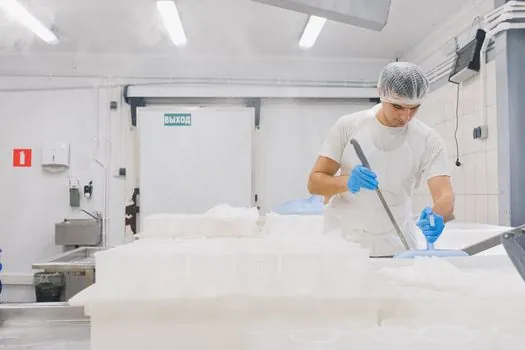
Specify the probe by application rather than by the label spear tip alone. Record whether the product is cheese, fruit, dough, or meat; whether the sample is soft, fibrous, or abrasive; and whether the measurement must be direct or can use a slurry [S1][S3]. For meat, specifically evaluate a construction identified for tough piercing [S3].
Then define the operating envelope. Confirm the required temperature against the 80°C typical limit for epoxy bodies and the approximately 100–110°C capability of suitable glass bodies [S4]. Select gel-filled or refillable construction based on maintenance capacity, and evaluate single- versus double-junction or open-junction protection for the expected fat, protein, solids, and cleaning chemicals [S1][S3][S4].
Finally, verify meter compatibility and output requirements. Combination electrodes place the sensing and reference half-cells in one probe, while the meter must provide the matching electronics, connectors, calibration routine, and temperature compensation [S4]. For a portable field-style implementation, the reviewed configuration pairs the spear probe with a pocket meter, 4.00, 7.00, and 10.01 calibration solutions, 3 M KCl storage solution, 4 AAA batteries, and a carrying case [S5].
Track three operational signals after installation: calibration drift, response time in representative food, and the rate of tip or junction fouling. If readings become slower, less stable, or sensitive to insertion depth, inspect the glass tip and junction before changing the product formulation or blaming the meter.