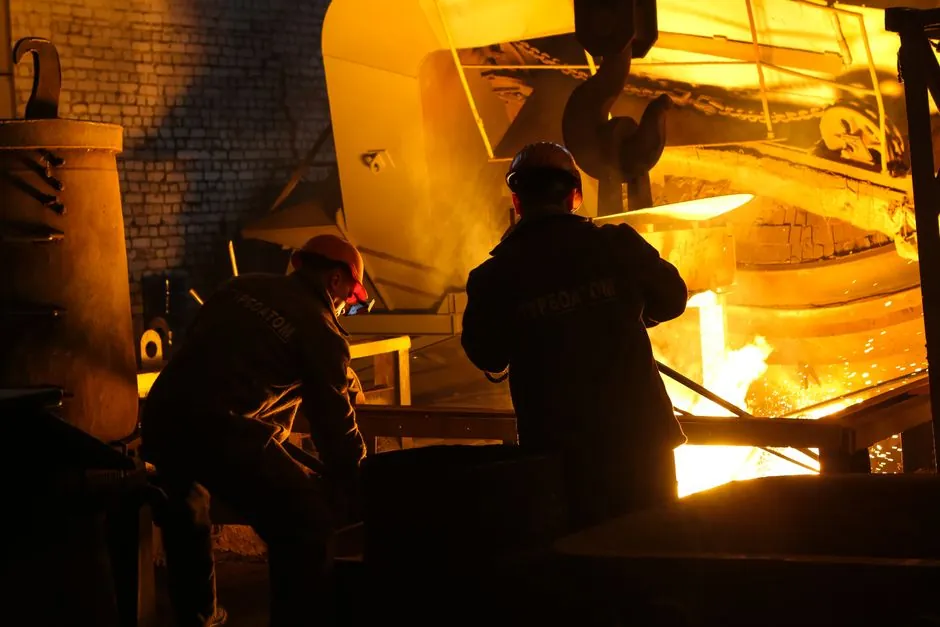
C18200 chromium copper is the RWMA Class 2 material for resistance welding electrodes, combining about 80% IACS conductivity with elevated-temperature strength [S4].
UNS C18200, also designated CDA 182, CuCr1, or RWMA Class 2, is used for spot and seam welding electrodes, tips, seam wheels, projection-welding dies, electrode-holder jaws, and other high-current components [S2][S3][S4].
C18200 Composition and Class 2 Position
C18200 contains 0.6–1.2% chromium with copper as the balance; published nominal composition is 99.1% Cu and 0.9% Cr, with iron, lead, and silicon limited to 0.10%, 0.05%, and 0.10% maximum, respectively [S2][S4].
The alloy is produced as copper-chromium rather than carbon steel, so its useful behavior comes from a copper matrix strengthened by chromium-rich precipitates. The cited composition places C18200 between more conductive Class 1 alloys and stronger, less conductive Class 3 alloys [S4].
Common identifiers include UNS C18200, CDA 182, CA18200, alloy 182, CuCr1, and RWMA Class 2. Comparable commercial trade names include Mallory 100, Tuffaloy 77, and Ampcoloy 97, but procurement should specify the governing designation and temper rather than rely on a trade name alone [S3][S4].
Electrical and Thermal Performance
Typical C18200 conductivity is approximately 80% IACS [S4], and its density is 8.89 g/cm³ [S5].
These properties make C18200 suitable for resistance spot and seam welding, where the electrode must carry high current while tolerating repeated mechanical loading and heating. C18200 is used in electrical switchgear, cable connectors, and circuit-breaker parts [S5][S6].
The 80% IACS rating is a useful acceptance check for procurement, but conductivity varies with product form, size, temper, and heat treatment. It should therefore be requested for the actual electrode stock, not assumed from the C18200 designation alone [S4][S8].
Strength, Hardness, and Heat Treatment
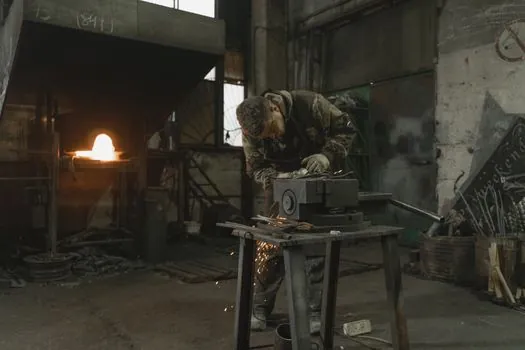
C18200 is heat treatable and cold workable [S3][S5], with approximately 80% IACS conductivity [S4].
These values are engineering approximations rather than guaranteed specification values because composition, specimen orientation, and manufacturing limitations affect test results [S3].
Class 2 Options Compared for Electrode Design
C18200 is an RWMA Class 2 alloy with approximately 80% IACS conductivity [S4]. Class 1 materials offer higher conductivity but lower strength, while Class 3 materials favor strength at the expense of conductivity [S4].
C18200 is the better general-purpose electrode choice than plain ETP copper when the electrode face loses geometry or mechanical strength under repeated heating. It is not automatically superior to a higher-strength alloy for extreme duty, and it is not the correct selection when maximum conductivity must take priority over deformation resistance [S1][S4].
Applications Across Welding Equipment
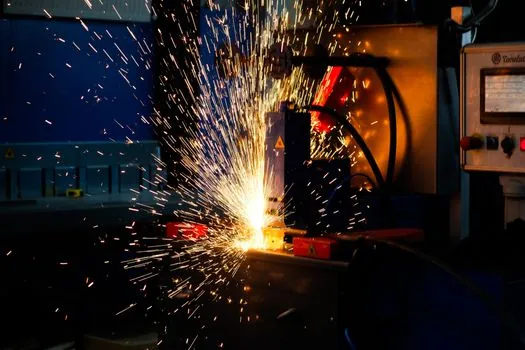
Resistance-welding electrodes and tips are core applications for C18200, including resistance-welding machine electrodes, seam-welding wheels, and spot-welding tips [S2][S3].
Other plant equipment includes electrode-holder jaws, electrode adapters, current-carrying arms, electrical connectors, switchgear, terminal parts, heat exchangers, and thermal or electrical conductors that need more strength than copper [S2][S5][S6].
C18200 is used primarily for resistance spot and seam welding [S2][S3]. Cleanliness and surface condition remain relevant because the electrode transfers heat through the workpiece interface, while the electrode cap itself must resist local wear, pitting, and pickup.
Limits, Failure Modes, and Sourcing Checks
C18200 resists softening at elevated temperatures [S2][S4]. Elevated-temperature suitability must therefore be checked against the actual electrode duty cycle, cooling method, and permitted service temperature [S4].
Electrode life is also affected by geometry. A hard, wear-resistant face resists deformation, yet excessive hardness or unsuitable surface condition can increase pickup and inhibit release from the workpiece. Inspect cap diameter, face condition, alignment, and holder contact rather than assuming that a heavier copper alloy eliminates all maintenance [S2][S3].
For procurement, request C18200 plus the RWMA Class 2 classification, product form, dimensions, temper, hardness, conductivity, and heat-treatment condition. Published property tables differ by section size and processing route, and nominal figures are not acceptable substitutes for purchase requirements [S2][S3][S4].
Installation and Maintenance Controls
Electrode-holder jaws must make secure, low-resistance contact with the electrode because loss of contact concentrates heating outside the intended weld interface. The cited applications include holder jaws, current-carrying arms, cable connectors, and switchgear, which means electrode performance depends on the complete conductive path rather than the cap alone [S2][S3].
Record base-metal grade and thickness, weld current, welding time, electrode force, cooling interval, electrode diameter, and cap replacement condition. Those measurements make it possible to distinguish material failure from an incorrectly set weld schedule or poor alignment without assigning every degradation event to C18200.
C18200 is also suitable for high-heat, high-current parts beyond electrodes, including electrical connectors, switches, heat sinks, and current-carrying structural members [S4][S6][S10]. For a resistance-welding electrode, however, the decisive checks are RWMA Class 2 status, conductivity near 80% IACS, hardness within the selected temper range, dimensional accuracy, and documented heat treatment.