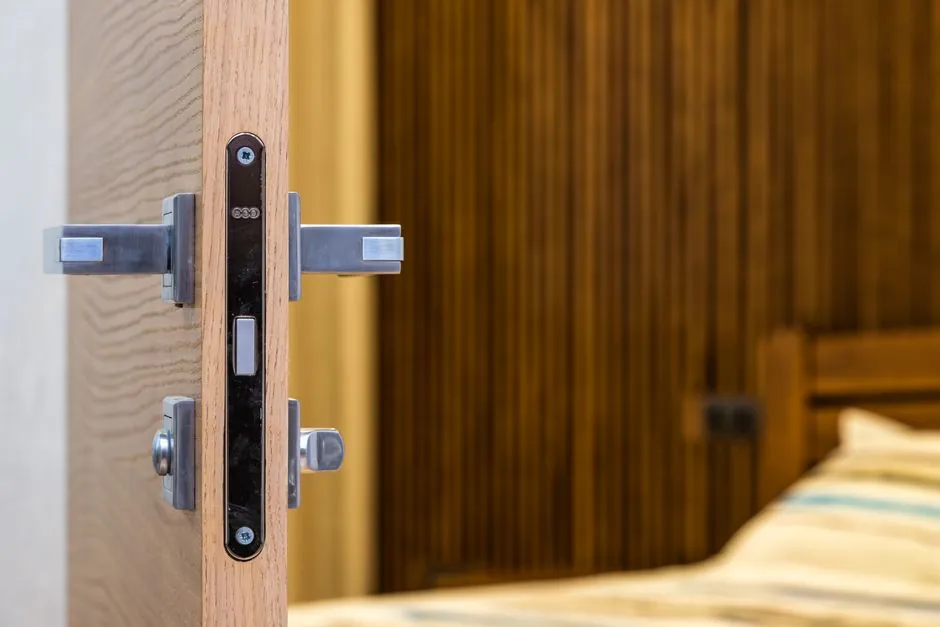
A delayed-action closer can hold an opened door for roughly 3 to 60 seconds before the closing cycle starts, improving passage time without changing the required closing speed [S2][S3].
The feature suits selected healthcare, education, storage, and institutional doors where users need extra time, but it does not replace compliant opening force, door clearances, or a power-assist operator [S1][S3].
What Delayed Action Controls
Delayed action delays the start of closing after a door is opened to its trigger angle, commonly 70 to 90 degrees, and then allows the sweep and latch-speed valves to complete the closing cycle [S2][S3].
A conventional closer already has separate sweep and latch-speed controls, while delayed action adds another hydraulic function. Backcheck is different: it increases resistance while the door is being opened, usually near 70 to 80 degrees, to control excessive opening speed [S3][S5].
Delayed action is built into the hydraulic closer body. It is not a mechanical hold-open arm, an electromagnetic holder, or a door stop, and the door still closes without manual intervention [S2][S3].
Accessibility Rules Do Not Require a Delay
ADA accessibility standards and ICC/ANSI A117.1 do not require delayed action; they regulate how quickly a door closes after it has been opened [S2][S6].
For a door with a closer, the cited requirement is a minimum 5 seconds from 90 degrees open to 12 degrees from closed under ICC/ANSI A117.1-2017 Section 404.2.7.1 [S2].
For spring hinges, the cited requirement is 1.5 seconds from 70 degrees open to closed, although that faster movement can make the door difficult for some users to maneuver [S2]. State and local adoptions can differ, so the project specification should identify the governing adopted standard [S2].
Opening force is also a separate accessibility issue. The 5 lb maximum cited for interior doors addresses the effort required to start opening, while delayed action addresses the time available to clear the opening after release [S3].
Compare the Main Door-Control Options
Delayed action, backcheck, hold-open hardware, and power-assist operators solve different problems. Delayed action governs when closing begins, backcheck governs resistance during opening, hold-open hardware keeps the door open mechanically or electromagnetically, and a power-assist operator supplies powered opening assistance [S3][S5].
Backcheck cannot be substituted for delayed action, and delayed action cannot satisfy a requirement for powered opening assistance. A mechanical door stop is still needed where a maximum opening angle must be controlled because backcheck controls speed rather than guaranteeing a fixed stop position [S3][S5].
Where the Feature Provides Measurable Value
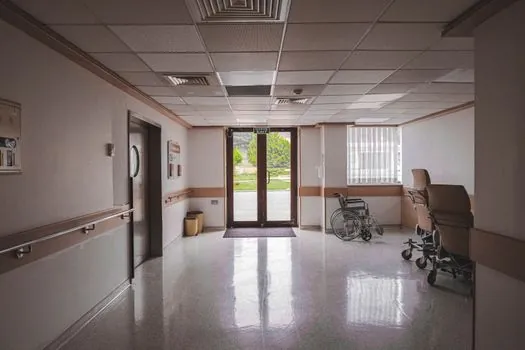
Delayed action gives wheelchair, walker, and cane users time to clear a threshold after opening the door, while also helping staff move patients, carts, and material-handling equipment through the opening [S3].
Institutional doors may see far heavier use than residential doors, including approximately 100 or more cycles per day in a school hallway and 500 or more in a hospital corridor, making closer selection and adjustment an operating issue rather than a one-time purchase decision [S4].
Appropriate applications include healthcare tub rooms, selected storage rooms, education corridors, senior-living and rehabilitation spaces, and institutional doors used by staff pushing equipment [S2][S3].
The feature can be disabled during maintenance, so the specification should identify the delay range, trigger behavior, opening force, closing time, and intended users rather than relying on a generic statement such as “closer with accessibility features” [S2][S3].
Fire Doors and Installation Constraints
International Building Code Section 716.2.6.5 permits delayed-action closers on doors required to be self-closing and not required to be automatic closing, but the cited provision does not impose a specific delay limit [S2].
That permission is not a blanket field substitution. The closer, frame, hinges, latch, closer arm, and any hold-open device must remain compatible with the labeled fire-door assembly and applicable authority requirements [S2][S3].
Closing speed, delayed-action valve, backcheck, and sweep adjustments interact through the closer’s hydraulic circuit. A delayed-action closer must still deliver the applicable minimum closing time and opening force, so final adjustment should follow the actual door, frame, hardware, and installed closer configuration [S2].
For closer sizing and mounting decisions, including regular versus parallel arm arrangements covered in Regular vs Parallel Arm Door Closer Selection, delayed action is an added valve function rather than a substitute for correct closer size or placement.
Write a Complete Hardware Schedule
A hardware schedule should identify the closer model, size, mounting configuration, finish, adjustable force or power, closing time, delayed-action range, backcheck requirement, and whether the opening is fire-rated [S3][S4].
Do not assume that every closer with an accessible appearance includes delayed action. The feature is optional and must be selected explicitly when the opening analysis shows that a brief hold improves safe passage [S2][S3].
For accessible entrances, the Access Board requires at least one compliant door or doorway at each accessible entrance and states that a push-side door equipped with both a closer and latch requires 12 inches minimum latch clearance for forward approach [S1].
That clearance requirement, door-maneuvering space, hardware operating force, and closing time are separate from delayed action. Each should be verified against the adopted accessibility standard and the complete architectural hardware set, including hinges, locks, latch, closer, and fire-door components.
The next trackable specification check is the opening-by-opening hardware schedule: record whether each closer must delay for more than 1 second, then confirm the delay range, 5-second closing-time path, 5 lb interior opening-force limit, and fire-door listing before procurement [S2][S3].