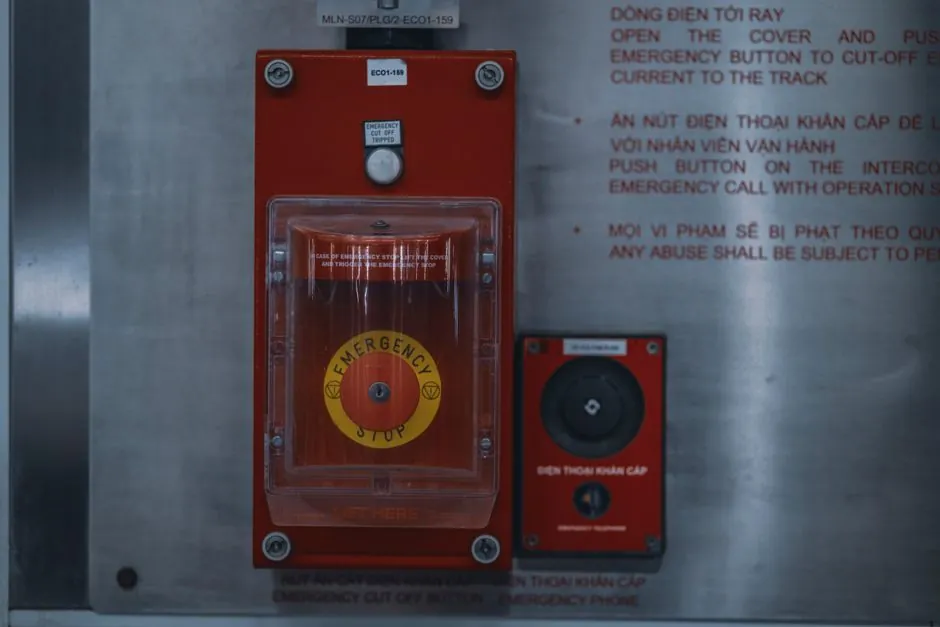
Eyewash activation alarm systems can detect station operation, sound a local siren, flash a strobe, and relay the event to a control room through dry contacts or a monitoring system [S1][S4].
Listed remote-alarm packages span $977.00 to $2,020.25, while available architectures range from standalone gravity-fed station alarms to flow-switch systems with local controls and back-to-base capability [S2][S9].
How Eyewash Activation Is Detected
The triggering element is normally a flow-sensitive device installed in the eyewash water circuit, so the alarm reports actual water flow rather than only the position of a push button or valve handle [S3][S4].
One documented flow switch uses a magnetically actuated piston that responds to very low fluid flow, can be mounted in horizontal, vertical, or inverted pipework, and connects through a low-voltage plug to a 12 VDC control circuit [S4]. A different product combines remote-alarm flow-switch capability with dry contacts for connection to an external alarm system [S6].
Thermal-differential flow switches offer another established method: two temperature-sensing elements create a measurable difference between flowing and stationary water, and the switch operates a relay when flow appears [S5] (2013-02). The practical selection criterion is not the name of the sensing technology, but whether the device detects the station’s actual water flow and can be maintained without restricting pressure or flow.
Local Alarm and Remote Signal Options
A complete activation alarm architecture has three functional blocks: the flow switch, the local alarm panel, and the interface to a remote notification or alarm-management system [S4].
At the local level, one documented panel combines an audible siren, visual strobe, ARMED and ALARM MUTE selector, red and green status LEDs, and a volt-free output for common-fault and back-to-base monitoring [S4]. Another product uses a siren and flashing light to alert nearby workers and can be installed on top of a specified gravity-fed eyewash station [S9].
For remote operation, remotely monitored alarms can connect to an alarm-management system that signals a control center or designated personnel when an alarm is triggered [S1]. The remote signal therefore adds response time, while the local audible and visual indication protects workers near the station when a casualty may be unable to summon help directly [S4][S7].
Neither the price nor the interface should be evaluated alone. A low-cost siren can meet local notification needs but does not establish a control-room link, while a dry-contact output may integrate with an existing plant alarm system without requiring a dedicated alarm-management platform [S1][S6].
Compare the Main Eyewash Alarm Architectures
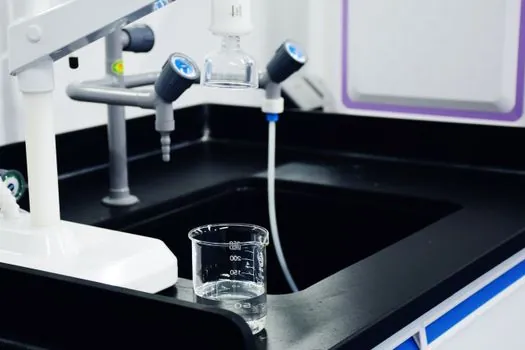
The main design choices differ across four decision criteria: activation evidence, local notification, remote notification, and installation complexity [S1][S2][S4][S6][S9].
This comparison favors a packaged panel for standalone installations and a dry-contact interface for plants with an established alarm-management system. The documented packaged option also provides a 316 stainless steel Y-strainer, barrel union, and reducer nipple for installation at the supply inlet [S4].
Define the Required Signal Before Ordering
An activation alarm specification should state whether the output must identify local operation, a common fault, or both, because a flow event and equipment-health fault perform different functions in the response workflow [S4][S5].
For a standalone station, the minimum useful package is a flow switch, local audible and visual alarm, power supply, and an approved means of resetting or silencing the event. For a remotely monitored installation, add a defined remote interface such as dry contacts, a volt-free common-fault output, or connection to an alarm-management system [S1][S4][S6].
Remote activation packages are commercially distinct from local alarm assemblies, with listed prices of $977.00 and $2,020.25 [S2]. Those figures are procurement signals, not installation quotations, because pipework, electrical supply, contact configuration, integration, and the selected eyewash station can materially change the installed cost.
The eye wash station selected for the alarm must be verified for compatibility with the sensing assembly and installation kit. A unit intended for a gravity-fed station should not be assumed to suit every wall-mounted, drench-hose, or combination fixture without mechanical and hydraulic review.
Confirm Performance Against the Flushing Function

Activation monitoring supports the response, but it does not prove that the eyewash can deliver the required flushing flow for 15 minutes. ANSI/ISEA Z358.1-2014 specifies a minimum eyewash flow of 0.4 gallons per minute, approximately 1.5 L/min, for at least 15 minutes [S3].
The same standard specifies at least 20 gallons per minute, approximately 75.7 L/min, for a safety shower for at least 15 minutes, and approximately 3.0 gallons per minute, or 11.4 L/min, for an eye/face wash unit [S3]. These are flushing-performance requirements, not alarm-response times, and a successfully detected activation does not establish that the supplied water pressure, flow, spray pattern, and duration remain acceptable during the event [S3].
Pressure drops can reduce spray coverage, interrupt flow, and impair hands-free operation, while shared or undersized supplies can compromise the station’s ability to sustain the required rinse [S3]. The monitoring design should therefore be reviewed against actual water demand, including simultaneous operation where permitted, rather than treated as a substitute for hydraulic commissioning.
Where Remote Eyewash Monitoring Fits
Remote monitoring is most useful where eyewash locations are not continuously staffed, where a casualty may need hands-on assistance, and where the response organization requires an event record outside the immediate work area [S1][S5][S7].
It is not a substitute for local warning devices. A remote signal sent to a control room does not alert personnel standing beside the station, and it does not ensure that help arrives within the flushing interval [S4].
It is also not, by itself, a water-quality or flow-performance monitor unless the selected device measures those variables. A flow switch confirms operation, while the cited remote architectures mainly provide notification, alarm-state indication, and fault outputs [S3][S4][S6].
Remote monitoring is less justified where an already-equipped local alarm is the only requirement, where no responsible personnel or alarm-management endpoint exists for the signal, or where installation work would compromise the eyewash plumbing, electrical safety, drainage, or hands-free operation.
Standards, Testing, and Maintenance
Eyewash performance should be verified against ANSI/ISEA Z358.1-2014, including the 0.4 gallons per minute eyewash flow requirement and 15-minute minimum duration [S3]. Alarm electrical components, hazardous-area classification, and installation method still require project-specific review, because the cited product information does not establish a universal hazardous-location certification for every alarm assembly [S4].
Commissioning should prove the complete chain: intentional activation produces sustained flow, the flow switch changes state, the local siren and strobe operate, the remote output reaches the intended panel or personnel, and the system returns to its normal state after reset [S1][S4].
Test frequency and inspection records should be aligned with the site’s safety program and the applicable eyewash maintenance requirements. The cited product documentation identifies a plug-in flow switch and installation kit, but it does not establish a universal test interval, so facility procedures and applicable requirements control the schedule.
Keep the perimeter alarm wording out of the specification unless the eyewash event must be distinguished from another site alarm, and keep the signal interface aligned with the plant’s access control only if the chosen architecture explicitly supports that integration. The defensible scope is flow-triggered eyewash notification, not a general-purpose alarm system.
The next procurement check is straightforward: obtain the flow-switch wet material, minimum detectable flow, contact rating, power requirement, mounting restrictions, and alarm interface for the proposed model, then verify all three against the selected station and plant monitoring architecture [S4][S6].