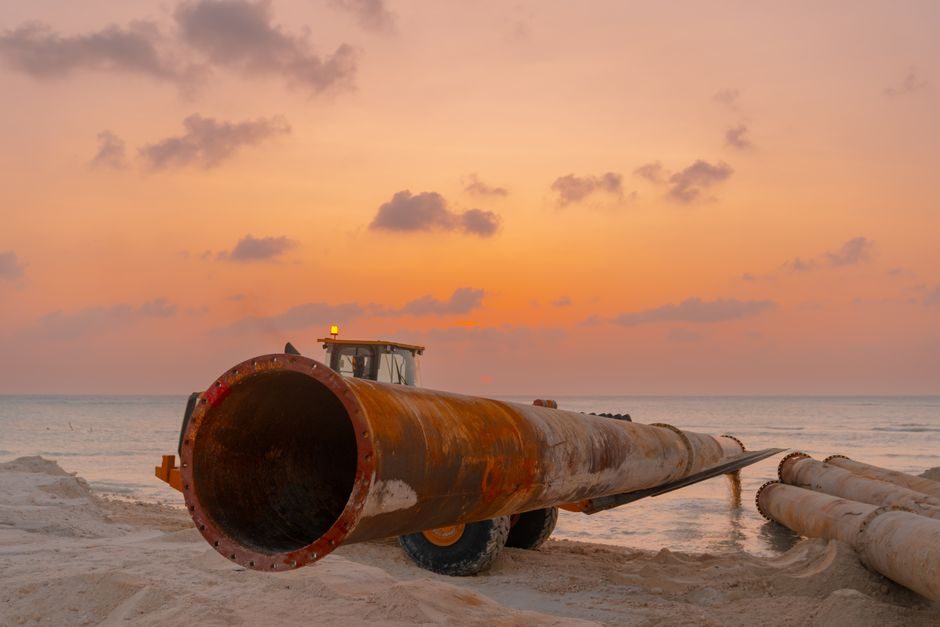
Spiral lock-seam galvanized steel duct typically ships in diameters from Ø80 mm to Ø3000 mm with SMACNA gauge selection tied to static pressure class, while extruded plastic pipe in PVC, PE, PPR, and UHMW-PE grades covers fluid service from domestic cold water to aggressive chemical slurry at operating temperatures rated from −40 °C up to +95 °C depending on resin [S2][S7].
The two product families rarely compete head-to-head: spiral duct is built to move air with low pressure drop and fire-rated galvanised steel skins, whereas plastic pipe is built to resist internal corrosion, chemical attack, and biofilm at the cost of pressure-temperature ceiling.
What Each Product Family Actually Is
Spiral duct is a helically wound, lock-seam or welded tube formed from galvanized steel strip (commonly G30/G60 zinc coating, base metal 0.5–1.2 mm), used in HVAC supply, return, and exhaust systems where the duty is moving conditioned or ventilation air at typically −500 Pa to +1500 Pa static [S1].
Plastic pipe is an extruded thermoplastic or thermoset tube in continuous coils or straight lengths, with PVC-U, PVC-C, PE80/PE100, PPR (PP-R), and UHMW-PE the dominant commercial grades; the Chinese extrusion line market lists complete PVC/PE/PPR lines in a price band of roughly US$1,250,000 to US$15,000,000, indicating the capital scale of the production segment [S1][S2].
Decision Criteria: Pressure, Temperature, Media, Fire, Cost
Compare the two options on five decision anchors — pressure rating, temperature ceiling, media compatibility, fire/smoke behaviour, and installed cost per metre — and the choice becomes mechanical. A complete spec-driven air-vs-fluid map for a related steel product is laid out in the Seamless Steel Pipe vs Spiral Duct: Spec-Driven Selection Map reference, which lines the same five criteria against steel alternatives. [S1]
On pressure: spiral duct is rated for low-pressure air (typical SMACNA classes ±250 Pa to ±1500 Pa), whereas plastic pipe in PE100 carries water at PN16 (16 bar) and even PN25 in thin-wall service; a reinforced plastic composite line can exceed PN30 [S2][S5].
On temperature: galvanized steel duct tolerates continuous hot air in the 200–400 °C range during fire/smoke spill; UHMW-PE pipe is rated for service from −269 °C to +80 °C, PPR for hot water up to ~95 °C, and standard PE80/PE100 capped around 60 °C for pressure service [S7].
On media: duct sees air, dust, and grease; plastic pipe sees potable water, process chemicals, mining slurry, and compressed air (in dedicated grades). On fire: galvanized steel is non-combustible (Euroclass A1), whereas most thermoplastics fall in Euroclass B–E and require intumescent wrap or alternative routing through occupied zones [S2][S7].
Who Should Specify Each — and Who Should Not

Specify spiral duct when the conveying medium is air, the duct runs through plenum or occupied ceiling space requiring fire-rated non-combustible construction, and diameters exceed Ø200 mm with long straight runs where lock-seam rigidity lowers support spacing. Specify it for HVAC retrofit where galvanised steel’s vibration tolerance and machine-formed fittings are advantages [S1].
Specify plastic pipe when the medium is a corrosive fluid (acid, alkali, brine, slurry), when scale and biofilm control matters in potable or process water, when the routing has many bends and the line must be fusion-welded on site, or when the system must avoid internal corrosion over a 50-year design life [S2][S5].
Do NOT specify plastic pipe for fire-rated HVAC smoke exhaust where local codes demand non-combustible duct, and do NOT specify spiral duct for chemical effluent or aggressive slurry where even galvanised coating fails within months; for chemical process lines, also look at engineering plastic alternatives for higher-temperature service.
Material Grades and Wall Construction
Spiral duct material is galvanised steel strip to ASTM A653 with G30–G90 coating weight, lock-seamed or butt-welded at the helix, with options for 304/316 stainless or aluminium for corrosive airstreams; gauge selection (24–22 ga typical, 20 ga for high-pressure) follows SMACNA HVAC Duct Construction Standards. [S1]
Plastic pipe material is the resin itself: PVC-U for cold potable and drainage, PE80/PE100 per ISO 4427 for water and gas, PPR (PP-R) per ISO 15874 for hot water, and UHMW-PE for abrasive slurry and cryogenic service; steel-plastic composite pipe combines a metal core with PE/PPR skin for higher pressure-temperature duty at the cost of fusion simplicity.
Production, Lead Time, and Cost Reference
A complete Chinese-built plastic pipe extrusion line (PVC/PE/PPR/WPC) is currently quoted in the US$1,250,000–US$15,000,000 band, with line configuration driven by resin, output (kg/h), and diameter range; turnkey lines include conical twin-screw extruder, vacuum calibration tank, haul-off, cutting, and belling station [S1][S2].
Spiral duct production uses spiral-forming mills from Ø80 mm to Ø3000 mm, with output metres-per-minute scaling with strip width and gauge; smaller lock-seam duct shops typically operate 1–3 forming machines and ship 6 m lengths in 7–10 working days for standard gauges.
Limits, Failure Modes, and Common Spec Traps
Spiral duct failure modes are gauge-driven: underspecified gauge on long spans leads to duct flutter and seam cracking at +750 Pa; missing stiffener rings on Ø>1500 mm lines cause ovalisation under negative pressure. Galvanic contact with copper or stainless supports in humid airstreams needs isolation gaskets [S1].
Plastic pipe failure modes are resin-driven: PVC-U cracks below −10 °C without proper formulation, PP-R oxidises in UV-exposed outdoor service without carbon-black or paint, and PE80/PE100 suffers slow crack growth (SCG) under sustained point loads if the pipe is bedded on sharp aggregate — proper sand bedding and PE100-RC grade mitigate this. For outdoor pipe-rack installations, the Plastic Pipe Selection Criteria for Outdoor Pipe Racks reference maps UV, support span, and expansion loop sizing.
Standards and Sourcing Anchors
Spiral duct is governed by SMACNA HVAC Duct Construction Standards, ASTM A653 for the steel substrate, and (in EU) EN 1507 for rectangular and EN 12237 for ductwork leakage class; ductwork tightness runs Class A (tightest) to Class D, and most European plant builds now specify Class B at minimum. [S1]
Plastic pipe standards by resin: PVC-U to ISO 1452, PE80/PE100 to ISO 4427 (water) and ISO 4437 (gas), PP-R to ISO 15874, UHMW-PE to ASTM F402; pressure ratings follow the pipe series (S) calculation, with PE100 PN16 SDR11 the common water benchmark. Standards for fittings and jointing methods (electrofusion, butt fusion, socket fusion, solvent cement) sit alongside the pipe standards and must be specified as a system, not in isolation.
The next node to track: UN/ISO revisions on PE100-RC pipe for trenchless installation, and EN 12237 ductwork leakage re-classification for pharmaceutical cleanroom builds — both are likely to tighten over the next 12 months and shift project specifications on either side of this comparison.