
At least a dozen established manufacturers supply sputtering targets worldwide, with published purities spanning 99.9% to 99.9999% (3N to 6N) across pure metals, alloys, oxides, and compound ceramics [S5][S8].
Capabilities differ sharply: some suppliers run only research-scale distribution, while vertically integrated manufacturers offer in-house powder metallurgy, indium bonding, rotary target machining up to 4 m, and noble-metal reclaim [S1][S2][S7].
What a sputtering target supplier actually delivers
A sputtering target is the consumable source material converted into a thin film inside a PVD chamber, so a supplier's job covers target fabrication plus target-to-backer integration [S1].
SCI Engineered Materials, for example, publishes that its one-piece planar targets reach 20 in. diameter, planar tile arrays extend to 3 m, and rotary cylinders reach 4 m, all bonded in-house with indium for thermal and electrical contact [S1]. Linde AMT emphasises powder metallurgy and casting routes for the same scope [S7].
American Elements extends the catalogue to ultra-high-purity 99.9999% (6N) across nearly every stable element, and VEM covers round and rectangular formats for all major PVD systems at 99.9% to 99.999+% [S5][S8].
Purity tiers and material families compared
Industry-standard purity bands cluster at 3N (99.9%), 4N (99.99%), 5N (99.999%), and 6N (99.9999%), with 3N-4N typical for decorative, solar, and wear coatings, and 5N-6N typical for advanced semiconductor and optical stacks [S5][S8].
Suppliers divide their catalogues into three families: pure metals and alloys (Al, Cu, Cr, W and custom alloys for semiconductor, decorative, and magnetic films), oxides and ceramics (ITO, alumina, TiO2 for optical, solar, and dielectric layers), and compound or intermetallic targets for compound semiconductors [S1][S5].
Bonding is a separate capability: indium bonding is the most common route, but elastomer and metallic-diffusion bonding appear at suppliers running rotary and large-area planar production [S1].
Who a sputtering target supplier is for, and who it is not for

Vertically integrated manufacturers (SCI, Linde AMT, American Elements, VEM) suit fabs and coating lines that need bonded, ready-to-install targets in qualified geometries [S1][S5][S7][S8].
Distributors and lab suppliers (MSE Supplies, Plasmaterials, Otto Chemie) suit R&D labs, universities, and pilot lines that buy unbonded, smaller-format targets in low volumes [S2][S4][S9].
Buyers who need only a kilogram or two of an obscure compound at 5N are poorly served by an integrated PVD materials house with a 4-week bonding lead time; they are better served by a stock distributor. Conversely, a 6N, 1.5 m planar target for Gen-8 glass coating is outside the scope of any lab distributor.
Decision criteria when comparing suppliers
Four criteria reliably separate suppliers: maximum purity grade offered, in-house bonding and machining, maximum planar or rotary geometry, and precious-metal reclaim or recycling capability [S1][S2][S5][S7][S8].
On purity, American Elements and VEM publish up to 6N (99.9999%) and 99.999+% respectively, while most generalist manufacturers stop at 4N5 (99.995%) or 5N [S5][S8].
On geometry, SCI's 20 in. one-piece, 3 m tile array, and 4 m rotary ceilings are concrete published numbers; smaller houses quote only up to 12 in. planar [S1].
On reclaim, SCI publishes a Virgin Powder Repress (VPR) process that can re-press a spent noble-metal target backer up to ten times before full reclaim is needed, with published cost savings up to 50% on noble-metal powder, against an industry planar target utilisation of only 15-30% [S1]. Plasmaterials likewise flags recycling/reclaim of spent targets as part of its service [S2].
Use cases driving current demand

Semiconductor interconnect and barrier layers (Cu, Ta, TaN, Ru, W) drive the 5N-6N metal target segment; transparent conductive oxides, principally ITO and IZO, drive the ceramic target segment for flat-panel display and touch-panel fabs [S1][S5].
Photovoltaic and solar-cell lines pull large planar tile arrays, while decorative and architectural glass pulls rotary aluminium and chromium targets, the format a sputtering target reference notes as the highest-throughput geometry for large-area coating [S1].
Optical coating houses and wear-resistant tool coating shops typically buy 3N-4N oxide and metal targets in small planar discs, often through distributors such as MSE Supplies and Otto Chemie rather than integrated PVD houses [S4][S9].
Standards, certification, and quality signals
ISO 9001:2015 is the most commonly cited quality management certification across integrated sputtering target manufacturers, with SCI and several peers publishing active certification [S1].
Beyond ISO 9001, no universal industry standard governs target purity grades; instead, suppliers publish in-house ICP-MS or GDMS assay data, density measurements, and bond-pull tests per target lot [S1][S5].
Buyers working in IATF 16949 automotive supply chains, or in semiconductor Grade-1 cleanroom fabs, should request a supplier's lot-level traceability, FAI documentation, and country-of-melt disclosure before locking a source [S1].
Limitations, constraints, and common failure modes
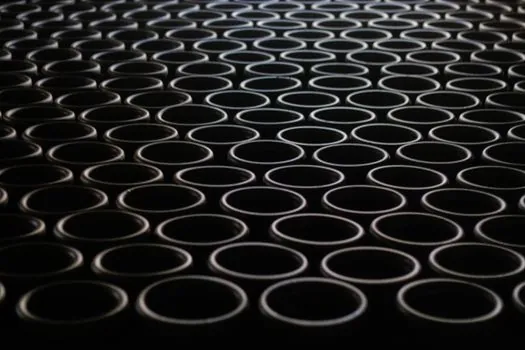
Sputtering target manufacturers commonly offer recycling and reclaim services alongside custom geometries and in-house bonding as part of their full-service manufacturing capabilities [S1].
Lead times for non-stock geometries routinely run 6-12 weeks because forming, sintering, density check, and bonding are sequential batch steps; a 4N rotary target is rarely available off the shelf at the 1-2 m size class [S1][S7].
Sourcing geography and supplier tiering
The 2026 supplier list includes US integrated houses (American Elements, SCI Engineered Materials, MSE Supplies, Plasmaterials, Materion via the 14-name Metoree index, Edgetech Industries), European powder metallurgy specialists (Linde AMT, VEM), and Asian stockists and compound makers (Stanford Advanced Materials, Otto Chemie India) [S3][S6][S9][S10].
Top-tier integrators (SCI, Linde AMT, American Elements, VEM) handle custom geometry and bonding; mid-tier stockists (MSE, Plasmaterials, Otto Chemie, SAM) cover standard catalogue SKUs; long-tail custom compound makers handle R&D and small-batch exotic materials [S1][S2][S4][S5][S7][S8][S9][S10].
For sourcing decisions tied to neighbouring thin-film or magnet production, the related reference on permanent magnet material selection shares the same powder-metallurgy and density-test language and is a useful cross-check on supplier QA claims.
Trackable signals to watch: suppliers publishing 6N-grade compound targets at 300 mm wafer scale, ISO 9001 recertification dates on the manufacturer site, and the next round of large-area (Gen-8 and above) planar tile supply awards, which are the leading indicator of capacity additions in this segment through 2026 [S1][S5][S8].
For component-level specifications, see construction machinery and equipment, and lamps and light fittings.